Schmitz Cargobull S.BO PACE+ and S.BO MULTI Target Dry Freight Fleets
The S.BO PACE+ pairs repairable FERROSTRUKT® panels with up to 27,000 kg payload capacity; the S.BO MULTI adds room for up to 33 Euro pallets.
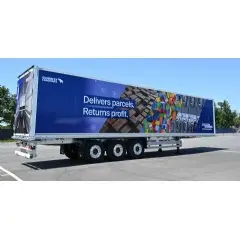
Schmitz Cargobull’s two new dry freight trailers address different fleet pressures: frequent parcel handling and changing cargo mixes. Presented at IAA TRANSPORTATION 2026, the S.BO PACE+ and S.BO MULTI share a modular platform, but their equipment points toward distinct jobs. The PACE+ is aimed at parcel and standard dry freight work, while the MULTI is built to carry a broader mix of loads in the same trailer.
That split matters to operators trying to keep equipment productive as routes and customers change. A trailer designed around repeated loading cycles has different priorities from one expected to switch between palletised goods, hanging garments and bulky freight. Schmitz Cargobull’s pair puts those priorities into separate configurations rather than asking one body to cover every use in the same way.
S.BO PACE+: built around frequent handling
The S.BO PACE+ is scheduled to reach the market from January 2027. Its defining feature is FERROSTRUKT®, a newly developed panel technology combining a steel surface layer with a honeycomb core. Schmitz Cargobull says the construction brings impact and puncture resistance together with low dead weight, a useful balance for trailers exposed to repeated loading and unloading while carrying freight over regular routes.
Panel repairability is another part of that design. If a sidewall panel is damaged, it can be replaced, which the company says simplifies repairs and shortens downtime. That can matter in parcel and standard freight operations, where a damaged body panel can interrupt work even when the rest of the trailer remains serviceable. A replaceable section also gives maintenance teams a more targeted repair option than treating the whole sidewall as one piece.
The PACE+ is designed for payloads of up to 27,000 kilograms. That figure places the trailer’s intended use clearly in high-volume parcel and dry freight service, though actual loading depends on the vehicle setup and the cargo being carried. Its combination of a low-weight panel design and a repairable sidewall is intended to support day-to-day availability as well as carrying capacity.
S.BO MULTI: one body, more cargo options
The S.BO MULTI takes a different route to fleet flexibility. Its integrated double-decker system uses keyhole plates and can provide capacity for up to 33 additional Euro pallets. The extra level gives operators another way to use the available interior volume when the load and handling plan suit double-deck transport.
When the freight mix changes, the interior can also be configured for palletised goods, general cargo, hanging clothing, vehicle parts, bulky items or loose goods. A wide selection of load-securing points supports those changes. In practice, the value of a versatile trailer depends on how quickly the crew can adapt the load space and secure each type of cargo; the MULTI’s equipment is intended to make that adjustment part of routine work.
That range may suit operators whose assignments vary across industry and distribution. It gives them a single body with more ways to carry different freight, while the double-decker arrangement adds capacity when the job allows it. The published figure of up to 33 additional Euro pallets describes the potential gain from that system, rather than a promise that every load can use the full capacity.
Shared chassis and cargo protection
Both trailers use Schmitz Cargobull’s modular dry freight system. Shared components include an aluminium bulkhead, steel connection profiles and galvanised, bolted chassis constructions. Their bodies meet DIN EN 12642 Code XL requirements, and the manufacturer describes them as designed for long service life and economical maintenance.
Repair work can use common tools alongside gluing and riveting techniques. That gives workshops several ways to address damage and helps keep maintenance practical across the body design. For fleets, repair access and the availability of replacement panels can influence how long a trailer stays out of service after wear or impact, alongside the durability of its structure.
Both models can also be specified in a TAPA TSR1-compatible version for loads needing additional cargo protection. The package includes electronic door locks that can be operated through geofencing or remotely, acoustic alarms with door-contact sensors, a dedicated battery and monitoring functions in the TrailerConnect® portal. Schmitz Cargobull describes itself as the first manufacturer to offer a TAPA security package for dry freight trailers with roller doors.
The two launches give fleets a choice based on the work the trailer needs to do: the PACE+ focuses on frequent handling, panel durability and a payload of up to 27,000 kilograms; the MULTI focuses on adaptable loading and optional double-deck capacity. With the PACE+ due from January 2027, operators evaluating either model will have concrete body features to weigh against their own cargo mix, repair routines and loading patterns.


