Ford GT41 Hypercar Brings a Naturally Aspirated V8-Hybrid to the 2027 WEC Grid
Ford’s GT41 pairs a Coyote-based 5.4-liter V8 with a hybrid system as it prepares for its 2027 WEC return.
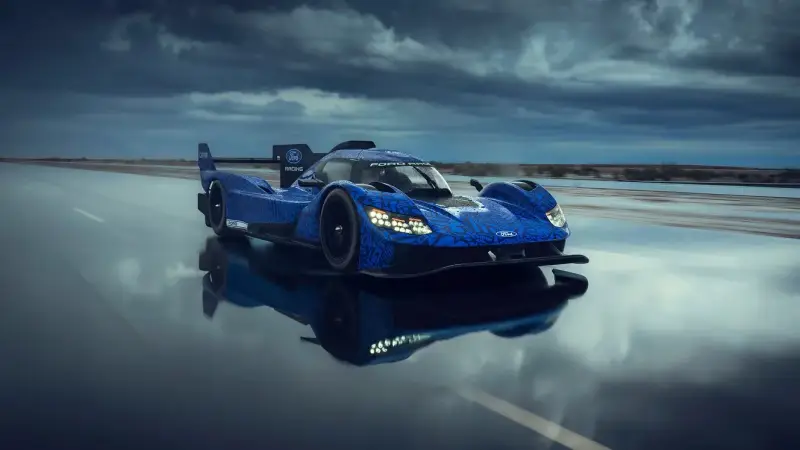
The Ford GT41’s most telling detail is under its bodywork: a naturally aspirated 5.4-liter V8 paired with a hybrid system. Ford Racing says the car and its Coyote-based engine were developed in-house, giving the company’s return to the top class of the FIA World Endurance Championship a distinctly Ford-built mechanical foundation.

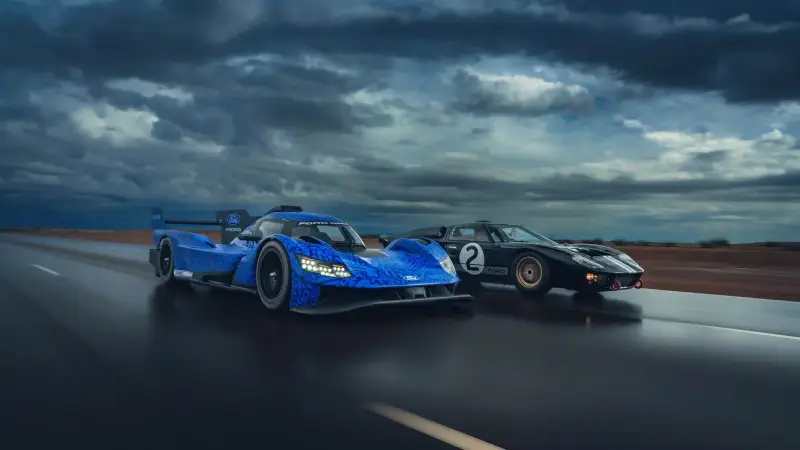
The name and proportions reach back to the GT40, whose four consecutive Le Mans victories came from 1966 through 1969. Ford says the new car measures 41 inches from the ground to its air intake, a direct nod to the number in its name. That measurement connects the modern prototype to the old car’s identity while leaving the GT41’s engineering to meet a very different endurance-racing brief.
A V8 at the center of the program
Ford has not provided power or torque figures, detailed hybrid-system specifications, or a breakdown of how the electric and combustion elements work together. What it has confirmed is the basic layout: a naturally aspirated 5.4-liter V8 and hybrid assistance. That’s enough to mark out the central technical choice, but the engine’s output, the system’s operating strategy and the finished car’s balance remain details to watch as development continues.
A naturally aspirated engine delivers its response without a turbocharger, while hybrid hardware adds another layer to how a prototype can manage propulsion over an endurance race. In practice, the value of the package depends on how the engine, electric system, chassis and energy management work together over long stints. The announcement gives no performance figures, so the GT41’s likely pace can’t be judged from displacement or configuration alone.

The in-house development claim also matters. Building the car and its Coyote-based engine within Ford’s own program gives the company direct responsibility for how the powertrain and vehicle are developed as a package. That can help teams coordinate changes across components during testing, though the announcement doesn’t describe the suppliers, technical partners or specific hardware used in the hybrid system.
Testing moves from Europe to the United States
The GT41 has completed extensive testing in Europe, according to Ford Racing. The next stated phase is a run of testing in the United States throughout December 2026 and January 2027. That schedule places track work close to the car’s planned first season, with development still to continue before the opening round.

Ford’s earlier 30-hour endurance test is one concrete marker of the program’s preparation. Endurance running gives engineers time to examine how components behave over sustained use and to identify issues that short sessions may not reveal. The available information doesn’t state what the test found or how the team has changed the car as a result, so there’s no basis to infer a reliability record yet.
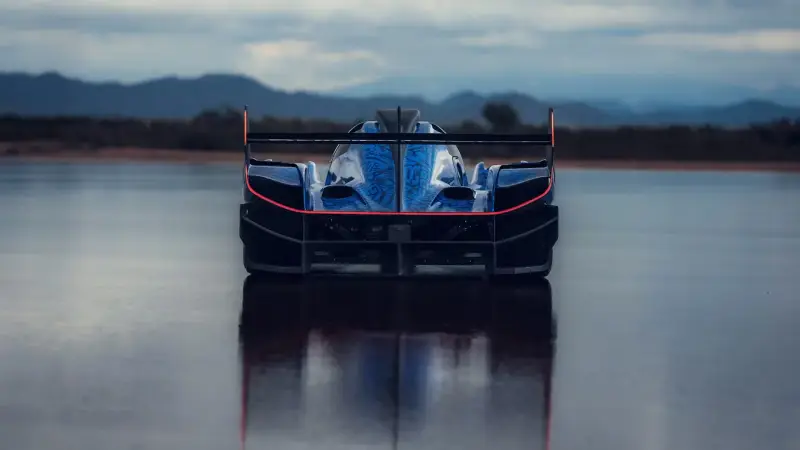
The next useful signals will be what emerges from the US testing block: whether Ford shares further technical detail, how the car develops ahead of its debut, and what the team learns from longer running. For now, the confirmed picture is a V8-hybrid prototype with a substantial test program behind it and more work scheduled before the 2027 season begins.
Drivers and race livery still to come
Ford has named Logan Sargeant, Tom Blomqvist, Matt Campbell, Sebastian Priaulx, Mike Rockenfeller and Nick Yelloly as GT41 drivers. The announcement doesn’t specify how those six drivers will be divided among cars or race entries, so the lineup’s precise structure remains to be seen.
The car has appeared in blue and white camouflage. Ford says its final racing livery will be revealed ahead of the opening round of the 2027 FIA WEC season in Qatar. That reveal will give the GT41 its finished visual identity; the more telling measure for race fans will come as the car moves through its remaining development and into competition.
For now, Ford’s return rests on a clear mechanical statement: an in-house Coyote-based 5.4-liter V8 working with a hybrid system, wrapped in a prototype that carries the GT40’s legacy in its name and stated height. The upcoming US tests should add the next chapter to that story.