Mercedes MB.DRIVE Adds Hands-Free Highway Assist and Route-Based Driving for 2026–27
Mercedes plans hands-free highway assistance by 2026, followed by navigation-guided point-to-point driving in 2027 for selected models.
Mercedes is adding two distinct kinds of assisted driving to MB.DRIVE: hands-free highway operation with automatic lane changes, followed by a route-guided system that can handle more of a programmed journey. The rollout is planned for Germany and the United States, with the first features due by the end of 2026 and MB.DRIVE ASSIST PRO scheduled for the first half of 2027.
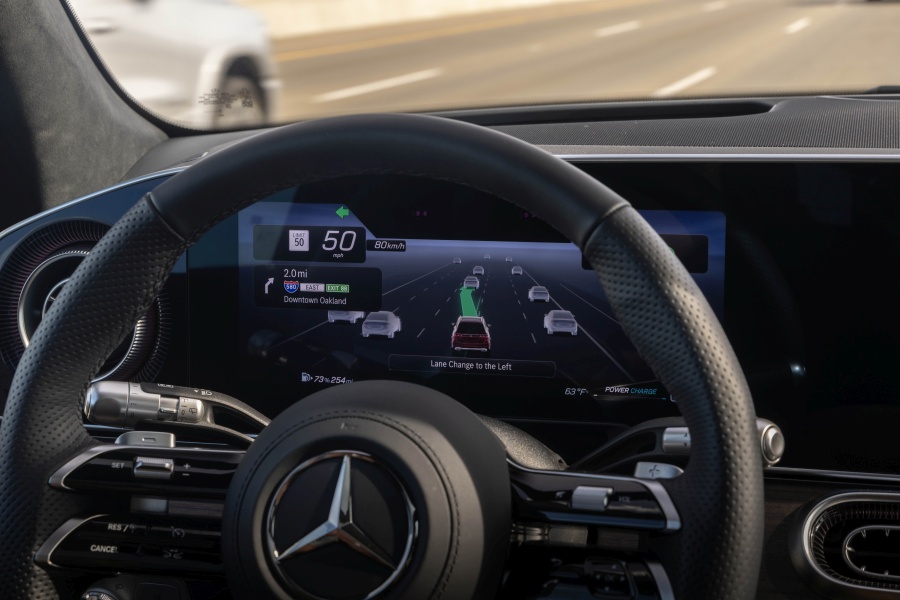
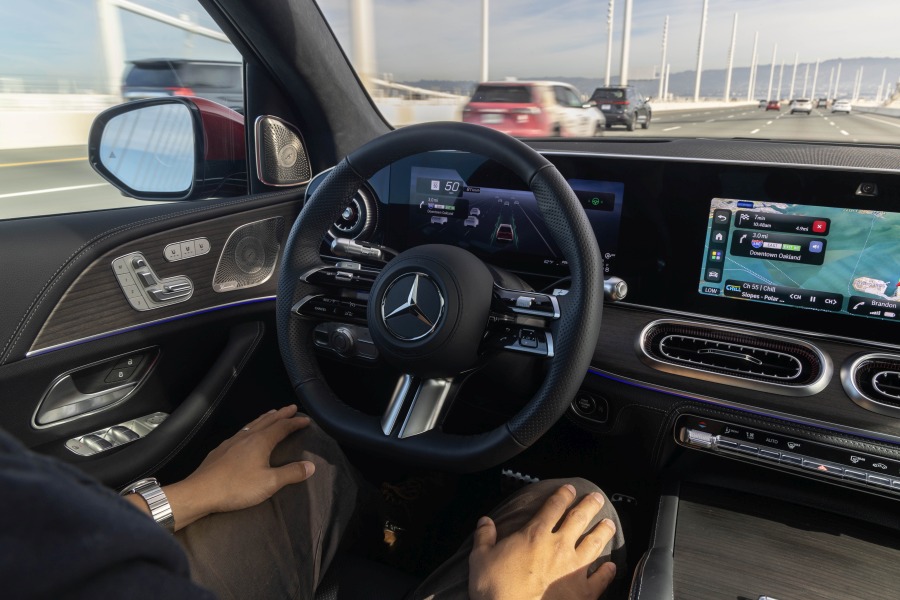
The first additions are the Hands-Free Assistant and Proactive Lane Change Assistant. On motorways, the Hands-Free Assistant will let a driver take their hands off the steering wheel at speeds of up to 130 kph. The lane-change feature is designed to choose and carry out a manoeuvre without the driver initiating it, whether the car needs to pass a slower vehicle or move toward the lane suited to a motorway exit.
That combination changes the rhythm of a highway drive: the system can maintain its course while also acting on traffic and route conditions. But Mercedes describes this as Level 2+ driver assistance. The driver still has to stay ready to take control whenever needed, so hands-free operation does not mean the car has taken responsibility for the drive.
Lane changes remain a key detail
Mercedes has not specified whether a driver must approve a lane change before the car begins it. That operating detail matters. Automatic execution could mean the system makes a decision and completes the move on its own, while a confirmation step would leave the driver with a final say over each manoeuvre.
A recent BMW system offers one example of how that interaction can work. Its Highway Assistant, introduced on the new 3 Series/i3, also operates at speeds of up to 130 kph. After the driver activates adaptive cruise control with the steering-wheel controls, the car requests a second confirmation before enabling Highway Assistant. A green LED on the right side of the steering wheel indicates that the system is active.
BMW’s setup keeps the vehicle centred in its lane and can suggest a lane change when it detects better traffic conditions elsewhere. The driver can approve the suggestion by looking at the relevant exterior mirror; the system then changes lanes if its Blind Spot Assist detects no vehicle in that area. If the driver doesn’t look toward the indicated mirror, the car stays in its current lane. Mercedes has not announced comparable details for its Proactive Lane Change Assistant, so the approval method and the system’s lane-change logic remain points to watch.
MB.DRIVE ASSIST PRO follows the navigation route
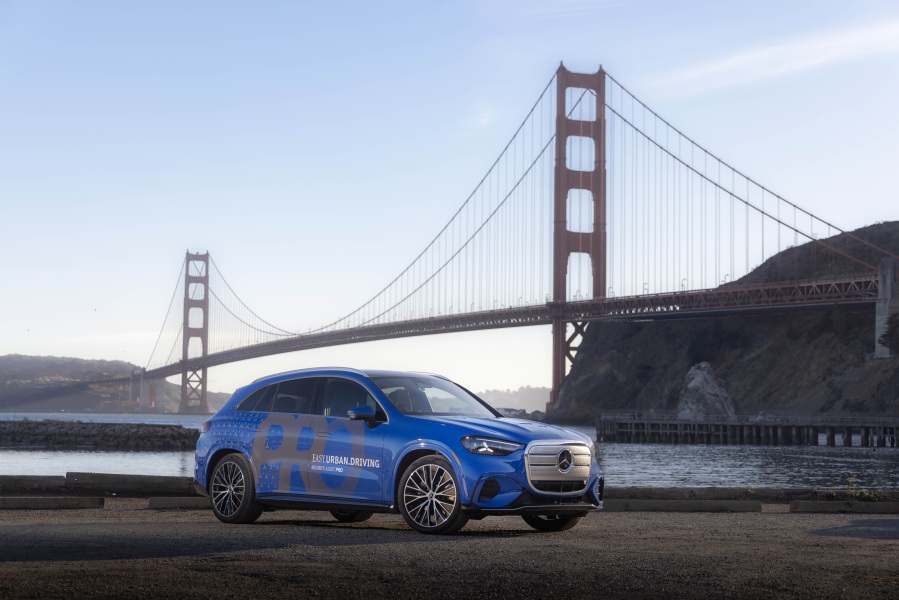
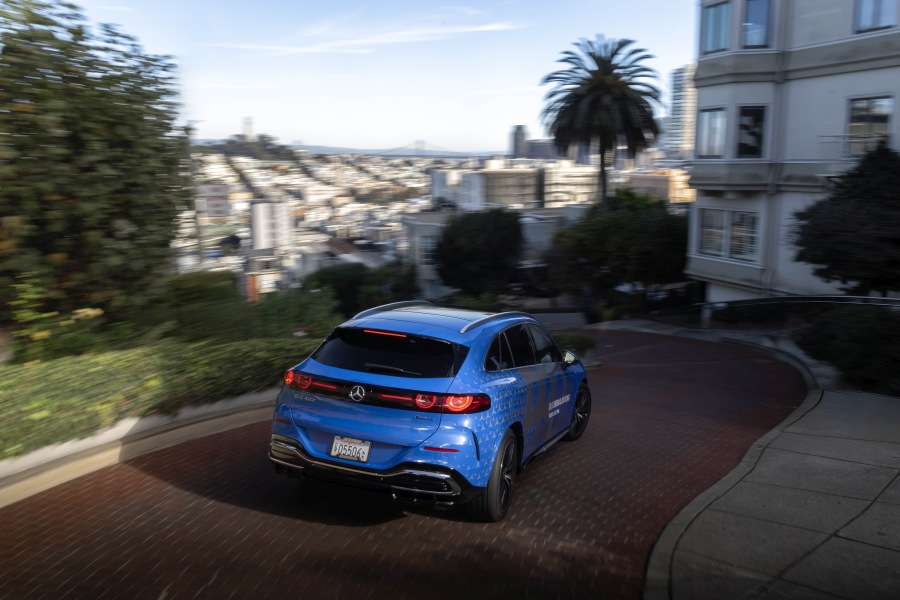
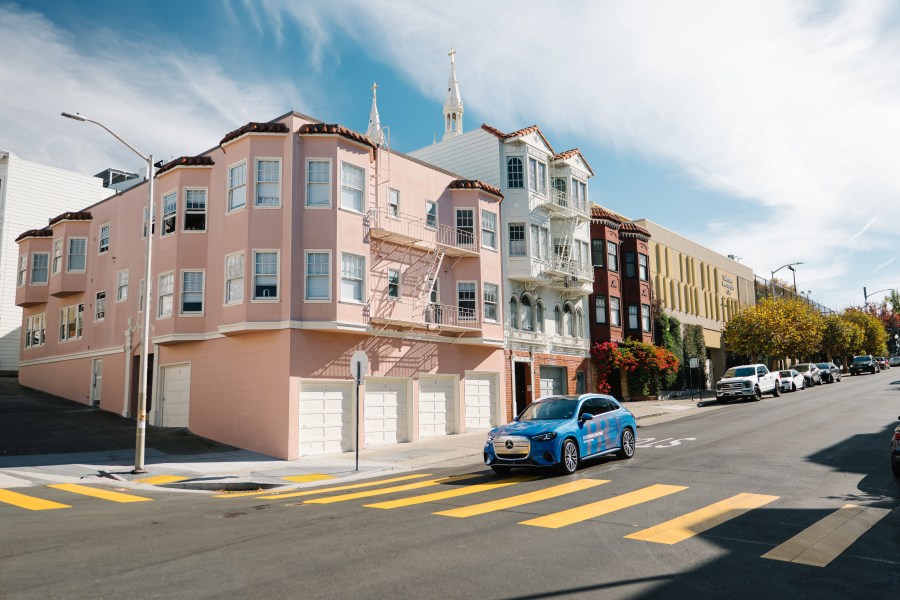
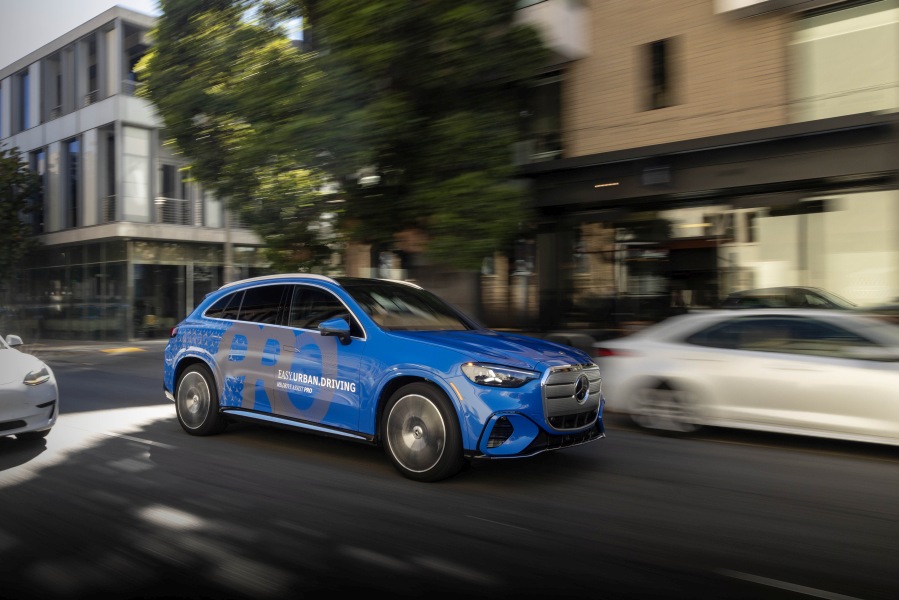
The later feature, MB.DRIVE ASSIST PRO, goes beyond highway lane keeping. With navigation active, the driver can press a steering-wheel button to have the car follow the programmed route in an assisted mode. The described functions include changing lanes, moving into the appropriate lane, negotiating turns at intersections, and accelerating or braking at traffic lights.
That mix of functions makes route context central to the system. A lane change can serve a specific upcoming turn, for example, rather than simply respond to the traffic immediately around the car. The vehicle is also expected to manage speed changes around traffic lights. Mercedes has not provided further operating limits or detailed conditions for those manoeuvres, so the announced capabilities describe the intended scope rather than every situation in which they will be available.
Mercedes says MB.DRIVE ASSIST PRO uses ten cameras, five radar sensors and 12 ultrasonic sensors, alongside advanced computing hardware. These sensors provide different kinds of information about the vehicle’s surroundings, while the navigation route gives the system a destination and path to follow. The source material does not specify how each sensor contributes to an individual manoeuvre, so the hardware count alone doesn’t establish which functions will work under particular road or weather conditions.
Availability spans new and compatible vehicles
The Hands-Free Assistant and Proactive Lane Change Assistant are planned for Germany and several US states by the end of 2026. Mercedes expects the features to reach the rest of the United States during 2027. The initial availability is therefore regional, with a broader US rollout to follow.
MB.DRIVE ASSIST PRO is planned for Germany and the United States in the first half of 2027. Mercedes names the electric CLA, electric C-Class, GLE, GLS and facelifted S-Class among the model year 2027 vehicles set to receive it across all powertrain versions. Additional models are expected to follow, though none are specified here.
Some compatible Mercedes vehicles already on the market may also gain MB.DRIVE ASSIST PRO through a paid over-the-air software update. That opens the possibility of adding the feature after a vehicle has been delivered, but compatibility will determine which existing cars qualify. Mercedes says China already has the system operating on the new CLA, giving the route-guided function an existing deployment before its planned arrival in Germany and the United States.
For owners, the practical milestones are the rollout dates, the list of eligible models and the still-unspecified rules for driver confirmation and system use. The announced functions suggest a wider role for route-aware assistance, while the Level 2+ classification keeps the driver’s attention and readiness at the centre of the drive.