Magnus Walker Drives Mercedes-Benz’s Four-Rotor C111 Wankel Prototype
A missed flight put Magnus Walker beside Mercedes’ 350bhp four-rotor C111 on the Pebble Beach Tour, then behind the wheel at Salinas.
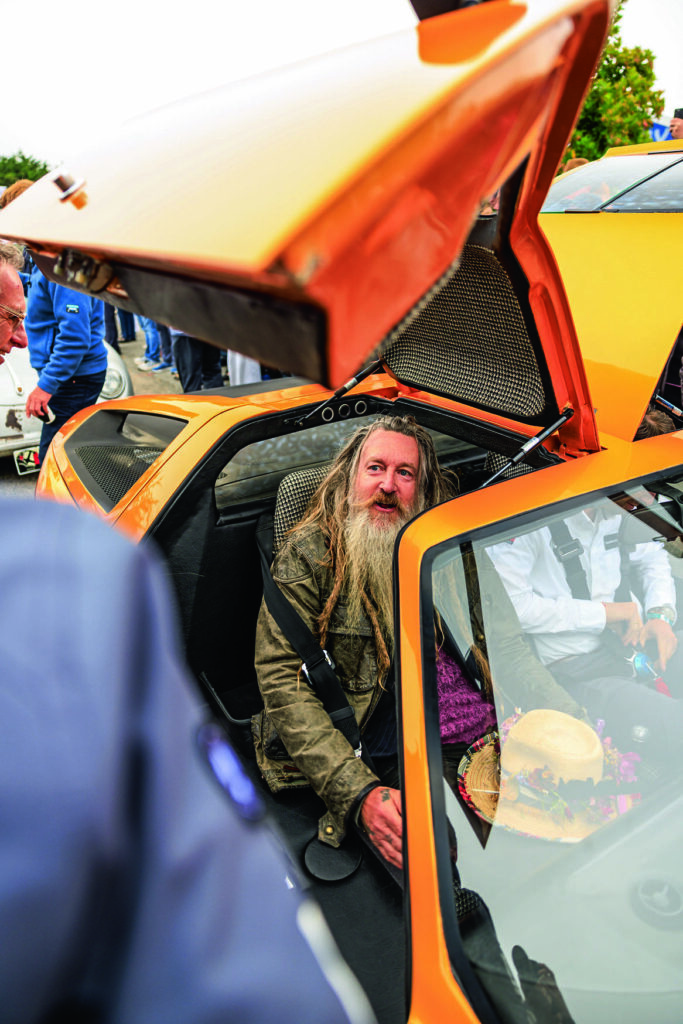
The four-rotor Mercedes-Benz C111 Walker drove at Pebble Beach had barely been used since 1975. Its return to the road came after a full factory restoration, making a 70-mile coastal tour and a short drive at Salinas Airport a rare chance to feel what the experimental Wankel car was built to do.
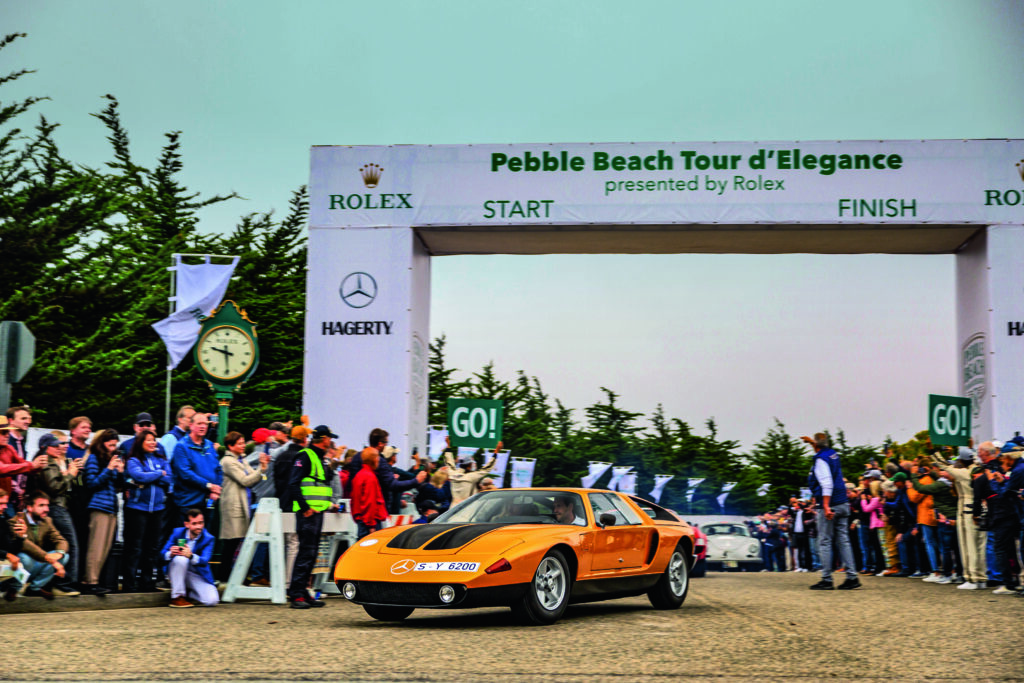
The chance began with a missed flight. On a cold, foggy morning in August 2024, Walker spotted his friend Michael from the Mercedes-Benz Museum beside the orange C111 at the start of the Pebble Beach Tour d’Elegance. The planned passenger hadn’t arrived, and Michael offered Walker the seat. With less than a minute before the 9:00am start, he climbed in.
A prototype built to test ideas
Mercedes-Benz introduced the C111 at the 1969 Frankfurt Motor Show. The company built 17 prototypes across several body styles, designated I, II, III and IV. The wedge-shaped, mid-engined cars explored propulsion systems and lightweight components; they weren’t intended for series production.
The earlier C111s used three- and four-rotor Wankel engines. Their compact layout, lighter weight and smooth, one-directional rotation offered a different character from a conventional reciprocating engine. Mercedes also built at least one C111-II with a V8. Later versions included the silver turbodiesel C111-III and V8-powered C111-IV, both developed as high-speed record cars at Nardò.
The C111 also revived the gullwing silhouette last seen on Mercedes’ W 194 race cars and W 198/300 SL. Today, 13 of the 15 C111-IIs originally built are in the Mercedes-Benz collection. The four-rotor car Walker rode in was the only running example of its type after its factory restoration.
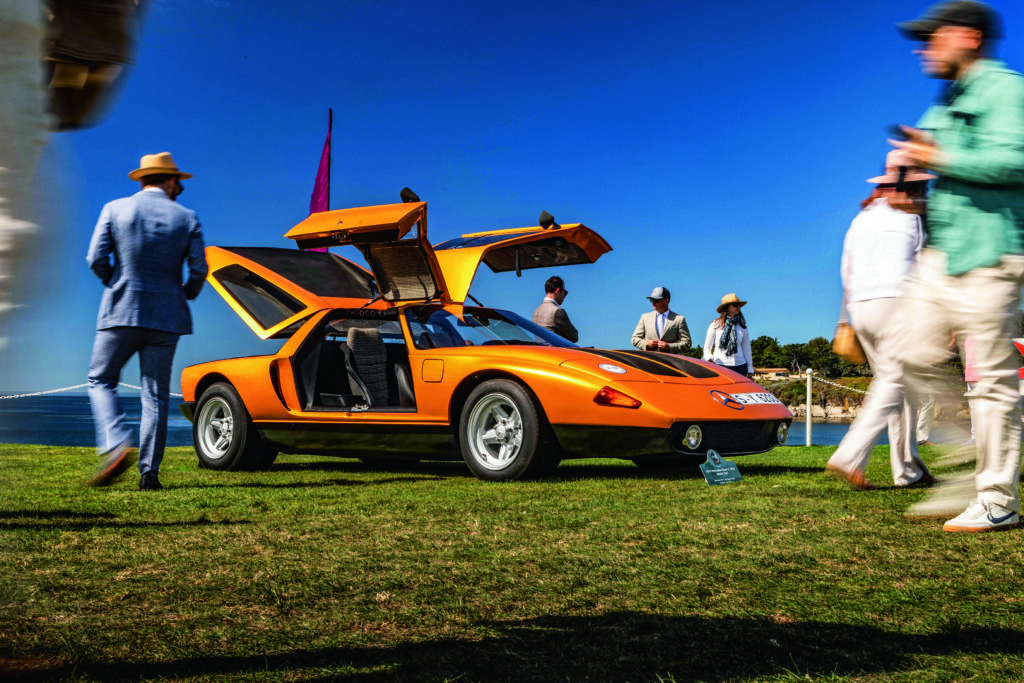
Two C111s, two engine characters
Walker had driven a C111 before, in 2022, when he spent about 15 minutes in the then-only running car. That example had been restored in 2014 with a 3.5-litre V8 rated at 250bhp. The V8 was chosen as the most reliable and user-friendly configuration; the Wankel engines had proved more delicate.
His first stint was a brief circuit near Long Beach Airport, shortly before the car went onto a trailer for Pebble Beach. The cabin was cramped and hot, with limited headroom, heavy doors and vinyl trim that had spent the day in temperatures above 90 degrees. Still, the V8’s torque, light clutch and easy-shifting dogleg five-speed made the car approachable. Walker was left wanting another turn.
On the Tour d’Elegance, he rode with Patrik from Mercedes for roughly 70 miles and two hours, following a police escort at under 30mph. The 350bhp four-rotor engine rarely exceeded 3,000rpm, far below its 8,000rpm red line. That pace gave Walker a passenger’s view of the car’s composure: it didn’t overheat or stall as the route crossed Bixby Bridge, with spectators lining the road and coastal mist drifting around the cars.
The rotary’s high-revving nature and modest low-speed torque mattered little at tour pace. Cabin ventilation was another story. The C111’s small pivot windows offered little relief, and Walker regretted keeping his jacket and jumper on as the cabin heated up.
Learning the rotary’s rhythm
The next day, Walker got behind the wheel on the runway at Salinas Airport. A Mercedes technician riding beside him explained the basic rule: don’t slip the clutch, and use enough throttle to avoid a stall without overdoing it.
The fixed-back vinyl seats felt unmistakably vintage once the gullwing doors were open. The large, standard-looking Mercedes steering wheel seemed conservative against the car’s futuristic body, while the dogleg five-speed lever sat close to hand. Legroom was good; rear visibility was poor. Closing a door took a firm pull on its vinyl strap and a careful tilt of the head—Walker’s first hurried attempt earned him a knock on the skull.
The 2.4-litre mechanical fuel-injection rotary fired with a turn of the key. A light throttle blip revealed how readily it climbed through the revs. The clutch had a manageable weight and a short, smooth movement to the bite point. First gear sat left and down in the dogleg pattern, but Walker pulled away cleanly, without stalling or slipping the clutch.
He reached fourth gear on the first circuit and fifth on the next. The lesson arrived quickly: short-shifting left the engine out of its useful range. The C111 wanted revs, with power delivered best by shifting high in the band; there wasn’t much torque low down to compensate. Steering felt light and direct, the brakes firm and effective, and the old tyres struggled to provide much grip. Heel-and-toe downshifts were possible, though the pedal layout and large steering wheel made them a satisfying challenge.
A road car that never was
Walker found the V8 and Wankel C111s similarly comfortable and unintimidating on their controlled drives. The clearest difference was the V8’s stronger low-speed torque. The rotary demanded a higher-rev approach, but both cars offered an unusual mix of engagement and ease of use for a 1970s supercar.
That everyday friendliness makes the C111’s unrealised road-car potential easy to imagine. Walker wishes it had reached production, carrying the 300 SL’s sense of occasion into Mercedes’ wedge-shaped vision of the 1970s. The four-rotor car’s next public outing is set for February 3, 2027, when it is due to be offered at RM Sotheby’s Paris auction—the first C111 Mercedes-Benz has sold publicly. Proceeds are earmarked for modernising the Mercedes-Benz Museum in Stuttgart, and the company has said no other C111 will be sold for at least 25 years.


