Goal Zero Boulder 100 Solar Briefcase: 100 Watts of Portable Camp Power
The Boulder 100 folds two tempered-glass solar panels into a 25.9 lb package, with a kickstand and an 8mm output for off-grid charging.
For a campsite or remote trail stop, the Goal Zero Boulder 100 packs a pair of rigid solar panels into a carryable, folding unit. Its rated output reaches 100 watts, giving overlanders a way to generate power away from a mains connection without hauling a full-size fixed panel. At 25.9 lb, it’s portable enough to move between a vehicle and a sunny patch of ground, though it’s a substantial piece of kit rather than a casual daypack accessory.

Built to travel, then set toward the sun
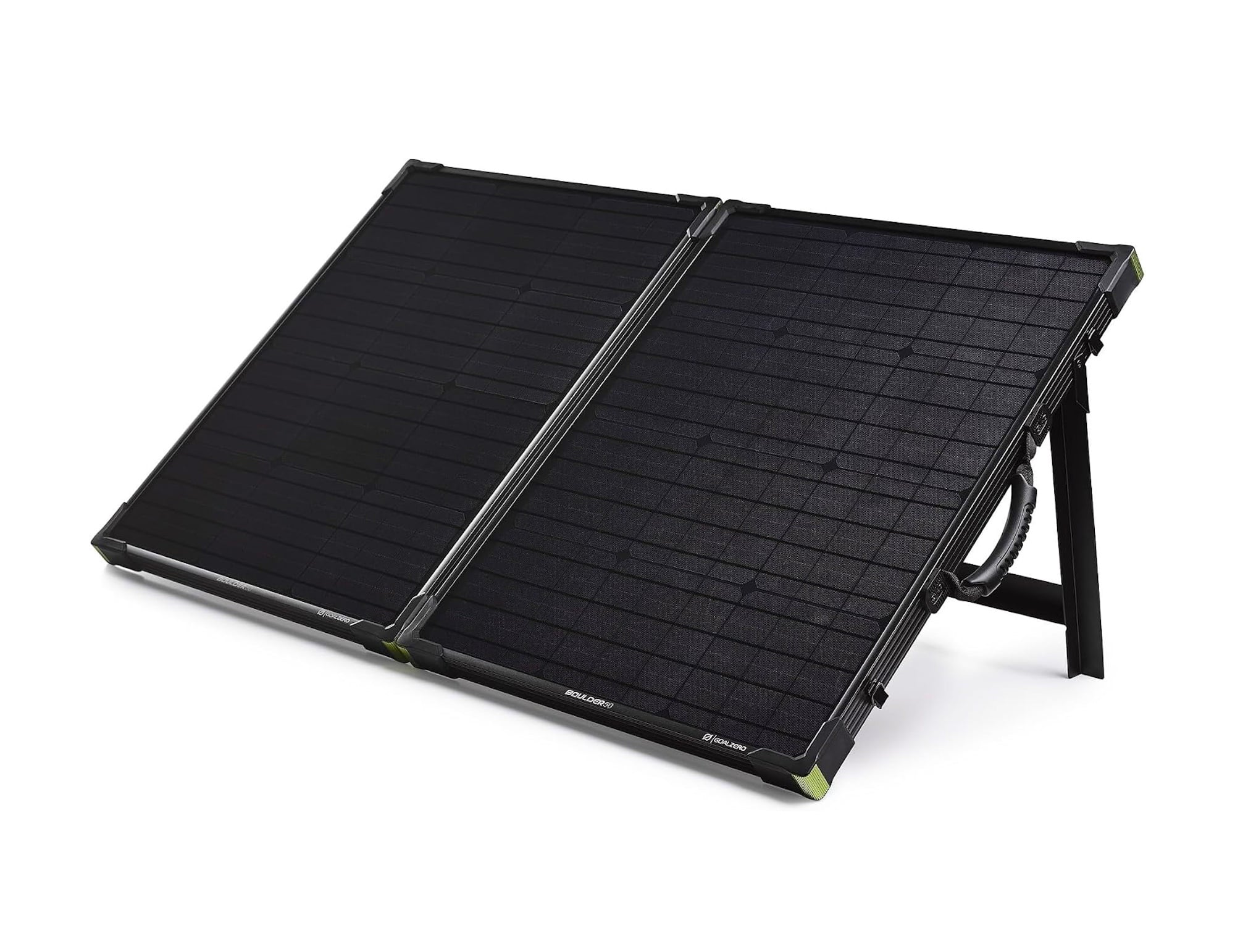
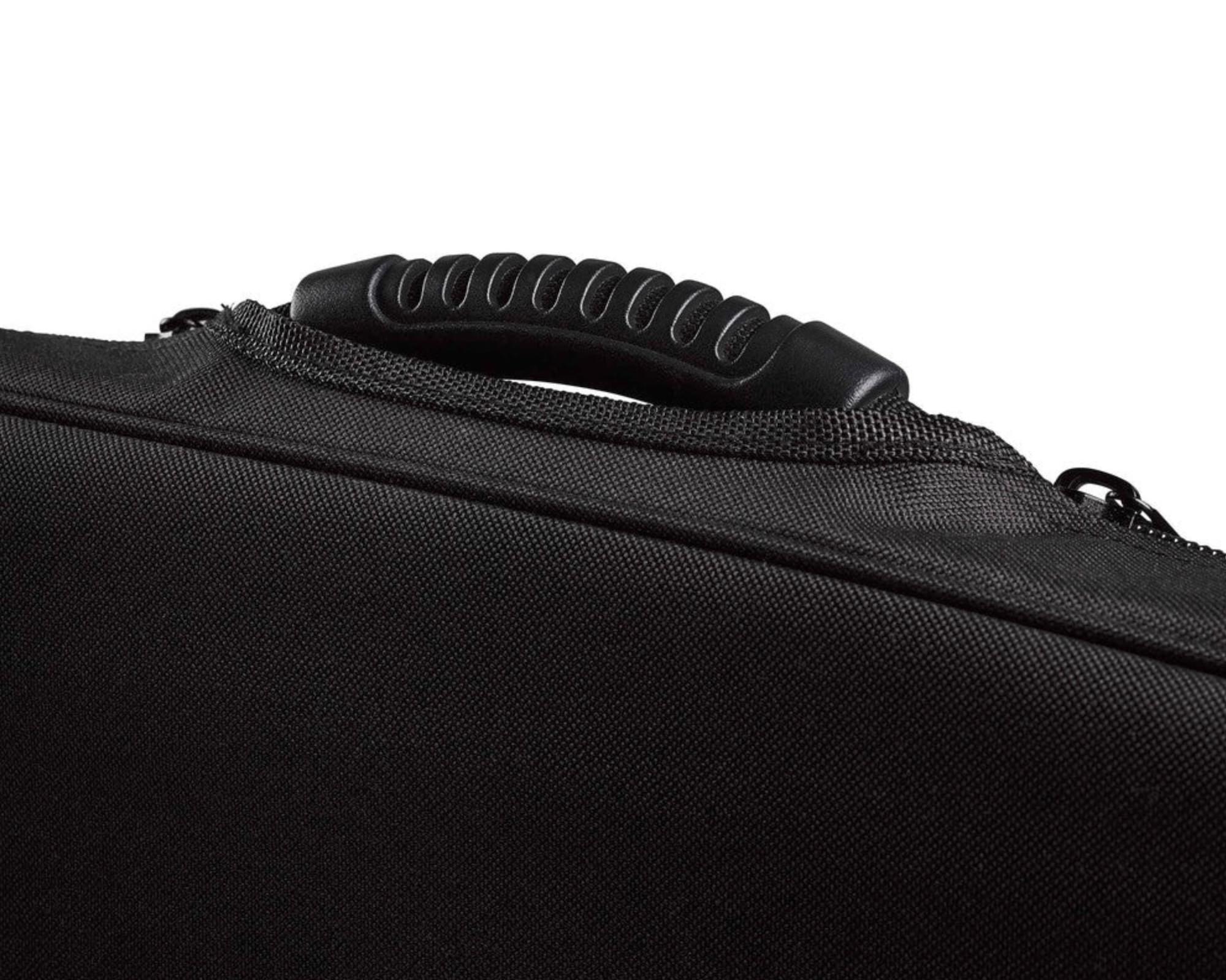
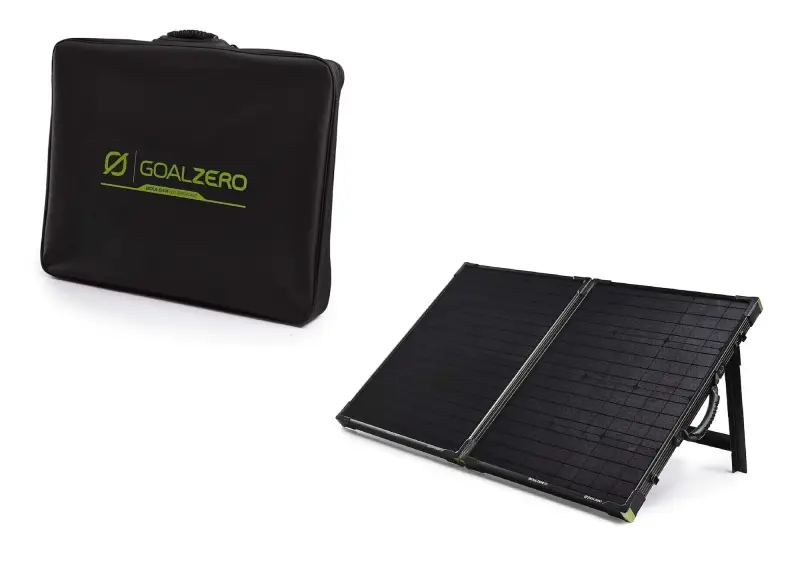
The Boulder 100 folds into a 27-by-22-inch rectangle, with an integrated handle and a canvas carry bag for transport. Open it up and a rear kickstand props the panels at an angle. That adjustable position matters in camp: a panel laid flat may be convenient, but aiming it toward the sun can help it collect more light as conditions change.
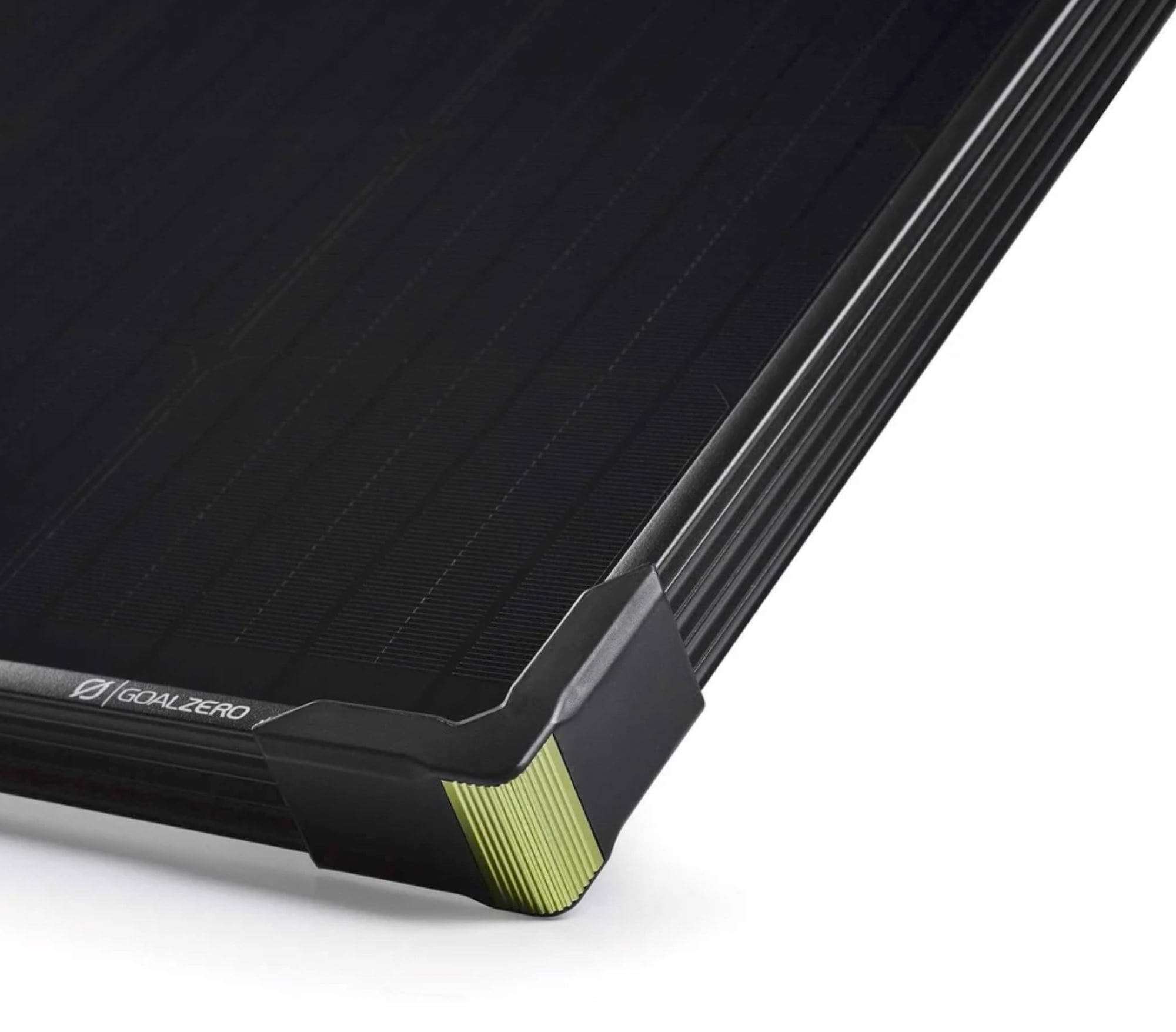
Its two panels are rated at 50 watts apiece. Monocrystalline solar cells sit beneath tempered glass, held in aluminum frames with added corner protection. That construction gives the unit the firm, glass-fronted feel of a conventional rigid panel while allowing both halves to fold together for storage in a vehicle trunk.
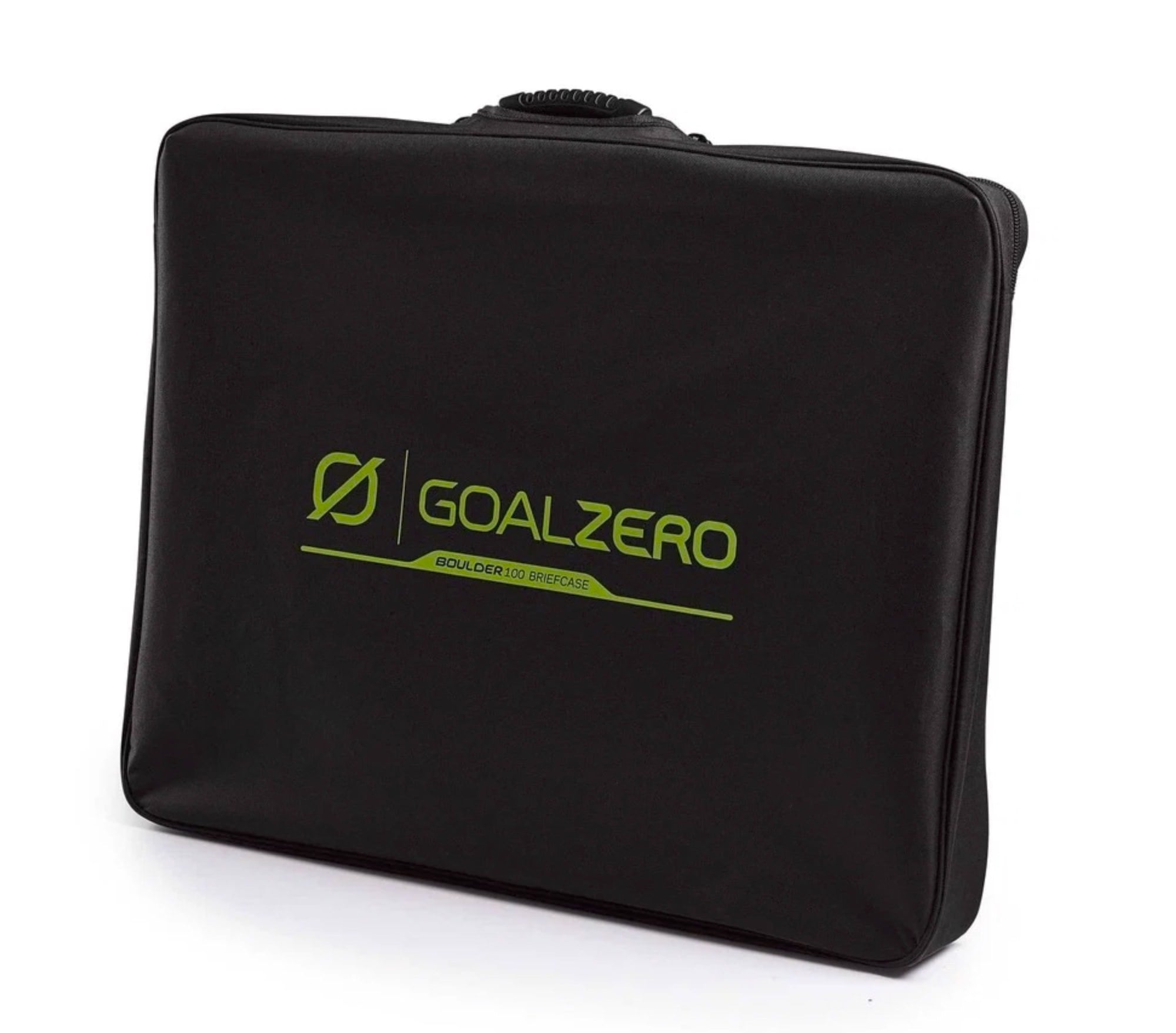
The Boulder 100 folds into a briefcase-sized package and uses a rear kickstand to angle its panels toward the sun.
Power exits through Goal Zero’s blue 8mm solar port, rated for up to 7 amps and 100 watts. That connection is the key compatibility detail for anyone planning a camp power setup: the panel needs a suitable Goal Zero connection or compatible equipment to make use of its output. The Boulder 100 is a solar generator component, not a battery pack, so storing energy for use after sunset depends on pairing it with a separate power station or other compatible battery system.
What 100 watts means at camp
The rated figure describes the panel’s maximum output under suitable conditions; actual generation depends on sunlight, panel angle and shading. A portable setup also asks for a little camp routine: place the briefcase where it gets clear sun, adjust the kickstand as the light moves, and keep trees, vehicle doors or other gear from casting shadows across the cells.

For an overlanding vehicle, the folding format is practical because it can ride flat in the cargo area and be set out after reaching camp. The 27-by-22-inch folded size and 25.9 lb weight are useful planning numbers when deciding where it fits alongside recovery gear, cooking equipment and other essentials. Its rigid panels and protective frames suit vehicle-based travel, where equipment gets moved and stowed repeatedly.
The Boulder 100 won’t replace a charging plan by itself. Buyers should check that their power station accepts the 8mm solar connection and can work with the panel’s stated output. The source material doesn’t specify charging times or a battery capacity, so those figures depend on the paired storage equipment and conditions in the field.
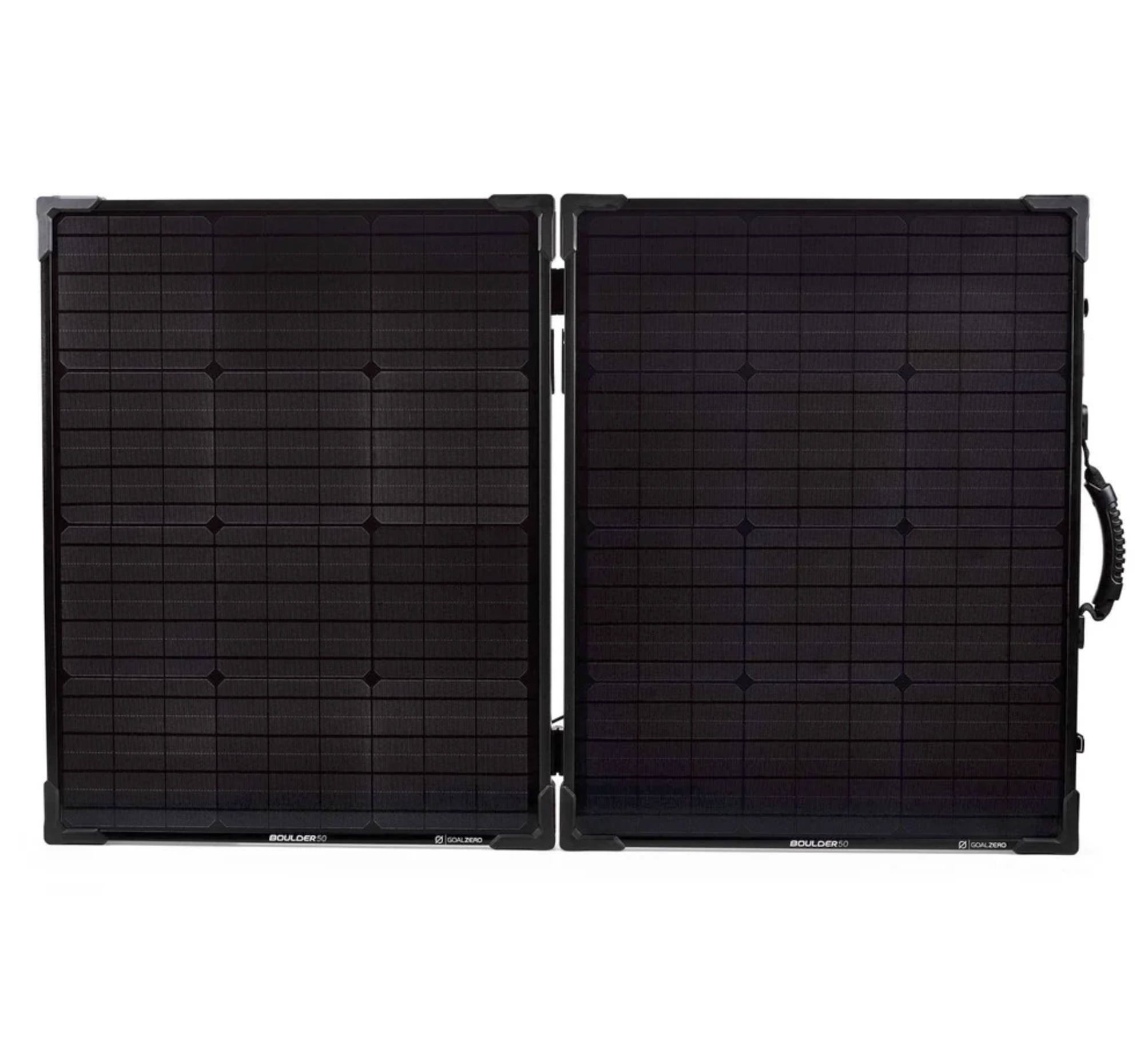
Each panel is rated at 50 watts, for a combined output rating of up to 100 watts.
A portable-power company with field roots
Goal Zero’s beginnings trace to 2007, when Robert Workman founded TIFIE Humanitarian. Workman had owned Utah’s Provo Craft & Novelty for 30 years and set up the nonprofit to help villagers in the Democratic Republic of the Congo run small businesses. His team needed a way to charge equipment in the field, but a 90-watt solar panel he priced in Kinshasa cost $2,000 USD.
Workman responded by having a compact system built. Called the GoBe, the first version paired a battery, a solar panel and an LED light. It was being tested in Congolese villages by 2008; a full day in the sun could provide hours of light at night and power for small devices. That basic pairing of portable generation and stored energy remains central to how off-grid solar kits serve campers today.
Goal Zero launched as a Utah-based company in mid-2009 with the Escape 150, a 13 lb power pack. Portable Nomad solar panels followed in 2011. In 2012, the company introduced the 103 lb Yeti 1250 power station, which it said sold out within a day and a half. The business ranked ninth on the Inc. 500 list in 2013, reporting a three-year growth rate of 16,981%.
NRG Energy bought Goal Zero in 2014, and lithium-battery Yeti power stations arrived in 2017. BioLite acquired the company from NRG in April 2025. Goal Zero continues to operate from Draper, Utah, with products shipping around the world.
Details for the vehicle kit
The Boulder 100’s appeal is its straightforward combination of folding storage, rigid glass panels and a built-in stand. Its 100-watt rating makes the job clear, while the 8mm port and 7-amp maximum provide concrete figures for checking a power station before heading out. At 25.9 lb, it asks for cargo space and a deliberate setup spot, but it avoids the permanent installation required by a roof-mounted panel.
Goal Zero lists a two-year warranty and a 30-day money-back guarantee with the product. For a vehicle-based camp, the practical checklist is simple: make room for the folded 27-by-22-inch case, confirm the power station connection, then give the panels a clear, well-positioned patch of sun. That’s the kind of portable setup that can keep a remote stop powered without turning the vehicle into a permanent solar project.