1981 Rolls-Royce Corniche I Split-Window Coupé Reimagined by Jay Ahr
Jay Ahr’s RR12 pairs a reworked split-window body and tailored cabin with a restored 6.75-liter V8 and three-speed automatic.
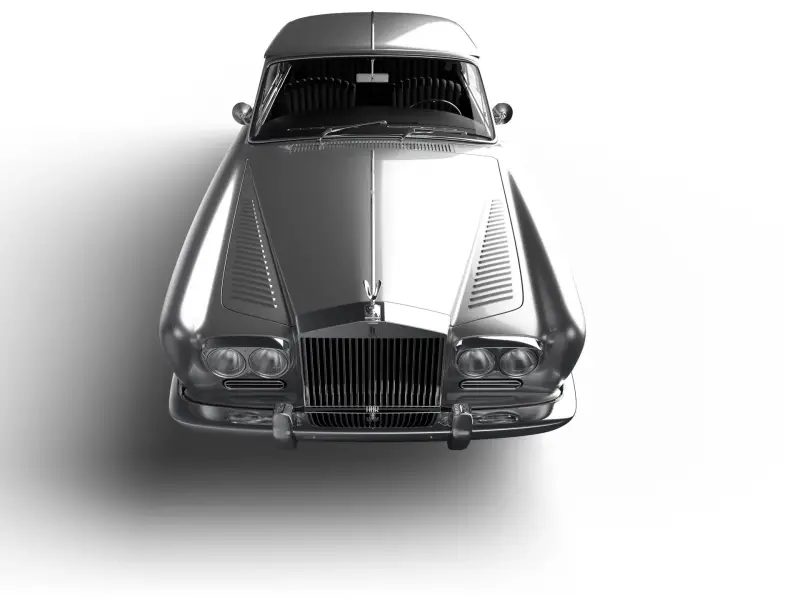
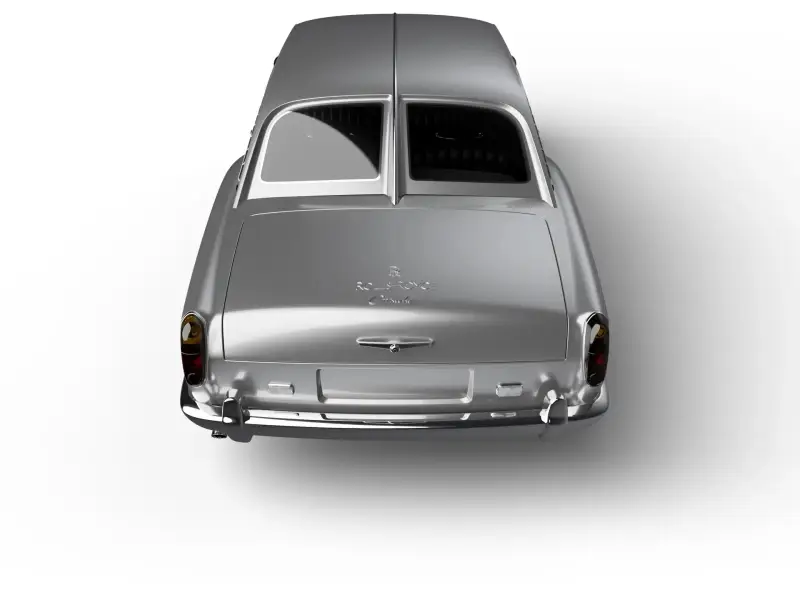
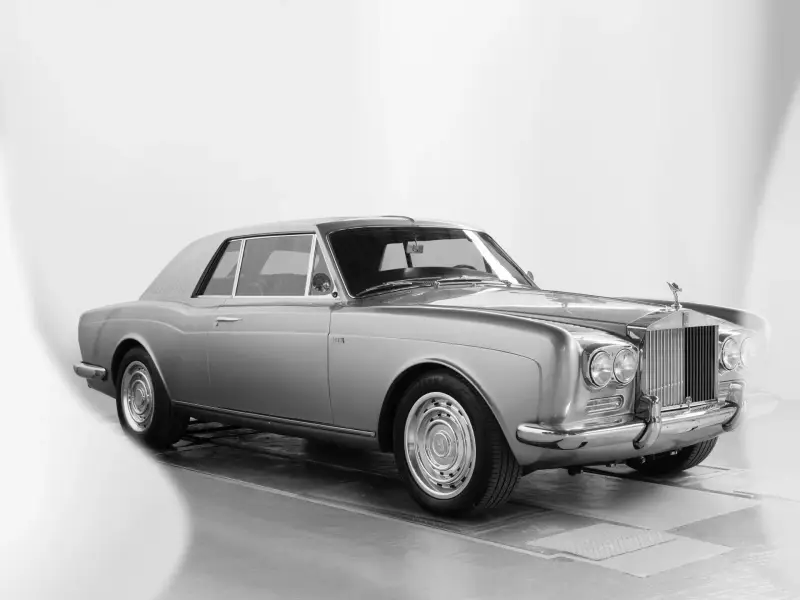
RR12 takes the 1981 Rolls-Royce Corniche I Coupé and gives its familiar grand-touring shape a sharply individual roofline. The split rear window is the defining change, but this Jay Ahr build reaches well beyond a one-off styling exercise: its body, cabin and mechanical assemblies were all part of an extensive transformation. RM Sotheby’s is offering the car for sale.
A Corniche with a new design vocabulary
Built from a North American-specification Corniche I Coupé, RR12 is the first automotive application of Belgian designer Jonathan Riss’s Jay Ahr philosophy. The work was carried out through Ahrsenal, an Atelier Mécanique established near Riss’s home in Hong Kong. Its team brings together artisans, engineers, mechanics, historians and designers to reinterpret significant cars through restoration and bespoke modification.
The stated process takes more than a year for each transformation, with work reaching from major mechanical assemblies to small finishing details. That matters here because RR12’s appeal depends on the whole car holding together as a design. A dramatic roof modification can easily make a familiar grand tourer feel like a collection of unrelated ideas. The stated aim was instead to retain the Corniche’s recognizable character while giving it a different visual presence and a more tailored finish.
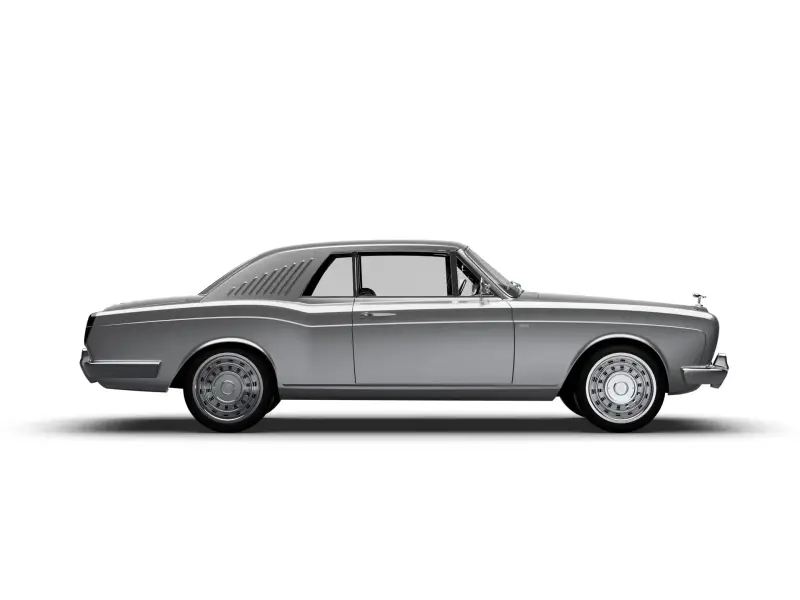
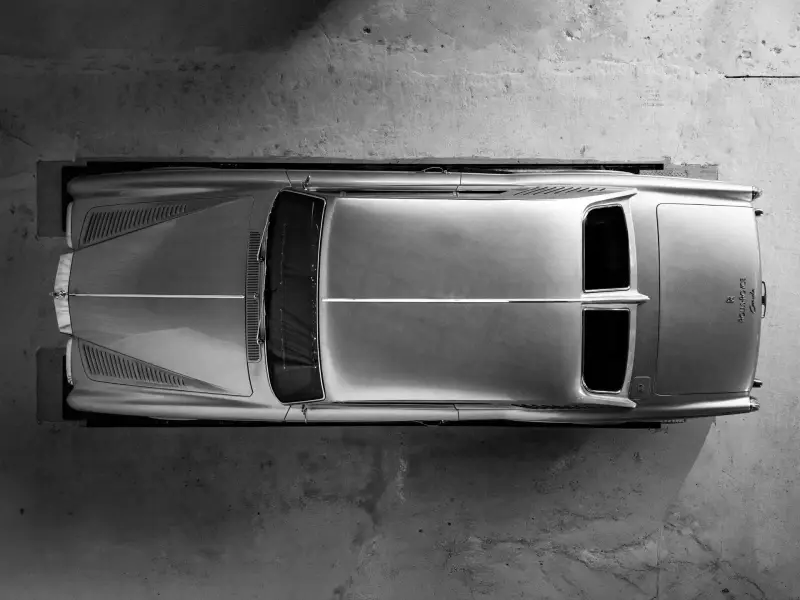
The custom-engineered split-window roof makes the biggest break with the standard coupé. It changes the car’s rear profile while leaving its broad British grand-touring proportions legible. The result asks the viewer to look twice: the Corniche remains recognizable, yet the roof treatment gives RR12 an identity of its own.
Metalwork and finish
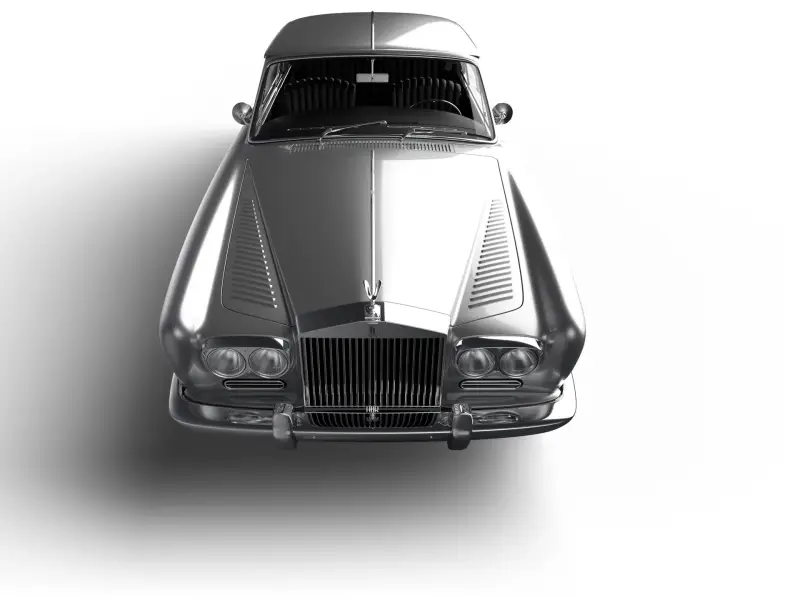
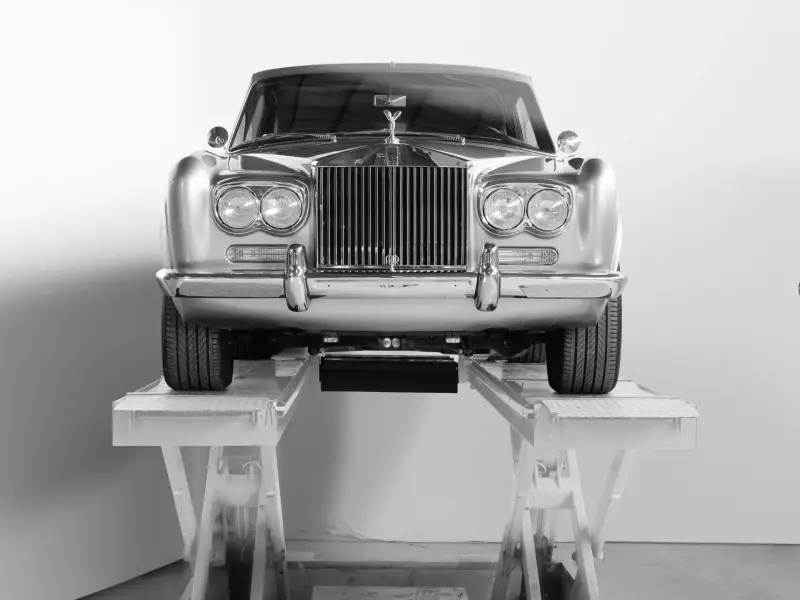
Metallic silver gives the body a clean surface on which the altered forms and detailing can read clearly. The bonnet has been reimagined with distinctive louvers, a motif repeated across the rear three-quarter panels. Integrated side indicators and parking lights, redesigned mirrors and bespoke exterior branding round out the changes.
Those details do more than add visual punctuation. Repeating the louvers links the bonnet to the rear bodywork, while revised lighting and mirrors let the altered design carry through smaller components. The layered paint finish is described as emphasizing depth and surface definition, putting attention on the quality of the bodywork as well as its shape. For a car whose roofline departs so visibly from the factory form, the transitions between panels and the consistency of the finish are central to whether the redesign feels considered.
A cabin shaped around the driver
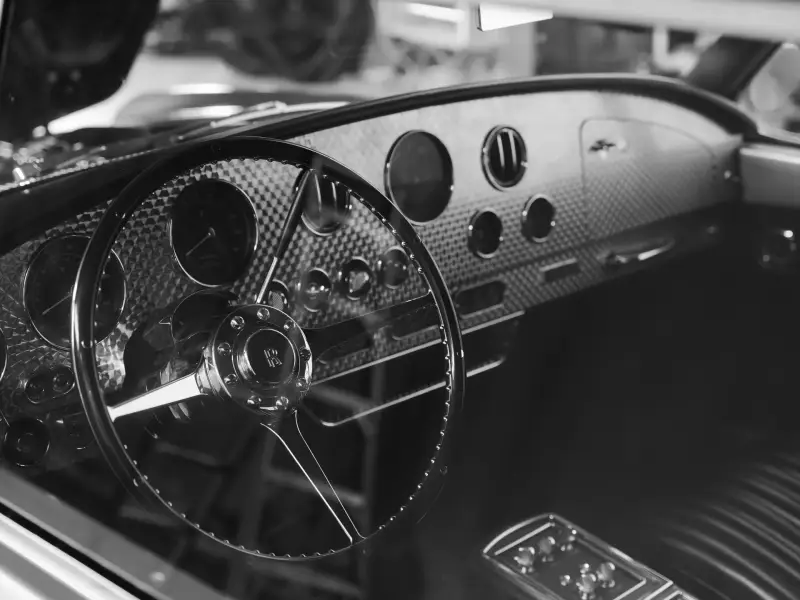
Inside, Jay Ahr calls the design concept “Cockpit Act III.” Black leather covers the cabin, while redesigned seats use lighter, more sculptural forms. Modernized instruments replace the original gauges, shifting the dashboard toward a more architectural, driver-focused presentation.
The luggage compartment receives the same attention as the seating area. It has full leather lining and vertical aluminum protective bars, with a Jay Ahr leather imprint embroidered on the trunk lid. That treatment extends the custom work into a space often left visually secondary, and makes the cabin feel like a coordinated interior rather than a set of isolated upgrades.
The design draws on influential twentieth-century furniture and interior designers, connecting the car to collectible design as well as automotive coachwork. Here’s the thing: the cabin changes are most persuasive when considered alongside the exterior. Both rework the Corniche’s visual language through shape, material and finish, while keeping the original model as the foundation.
Restored V8, familiar transmission
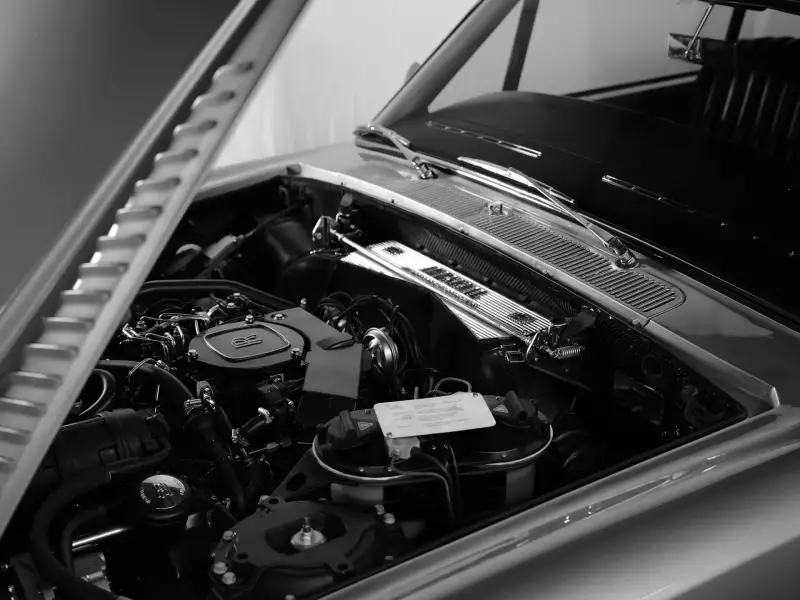
Under the bonnet sits a correct-type 6.75-liter Rolls-Royce V8, estimated to produce approximately 250 horsepower. It’s paired with a three-speed automatic transmission. The mechanical components have been comprehensively restored and upgraded with the stated goals of improving reliability and performance while preserving the Corniche’s original mechanical character.
No further specifications are given for those upgrades, so the broad description leaves practical questions for a prospective owner: which components were renewed, what was changed, and how the work is documented. Those details matter on a bespoke car because the quality of the finished surfaces is only part of ownership; service records and a clear account of the mechanical work help explain what has been done and what may need attention later.
RR12 is currently in Los Angeles. Its combination of a familiar 6.75-liter V8 and three-speed automatic with extensively altered bodywork and a reworked interior makes it a distinct take on the Corniche I. The lasting test will be how the design and restoration stand up in use: the split-window profile catches the eye, while the quality of the underlying work will shape the experience of owning and driving it.


