1973 Porsche 911 Carrera RS Touring: First-Series 2.7, Matching Numbers
Chassis 9113600312 pairs first-series Carrera RS credentials with its matching 2.7-liter flat-six, 915 gearbox and documented bare-metal restoration.
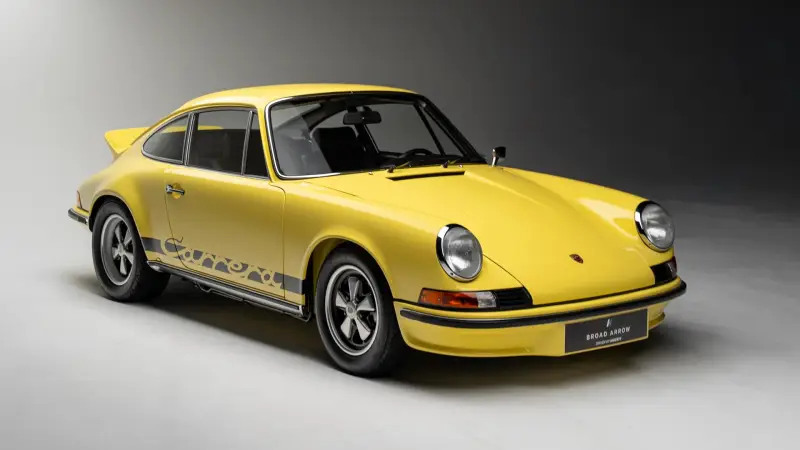
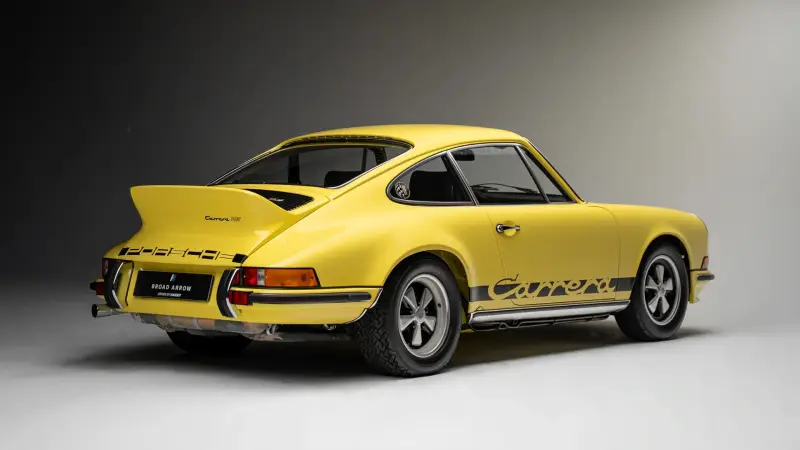
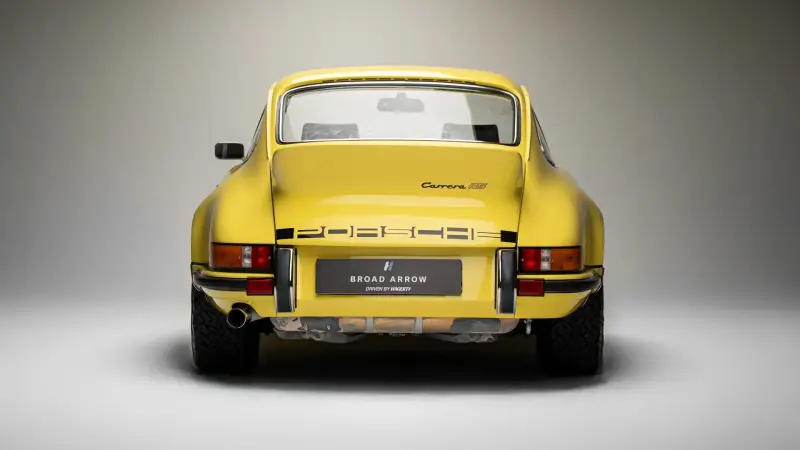
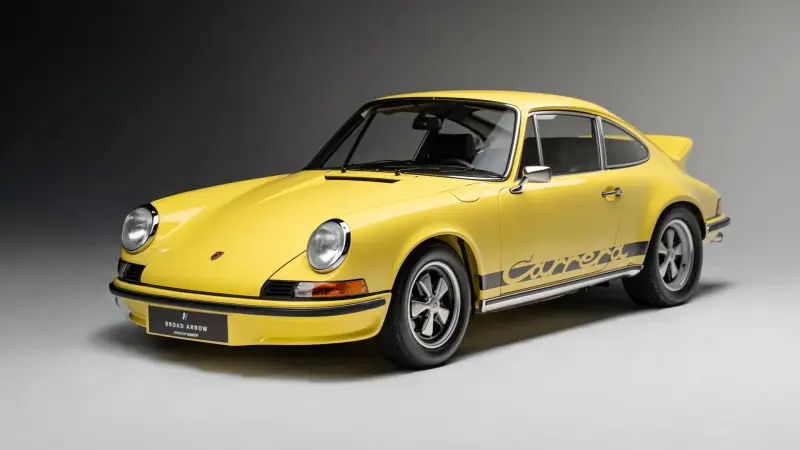
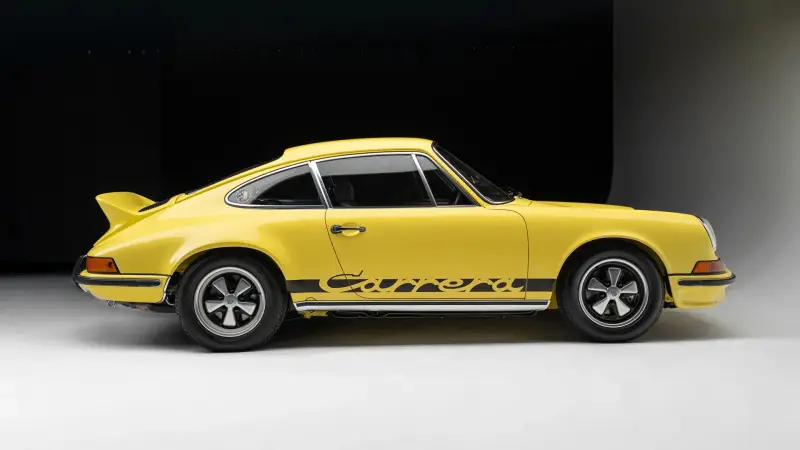
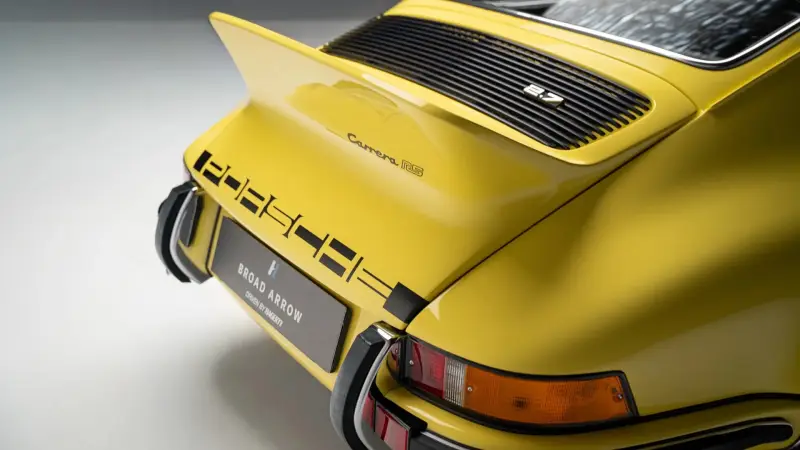
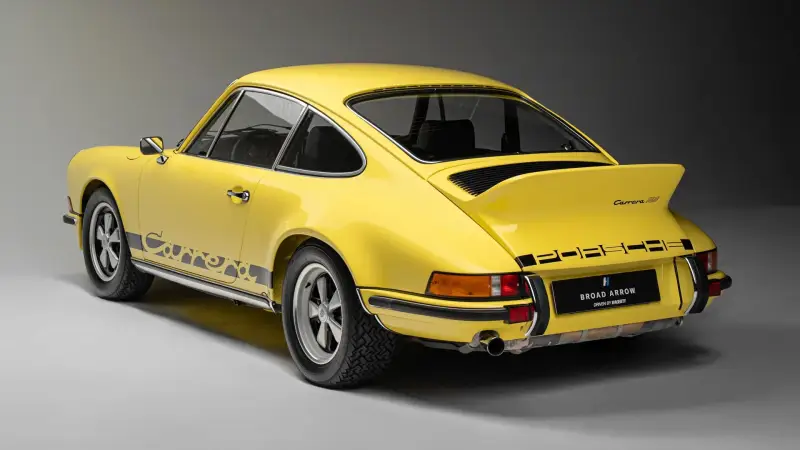
Chassis 9113600312 brings together the details that make an early Carrera RS 2.7 especially compelling: first-series construction, matching-numbers engine and gearbox, a documented German history, and a restoration that returned the car to its original Light Yellow finish. The 1973 911 Carrera RS Touring is offered through Broad Arrow Private Sales, with its identity and restoration supported by period records, photographs and Porsche documentation.
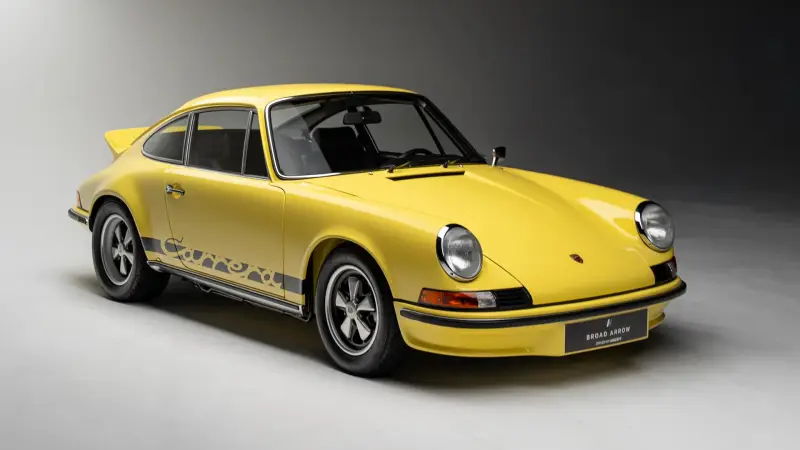
Built for the RS’s racing role
Porsche introduced the Carrera RS 2.7 in 1972 as a foundation for international GT competition. The initial production target was 500 cars, the number required for FIA Group 4 homologation. Cars were first completed in lightweight RSH form, after which customers could choose the pared-back M471 Sport or the more road-focused M472 Touring specification. Demand carried production beyond that initial target, to 1,580 examples.
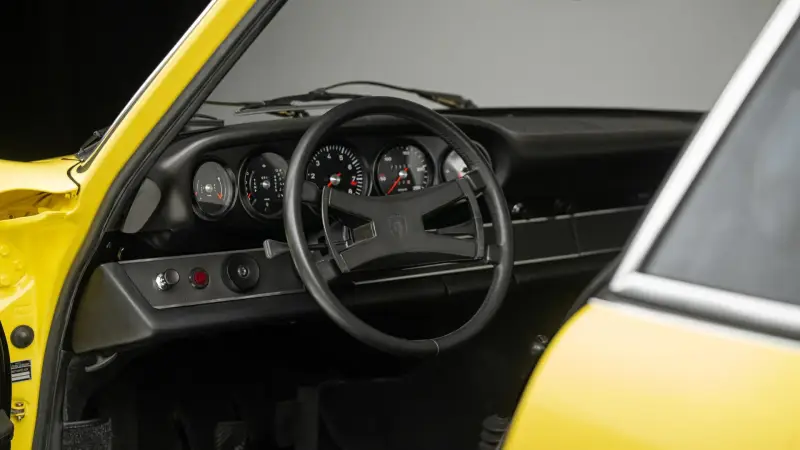
The Touring specification gives this RS a distinct balance: it retains the model’s competition-minded origins while offering a more usable road-car cabin than the Sport version. That context matters when assessing chassis 0312. Its significance rests on its early production identity and mechanical provenance, while its Touring configuration reflects the road-going side of the RS formula.
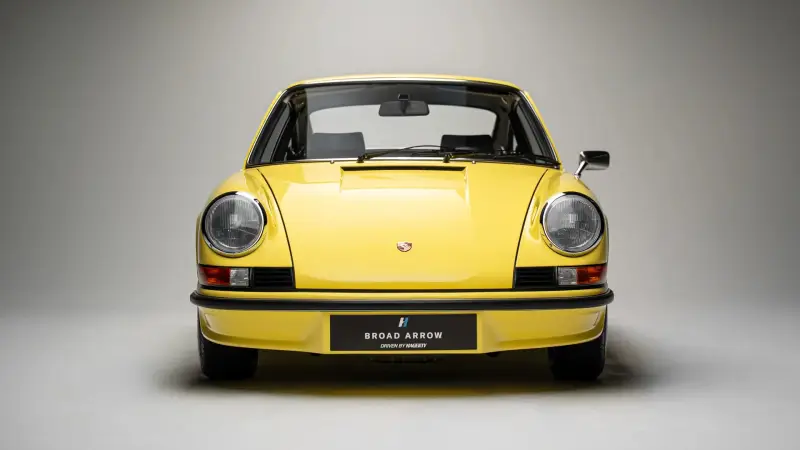
Early construction and factory specification
Completed on January 1, 1973, chassis 0312 belongs to the first production series. Its construction included 0.8 mm steel body panels, about 9.5 kilograms lighter than standard 911 bodywork, along with a forged aluminum front axle subframe member and further chassis and suspension reinforcements. These details show how Porsche addressed weight and structure in a car intended to serve as a competition base; they’re part of the car’s specification, not simply features added for appearance.
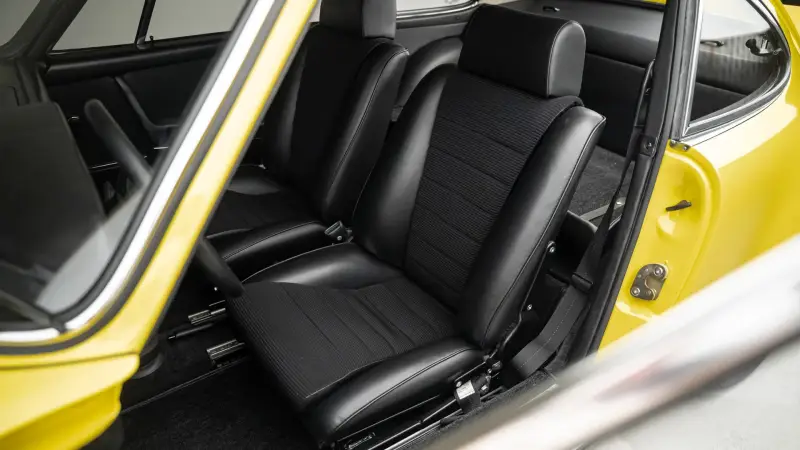
The car was delivered through Porsche Gottfried Schultz in Ratingen-Lintorf, Germany, in Light Yellow over Black leatherette. Its factory options included corduroy Recaro sport seats and a limited-slip differential. That differential is a meaningful part of the RS’s driving character: it helps manage power across the rear wheels under acceleration, especially when grip differs from side to side. The available information identifies the option but doesn’t give a gear ratio or further setup details.
A traceable history and a return to Light Yellow
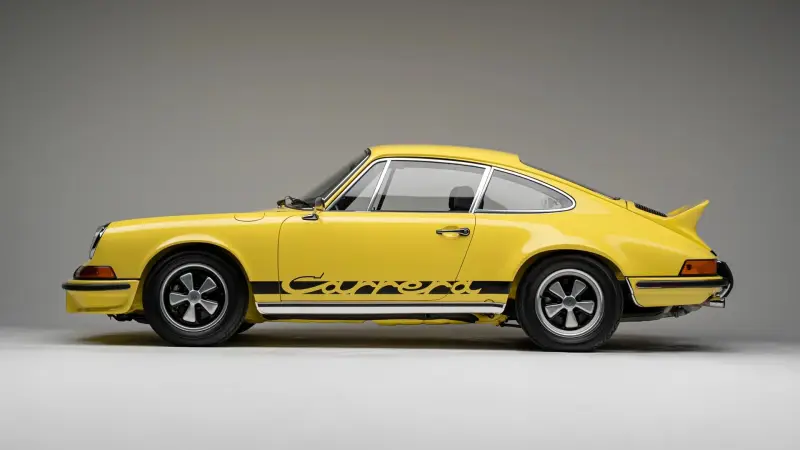
Chassis 0312’s German ownership record reaches back to its first delivery. The file includes the original Fahrzeugbrief and historical sales documentation, giving the car a paper trail that can be followed across ownership changes. During the mid-1970s, it was altered to resemble the later 1974 RS 3.0 and repainted Light Blue Metallic. That period of change is part of the car’s history, and the subsequent restoration brought its appearance back to the factory color.
The current restoration project began after the car was acquired in 2012. Over five years, specialist Stefan Roitmayer guided a photo-documented rebuild. The body was stripped to bare metal, repaired where needed and refinished in Light Yellow. The mechanical, electrical, suspension and interior components were comprehensively restored, with numerous new-old-stock parts used to support an authentic finish. The work was completed in 2016.
A bare-metal restoration can make a substantial difference to an older car’s condition and presentation, but the supporting record is central to understanding what was done. Here, photographs document the process, including the chassis and production-number stampings before restoration. That evidence helps connect the finished car to its earlier state and supports the continuity of its identity.
Matching mechanicals and documentation
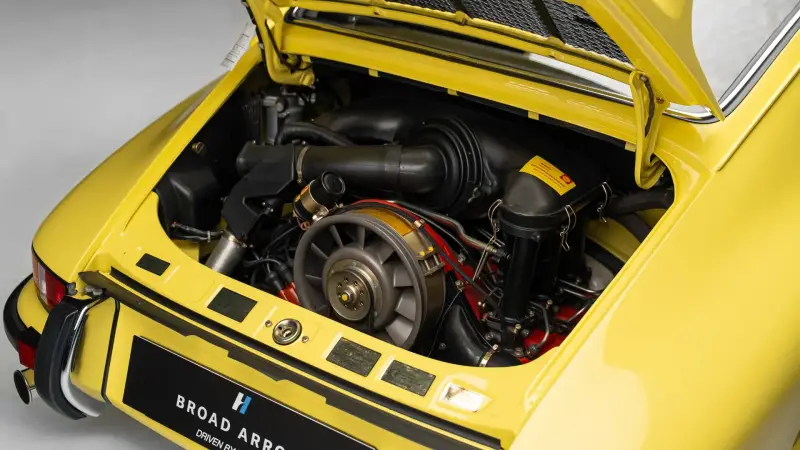
The car retains its matching-numbers 2.7-liter 911/83 flat-six and 915/08 five-speed manual transmission. Keeping the engine and gearbox associated with the chassis is a key part of its mechanical provenance. The supplied details don’t state horsepower, torque, mileage or internal engine work, so the significance here is the documented identity of the major components rather than a claimed performance figure.
A Porsche-issued Zertifikat and documentation in Carrera RS Das Buch add to the history file. Together with the original Fahrzeugbrief, sales records and restoration photographs, these materials give a prospective caretaker several ways to review the car’s identity, factory specification and restoration. The combination of records and surviving mechanicals is what gives chassis 0312 its particular depth: its early RS status is supported by more than its badges and restored finish.
This Carrera RS 2.7 Touring is scheduled to be presented at Techno Classica Salon 2026 at Messe Dortmund. Its appeal comes from the full picture: first-series construction, a factory-recorded Touring specification, matching 911/83 and 915/08 units, and a documented restoration back to Light Yellow. For enthusiasts weighing an RS by both its road-car character and its connection to Porsche’s competition plans, chassis 0312 offers a particularly well-recorded example to examine.
Vehicle details: Broad Arrow Private Sales
===

