2017 Aston Martin DB4 GT Continuation: 397.4 HP, Period Craft and Competition Hardware
One of 25 DB4 GT Continuations, chassis 0219/L pairs a 4.2-liter six with fuel injection, a Tremec five-speed and a substantial spares package.
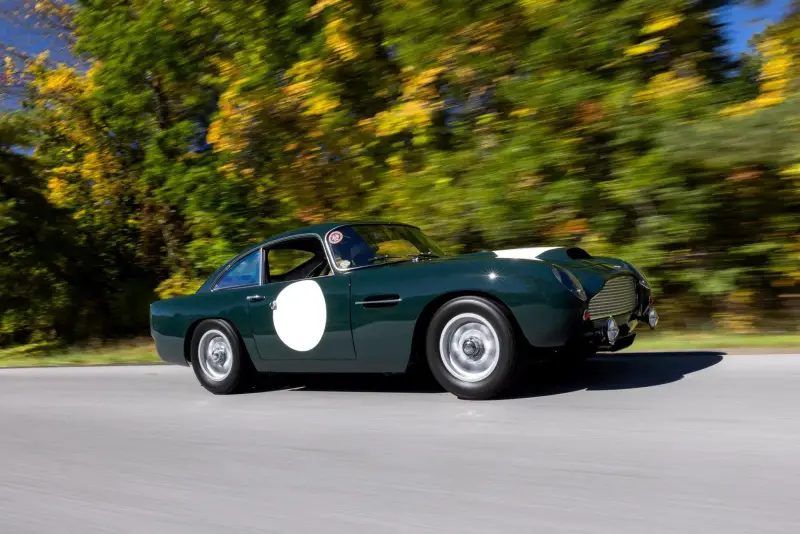
Chassis 0219/L sits at an unusual junction: it carries the hand-built character of Aston Martin’s DB4 GT Lightweight recreation, yet its engine, gearbox and chassis have been altered for a more usable competition setup. Listed for sale on Bring a Trailer, this 2017 example is the second of 25 continuation cars built by Aston Martin Works between 2017 and 2018. Its recorded dyno output is 397.4 horsepower and 377.9 lb-ft of torque, figures that give the 4.2-liter straight-six a clear mechanical profile.
A short-wheelbase GT with a rare lineage
The DB4 GT arrived at the 1959 London Motor Show as a more focused version of the standard DB4. Aston Martin shortened the wheelbase and reduced the car’s overall dimensions, then paired the tighter package with lightweight aluminum bodywork and a more powerful engine. Production ran through 1963, with 75 DB4 GTs built. Only eight received the additional Lightweight treatment, making that small group a particularly direct link to the competition brief carried forward by the continuation cars.
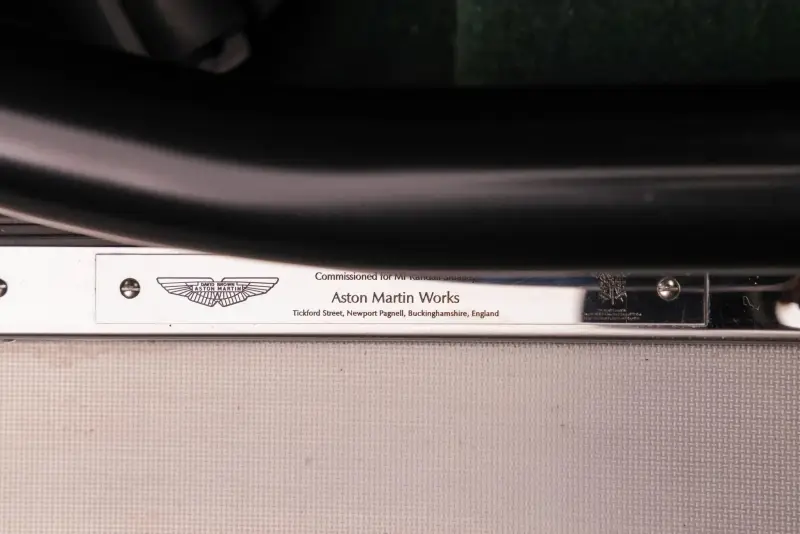
Aston Martin announced the continuation program in late 2016. The 25 cars were made with traditional construction methods and were intended for track use, drawing on the original DB4 GT Lightweight’s engineering and build principles while incorporating modern technology and selected competition-focused changes. Numbering for the continuation cars follows the original production sequence, and the identification plates on 0219/L confirm its position as car two of the series.
Traditional bodywork, later chassis changes
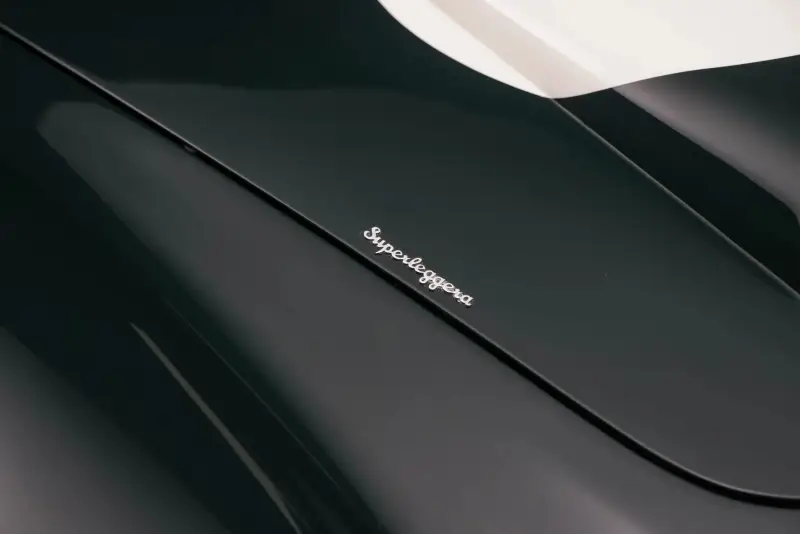
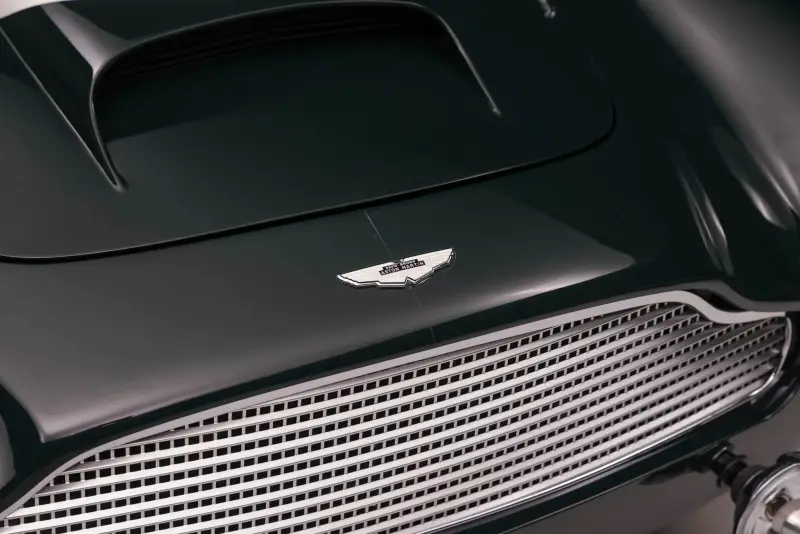
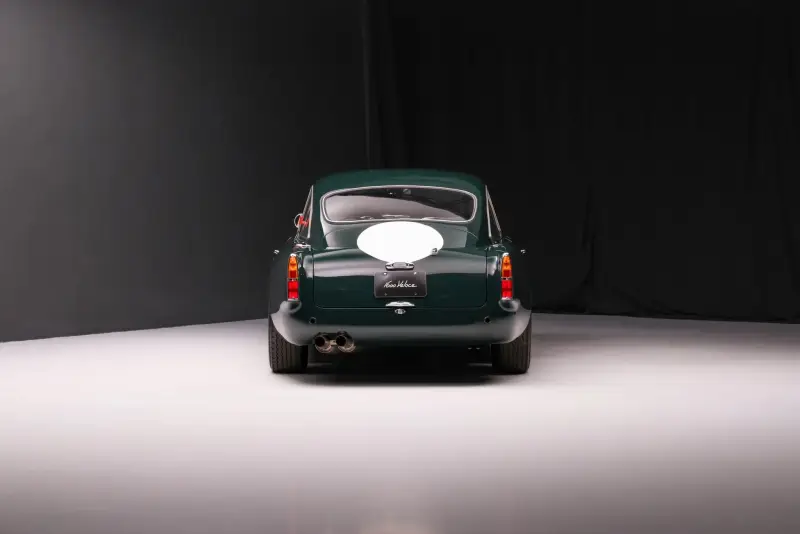
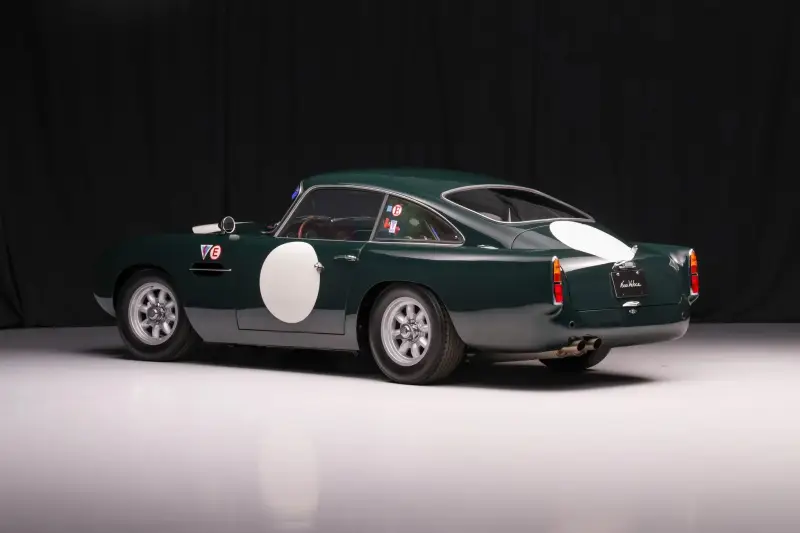
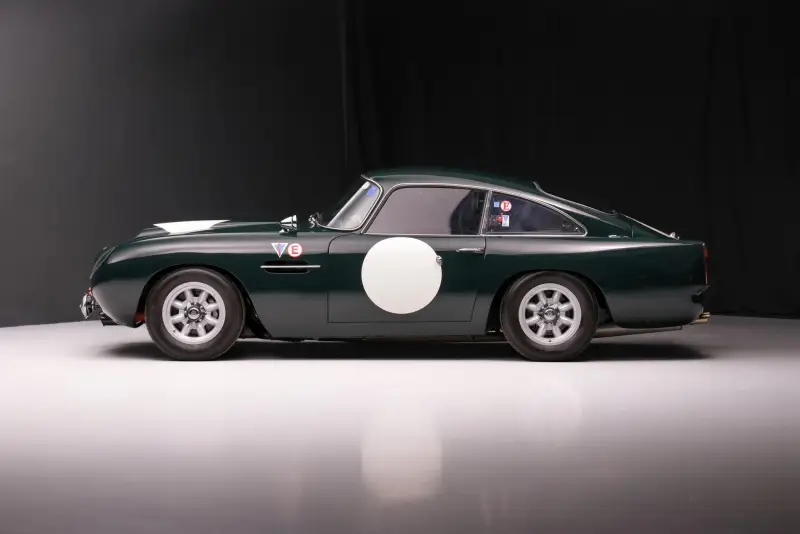
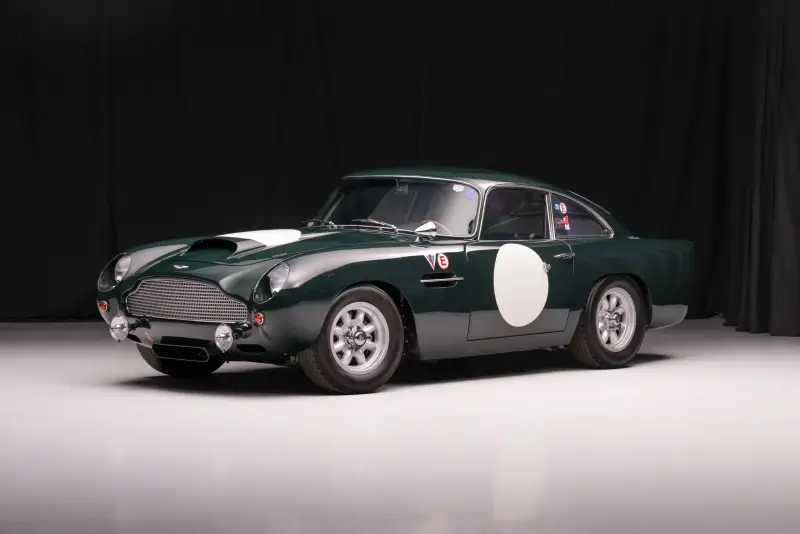
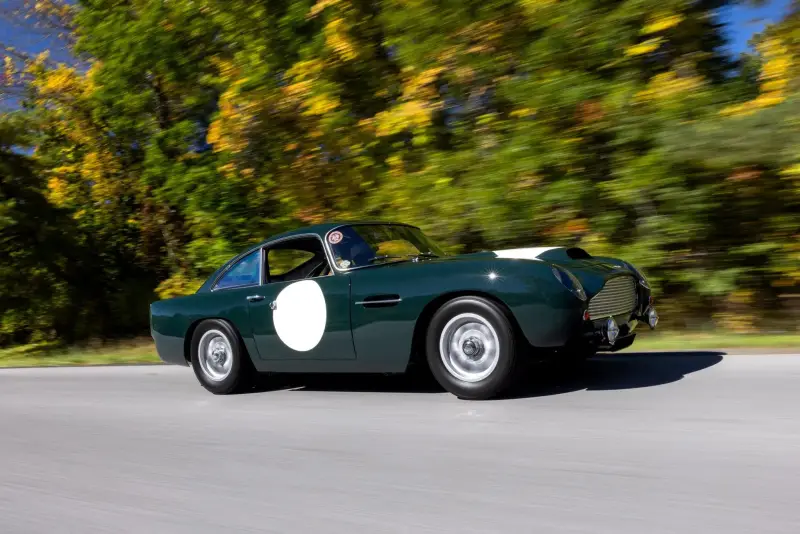
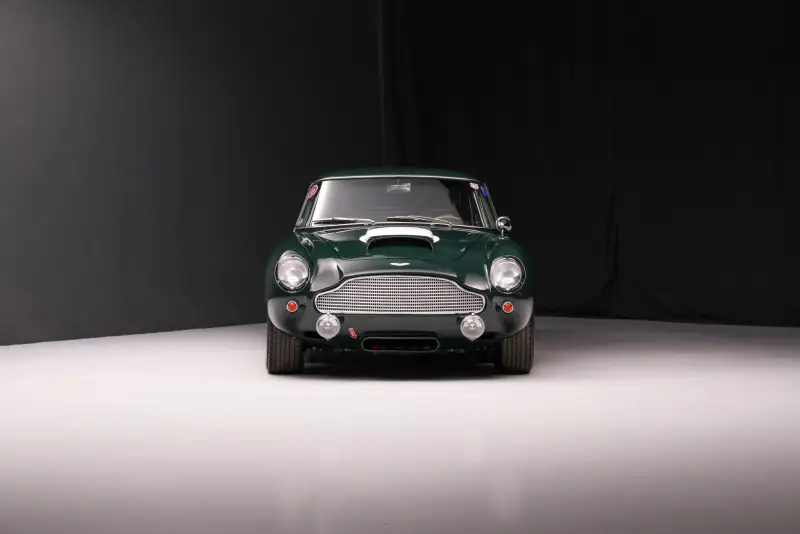
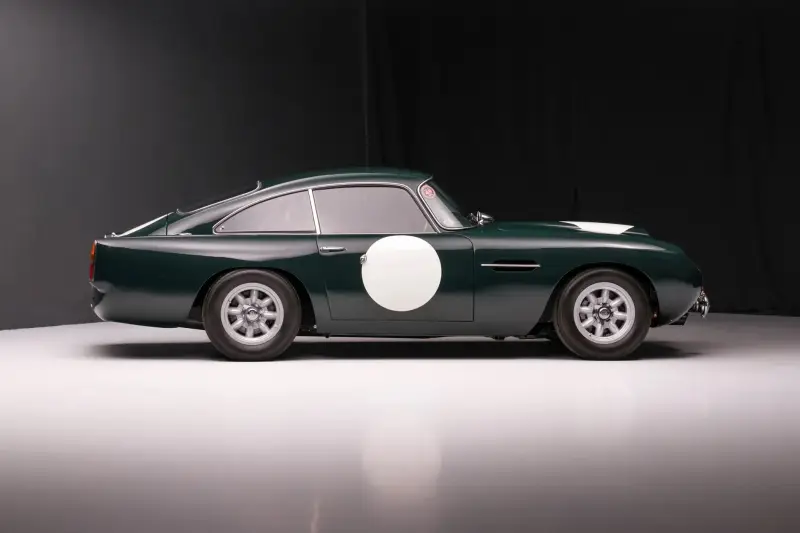
The body follows Touring’s Superleggera method: a steel platform chassis and tubular framework support hand-beaten aluminum panels. That construction preserves the original car’s light, coachbuilt character while giving the structure its underlying support. The green paint is set off by white vinyl racing roundels, a hood scoop, mesh grille, faired-in Lucas headlights and auxiliary front spotlights.
Fifteen-inch peg-drive Minilite wheels use three-eared knock-offs and wear Avon tires. Four-wheel disc brakes combine Alcon calipers at the front with Girling units at the rear. Subsequent modifications added power-assisted rack-and-pinion steering and adjustable coilover suspension. Those changes affect the car’s working setup directly: steering assistance can ease effort during low-speed maneuvering, while adjustable coilovers give the suspension a means of tuning ride height and damping behavior. The available details don’t specify spring rates or damper settings, so the exact setup can’t be inferred from the hardware list alone.
Fuel injection and a five-speed manual
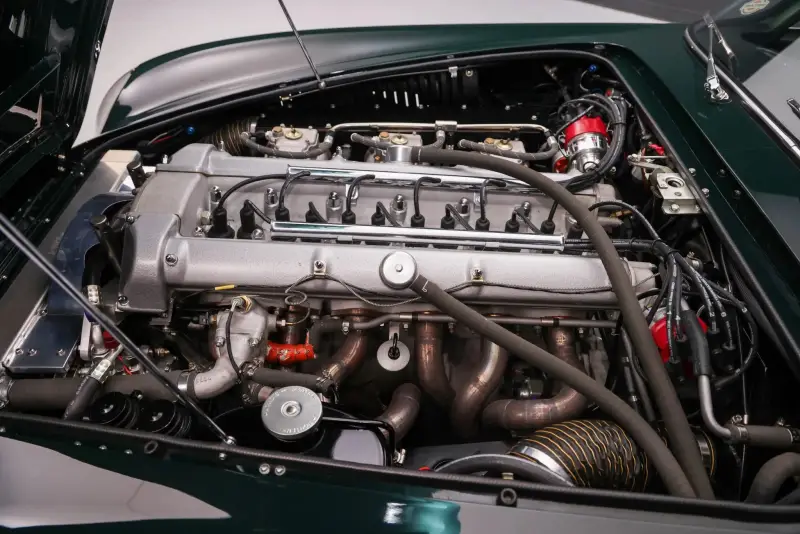
Power comes from a 4.2-liter dual-overhead-cam inline-six, enlarged from the original DB4 GT’s 3.7-liter engine. Aluminum construction, hemispherical combustion chambers and dual-plug ignition retain the basic architecture of the period powerplant. In September 2018, Pennsylvania-based Steel Wings replaced the factory triple Weber carburetors with electronic fuel injection. Dyno testing after the conversion recorded 397.4 horsepower and 377.9 lb-ft of torque.
That measured output provides a useful reference point for the engine as configured after the fuel-injection work. The conversion changes how fuel is metered compared with the original triple-carburetor arrangement, while leaving the engine’s stated displacement and core design intact. The listing details don’t give a before-and-after dyno comparison, so the figure describes the modified engine without establishing a specific gain from the conversion.
A Tremec five-speed manual takes the place of the original four-speed dog-engagement gearbox. The swap is paired with a Tilton twin-plate clutch and Quaife differential. Together, those components make this a substantially revised driveline: the transmission adds a ratio compared with the original unit, the twin-plate clutch is part of the updated engine-to-gearbox connection, and the differential completes the power path to the rear wheels. The original transmission and related components are included with the sale, preserving options for a future owner who wants to explore a different configuration.
A cockpit built around use
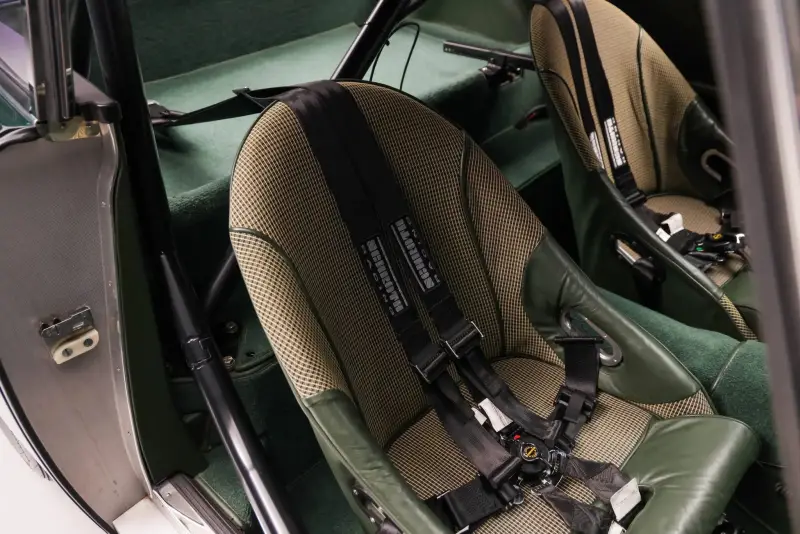
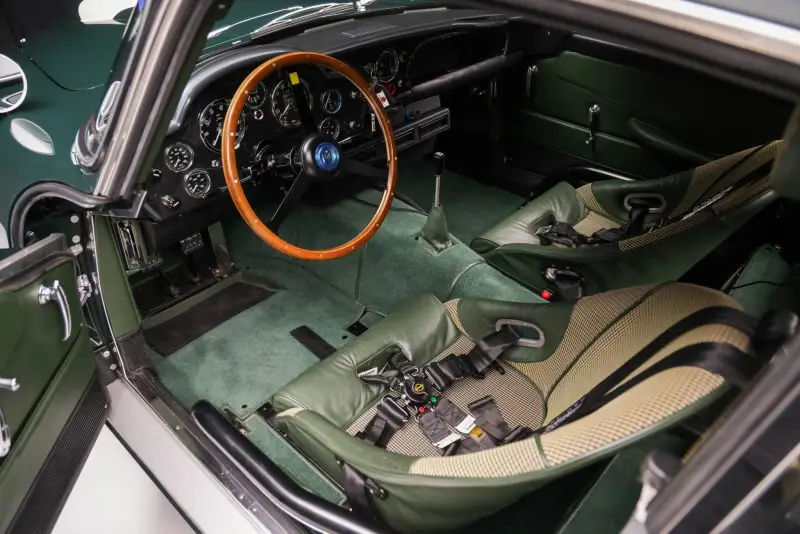
The left-hand-drive cabin combines period cues with changes aimed at track and road comfort. Low-back bucket seats wear green leather and checked cloth; they replace the continuation car’s original Tillett carbon-fiber racing seats. A roll bar now occupies the space of the factory full roll cage, and Schroth six-point harnesses are fitted. Air conditioning adds a practical comfort feature to a cabin otherwise shaped by competition hardware.
Smiths instruments, a riveted wood-rimmed steering wheel and drilled pedals keep the cockpit visually connected to the car’s historic inspiration. The seats, restraint setup and roll bar also document a meaningful departure from the delivered configuration, details that matter when assessing how the car has been used and how a new owner might want it arranged.
Removed parts add configuration choices
The sale includes an extensive set of removed components: the original four-speed transmission, carburetors, Tillett seats, four wire wheels, roll cage and differential components. That collection gives a future owner tangible reference parts and the ability to consider returning selected systems or cabin pieces toward their earlier specification. It also helps document the scale of the changes, though any reconfiguration would depend on inspecting the parts and confirming their condition and completeness.
For a DB4 GT enthusiast, the appeal of 0219/L is its combination of continuation-series rarity, traditional aluminum body construction and a clearly documented modernized mechanical package. Its 4.2-liter engine, fuel injection, five-speed gearbox, adjustable suspension and supplied original components make the car an especially interesting case study in how a period competition shape can be adapted for contemporary use while keeping its historic engineering roots visible.