1956 Mercedes-Benz 300 SL Gullwing: Rare Factory Colors and 2025 Mechanical Restoration
This matching-numbers 300 SL pairs documented California history and rare 1956 factory colors with a $100,000-plus mechanical restoration.
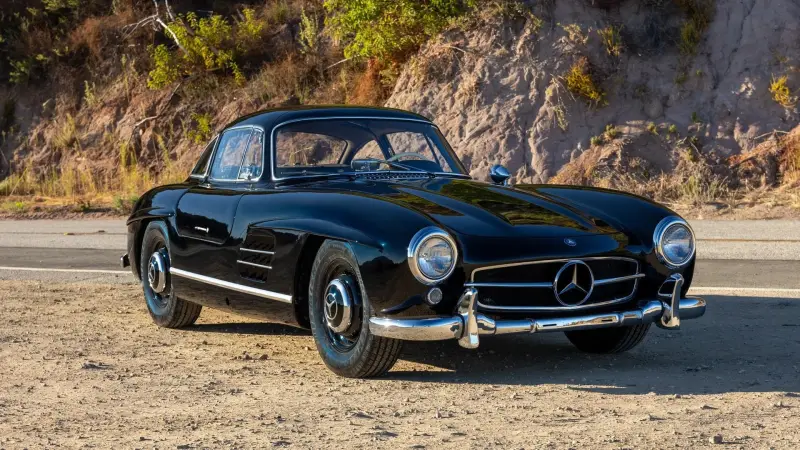
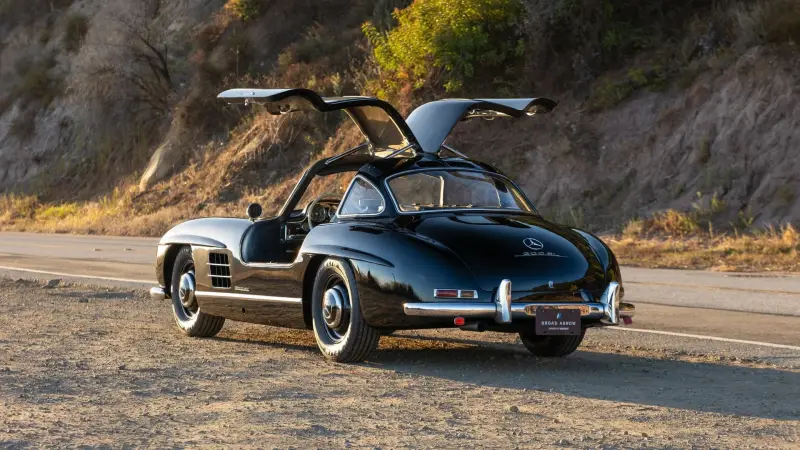
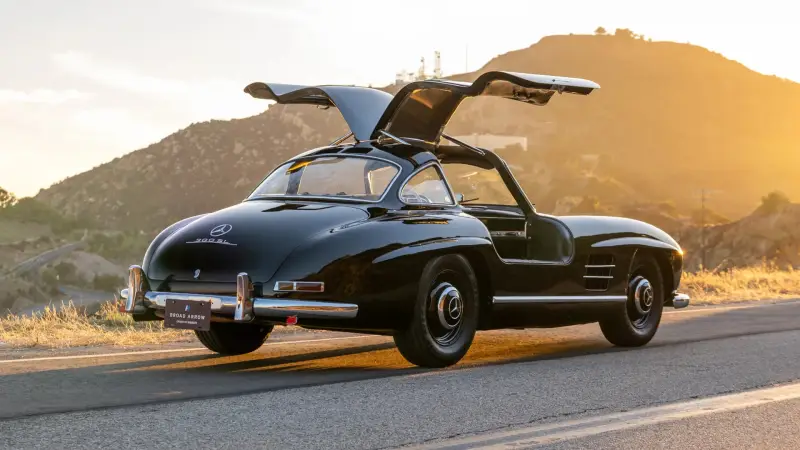
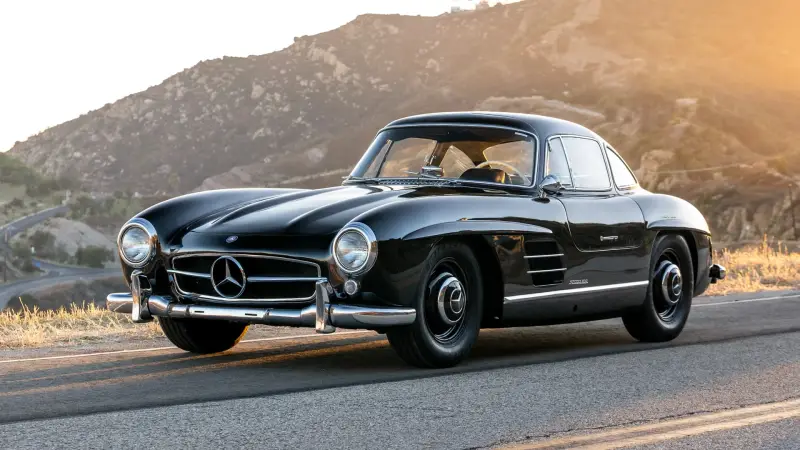
A 2025 mechanical restoration at Mercedes-Benz Classic Center USA gives this 1956 300 SL Gullwing a substantial recent service record, while its original chassis, engine, body, front spindles and transmission remain in place. Offered by Broad Private Sales for $1,650,000, the car also brings documented California ownership and an unusually rare factory color combination. Those details make its specification and mechanical work the real story behind the instantly recognizable roofline.
A race-bred structure shaped the road car
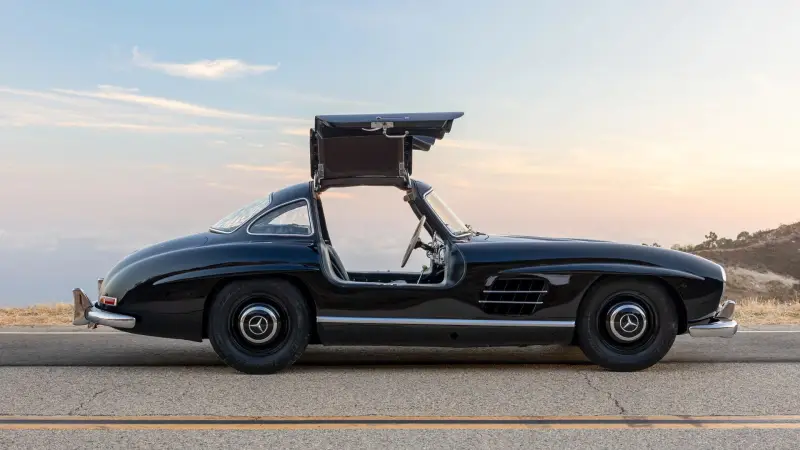
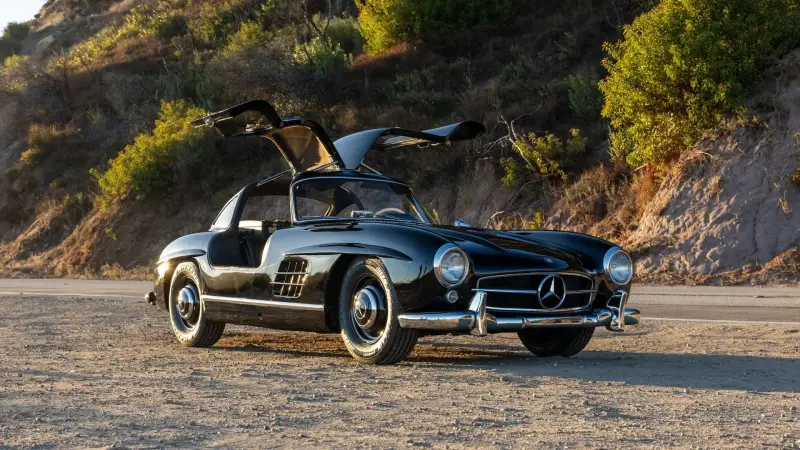
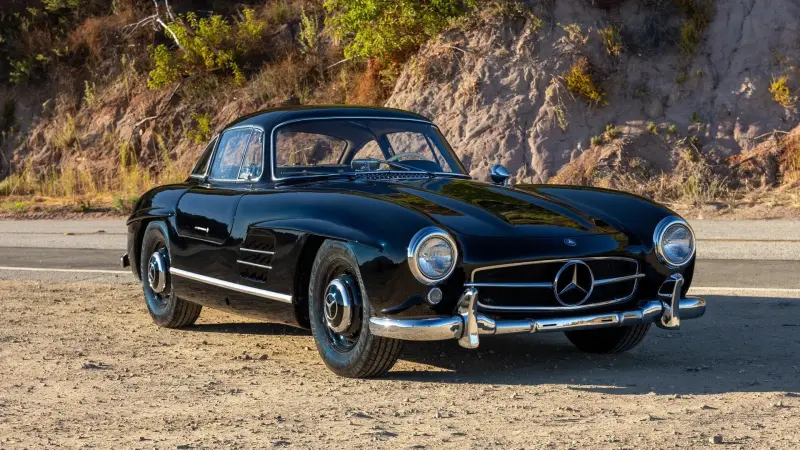
The 300 SL’s roots lie in the W194 competition car, whose 1952 appearances at the Mille Miglia, the Grand Prix of Bern and the 24 Hours of Le Mans established its sporting credentials. The tubular spaceframe, developed under Fritz Nallinger, Rudolf Uhlenhaut and Joseph Müller, prioritized a lightweight structure. Its tall sides made conventional doors impractical, so the roof-hinged openings followed the shape of the frame. That engineering constraint produced the Gullwing’s defining silhouette.
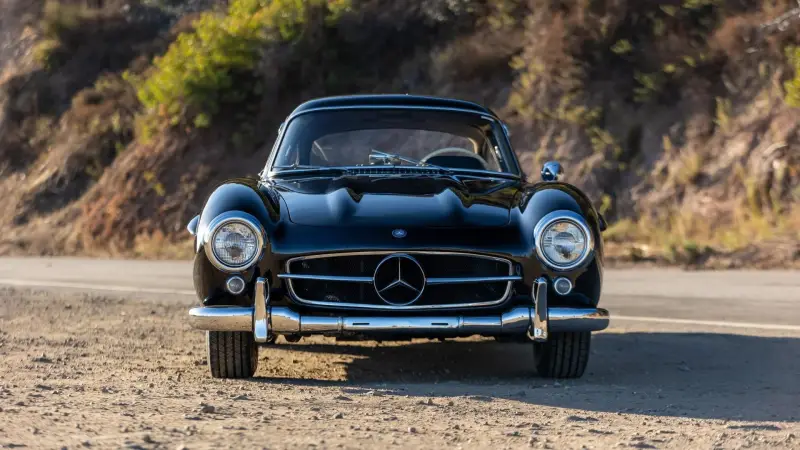
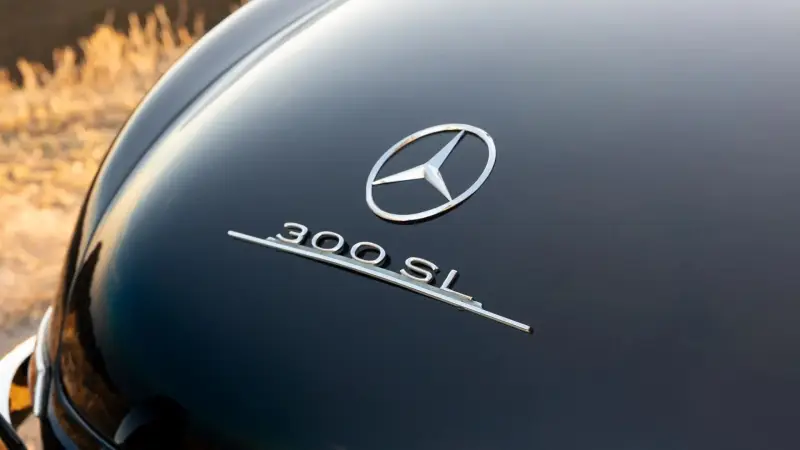
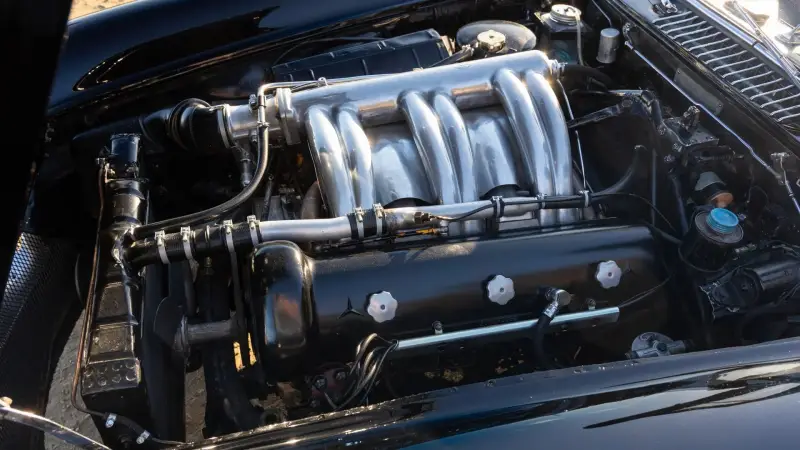
The production Coupe arrived in 1954 with a 3.0-liter M198 inline-six, Bosch mechanical direct fuel injection and dry-sump lubrication. The engine sits at an angle to lower the hood and support a more efficient body profile. Output was approximately 240 horsepower, and top speed approached 161 mph. Those figures placed the Gullwing among the quickest production cars of its era, while the dry-sump arrangement reflected its competition-minded engineering. Mercedes-Benz built 1,400 Coupes before production ended in 1957.
A rare specification, then a later color change
Commission number 806 344 was completed on September 24, 1956, and delivered to Southern California with 71 miles recorded. Its original finish was Hellblau Metallic over Red leather, a combination factory documentation identifies as a special order. Only nine cars received that color in 1956, and 67 across the full production run. The rarity here is specific: it rests on the documented paint and upholstery choice, rather than on the model’s already familiar status.
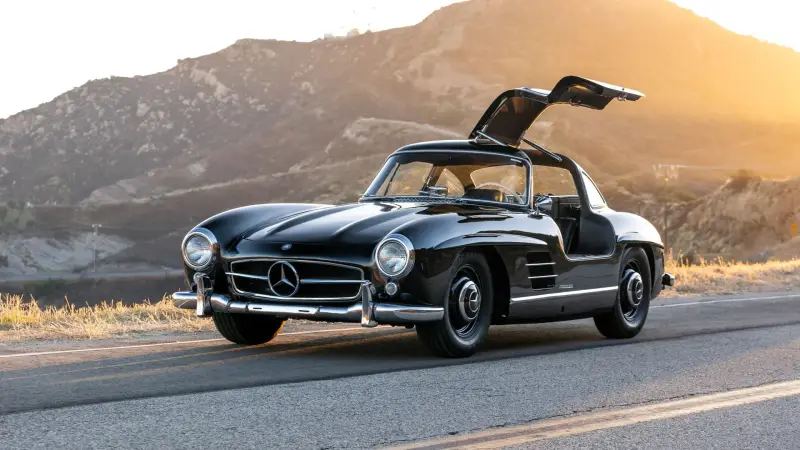
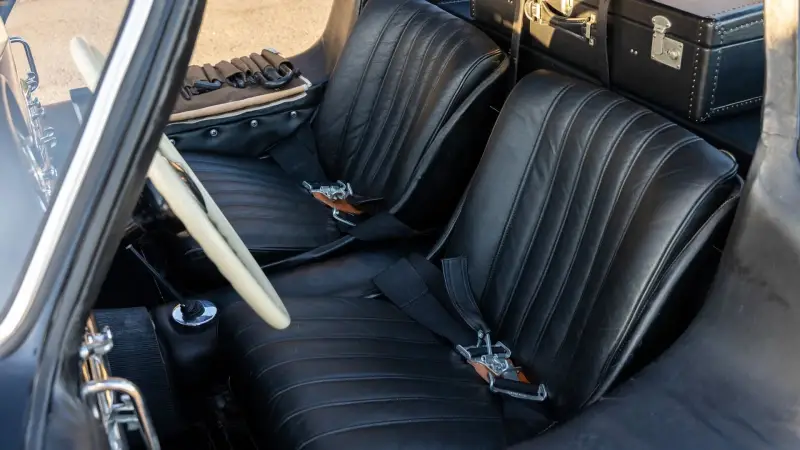
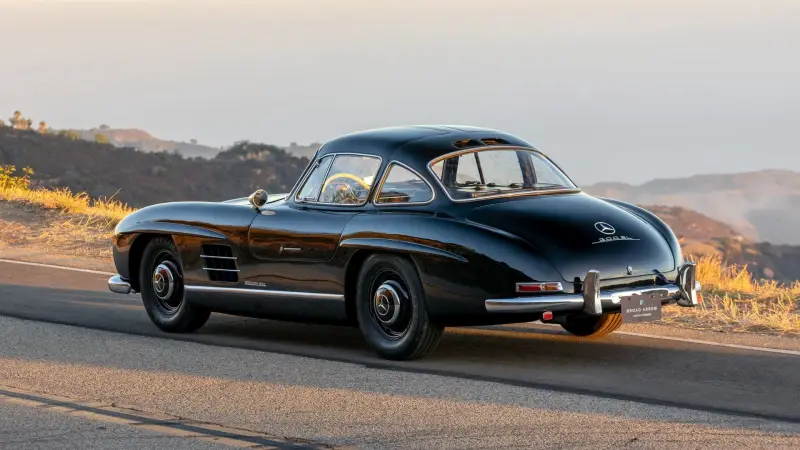
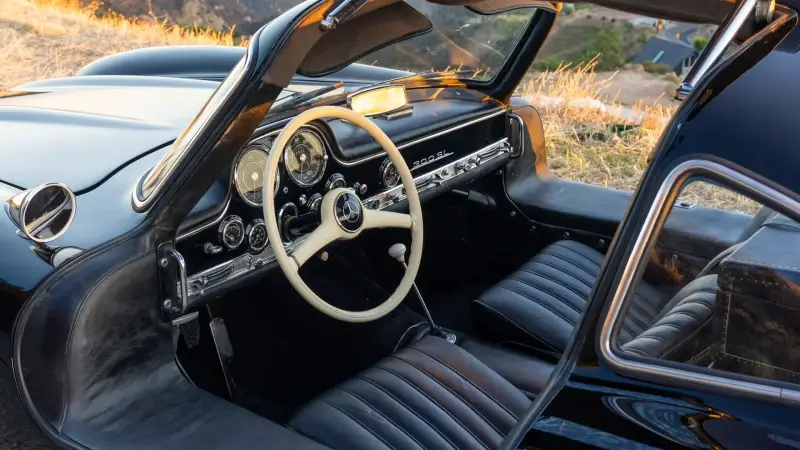
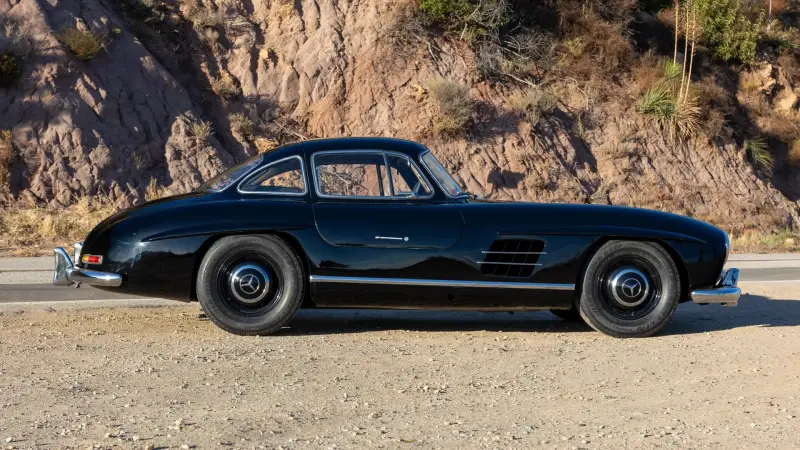
The factory record also lists export-market equipment suited to its American delivery: English-language instruments, a speedometer calibrated in miles, a windshield washer and chrome-plated disc wheels. The car has since been refinished in Black over Black leather, with blue plaid cloth inserts in the seats. That later presentation differs from the original color scheme, so the paperwork adds useful context for anyone assessing the car’s specification and restoration history.
Its known ownership remained in California, with Michael Gallagher, Maynard H. Lobell and John Northcott Jr. among its previous owners. The current owner acquired it approximately two years ago. During that period, the Gullwing took part in the Colorado Grand and the Mercedes-Benz 300 SL Classic, evidence of use in organized driving events as well as display.
Mechanical work with practical value
More than $100,000 went into mechanical restoration by Mercedes-Benz Classic Center USA in 2025. The work covered transmission resealing and flywheel resurfacing, along with ignition and fuel-system servicing. Driveline components were replaced, the brakes received comprehensive refurbishment, and new Dunlop SP Sport Aquajet tires were fitted. Taken together, those jobs address systems central to making a high-performance 1950s car usable: power delivery, stopping performance, ignition, fuel supply and the connection between engine and wheels.
The stated work provides a useful starting point for a prospective owner reviewing the car’s condition, but the list is not a substitute for the underlying invoices or a present-day inspection. A specialist would want to understand the scope of each repair, the parts replaced and how the systems have performed since the work. The car’s retained original chassis, engine, body, front spindles and transmission anchor its matching-numbers status; the restoration record adds a separate account of what has been serviced.
The car is currently displayed on the Hagerty stand at the inaugural Retromobile New York. Its rare documented original colors, California history, retained major components and recent mechanical attention make for a distinctive combination in a 1956 Gullwing. For a buyer, the next useful step is to put the factory records and 2025 work documentation alongside an in-person inspection, with particular attention to how the restored mechanical systems operate on the road.