1997 Ferrari F50 With 106 Miles: V12, Gated Manual and Original Accessories
Chassis 107165 pairs a 513 hp V12 and six-speed gated manual with just 106 miles, documented service and an unusually complete set of factory accessories.
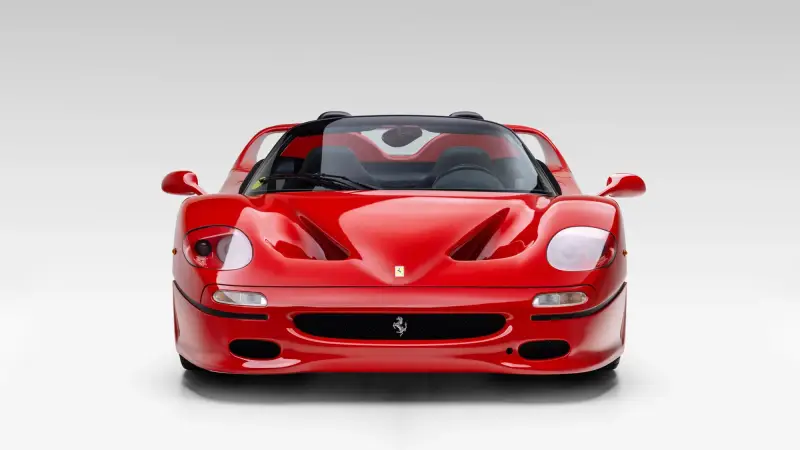
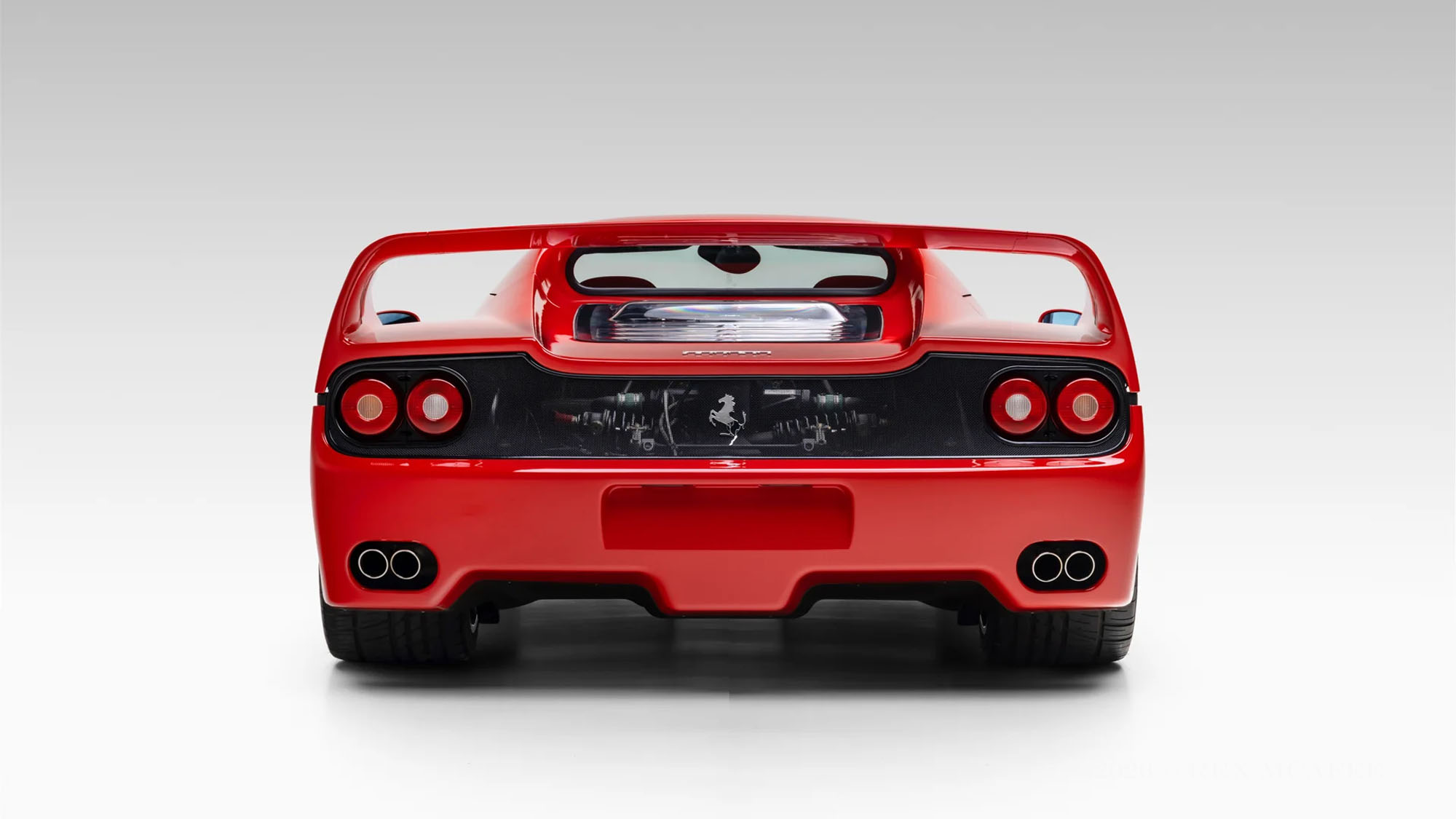
Just 106 miles are recorded on this 1997 Ferrari F50, chassis 107165, but its appeal goes beyond low mileage. The car combines documented international provenance, recent service and an unusually complete collection of original factory accessories. Finished in Rosso Corsa over Nero leather with red seat inserts, it is the 334th of 349 F50s built from 1995 to 1997.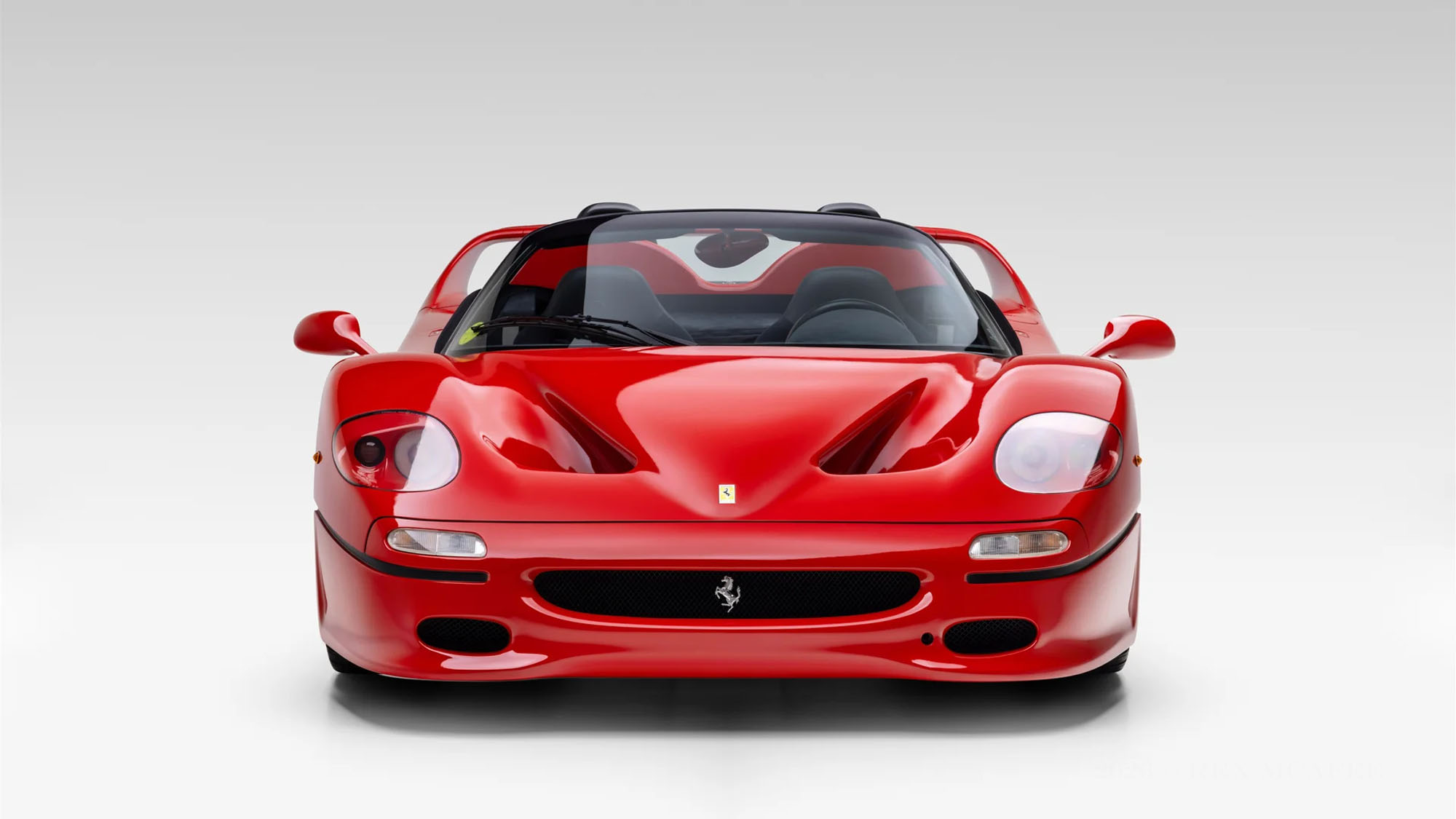

The odometer figure makes this a strikingly preserved example of a car engineered for a very physical driving experience. Its naturally aspirated 4.7-liter V12, carbon-fiber structure and six-speed gated manual tell a story of direct mechanical connection. The surviving paint, interior and factory equipment add another dimension: they show how much of the car’s original presentation remains with chassis 107165.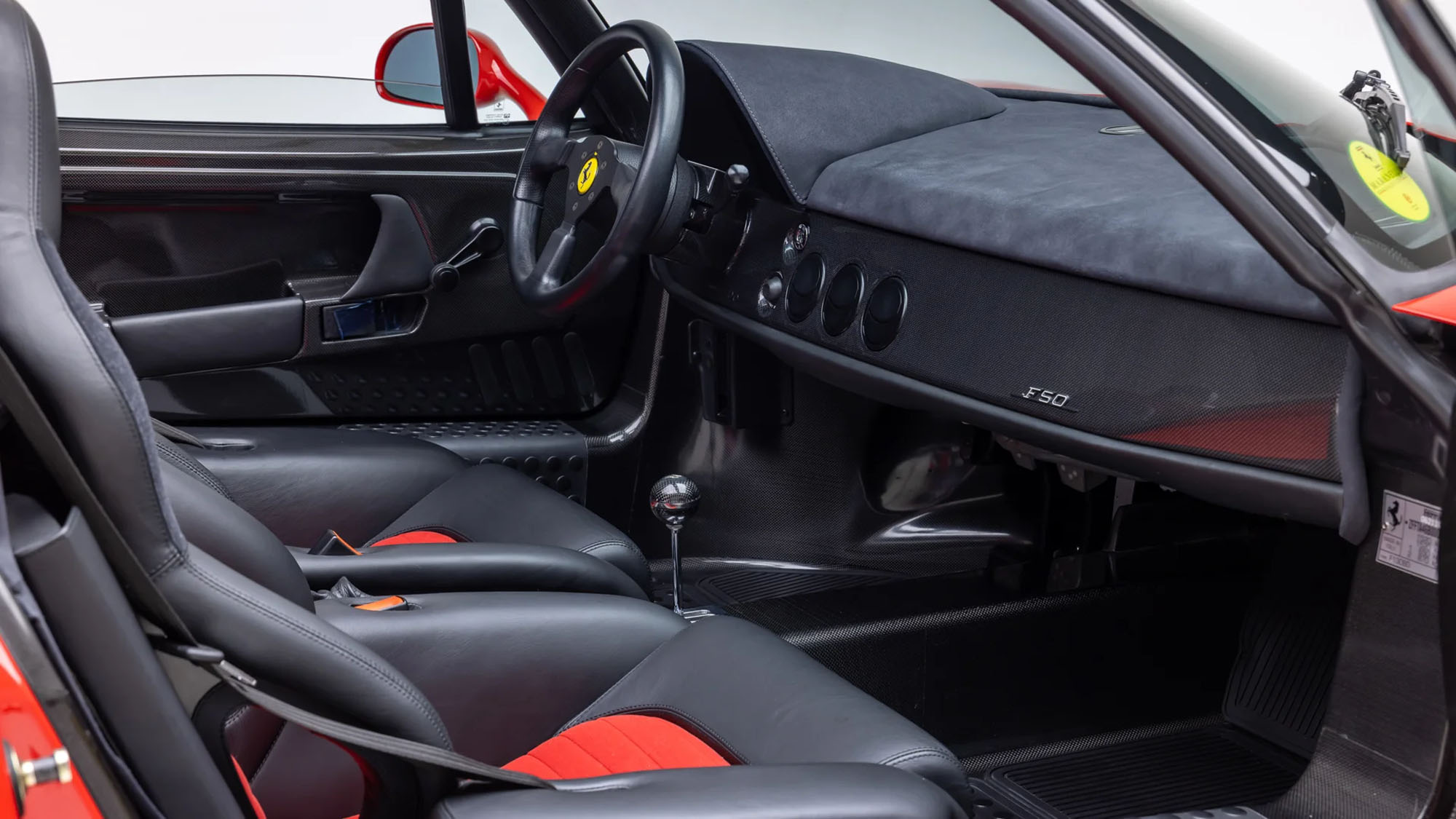
A V12 built into the chassis
Ferrari introduced the F50 at the 1995 Geneva Motor Show, ahead of the company’s 50th anniversary. The concept was to bring Formula 1-derived engineering to a road car. Its 4.7-liter V12 produces 513 horsepower and 347 lb-ft of torque, with titanium connecting rods, five valves per cylinder and dry-sump lubrication.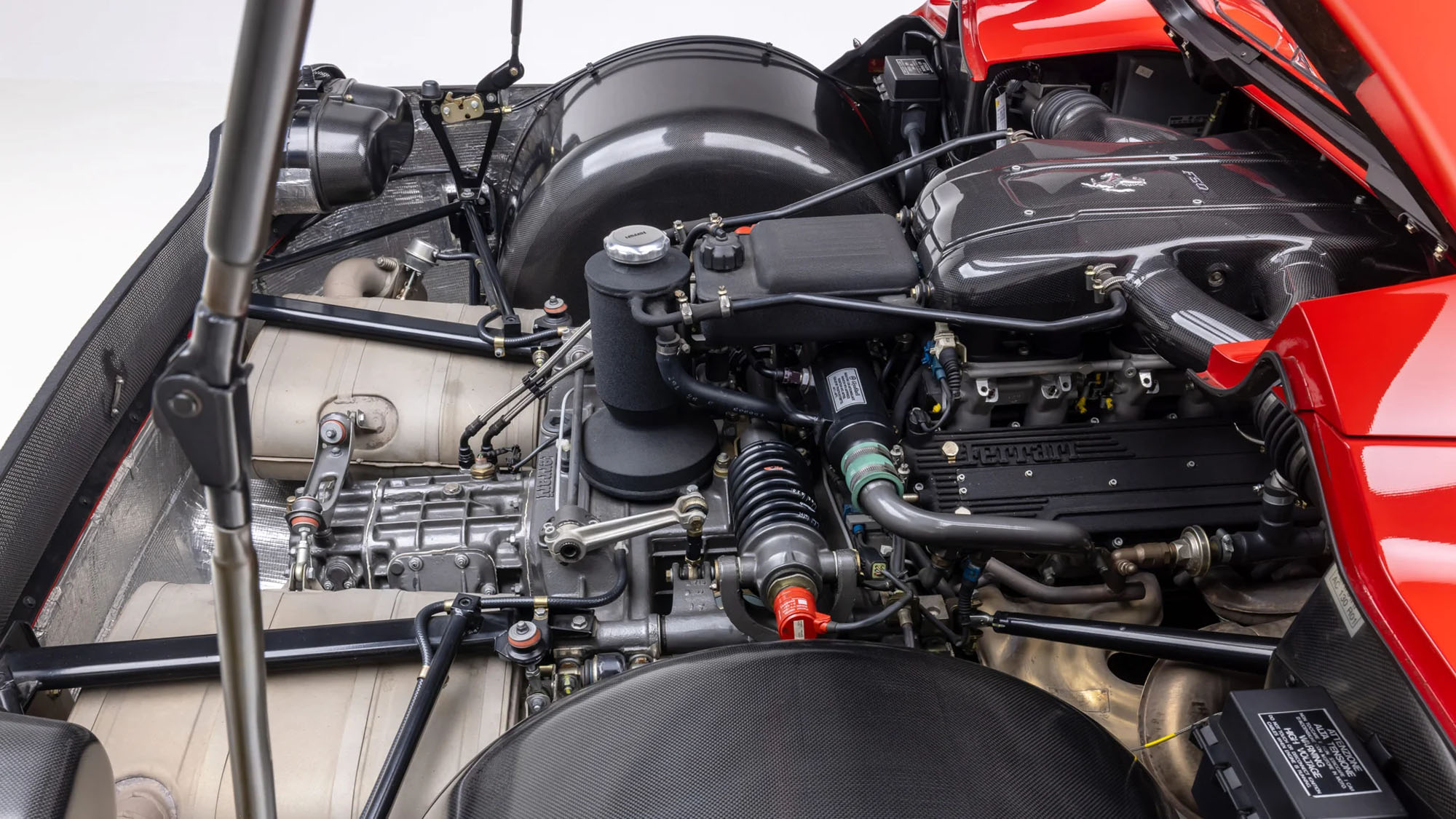
The engine’s role is structural as well as functional: it bolts directly to the lightweight carbon-fiber monocoque and helps form the car’s chassis. That arrangement differs from a conventional road car, where the engine sits within a separate structure. It also puts the suspension and drivetrain close to the driver’s experience of the car’s movement, giving the F50 its uncompromising, race-derived character.
Other hardware follows the same brief. The F50 uses pushrod suspension, titanium hubs, unassisted steering and Brembo brakes. That setup asks the driver to do more of the work: steering assistance and electronic mediation aren’t part of the described package. The result is a direct, demanding feel that makes the car’s engineering more present on the road.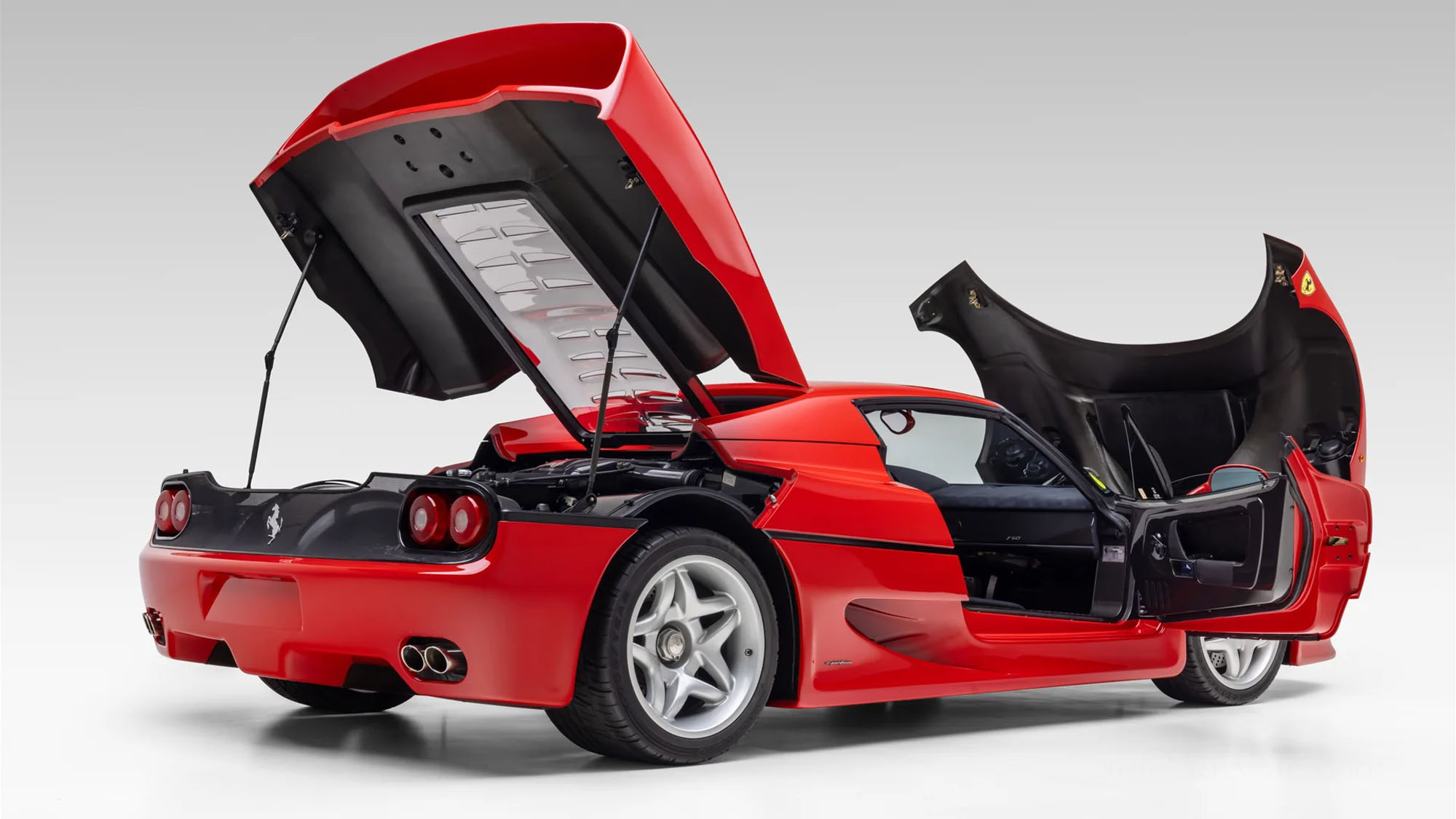
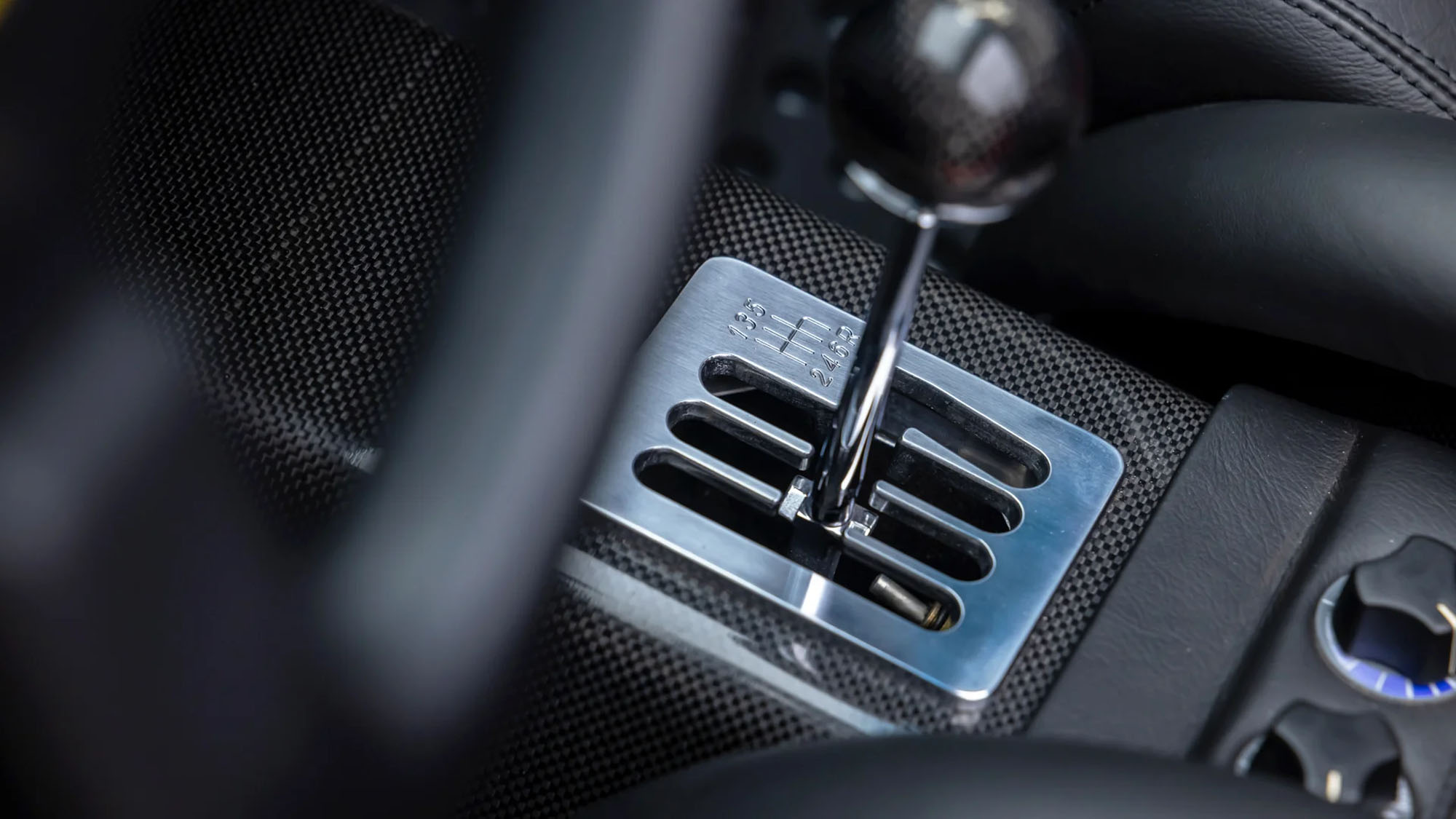
Power reaches the rear wheels through a six-speed gated manual transmission. The F50 was Ferrari’s last flagship supercar with a traditional manual gearbox, and that detail shapes the experience as much as the V12’s output. Shifting is an active part of driving the car; the driver works through the gate rather than relying on an automated transmission. Ferrari quoted a 202 mph top speed, while contemporary testing recorded a 0–60 mph time of 3.6 seconds.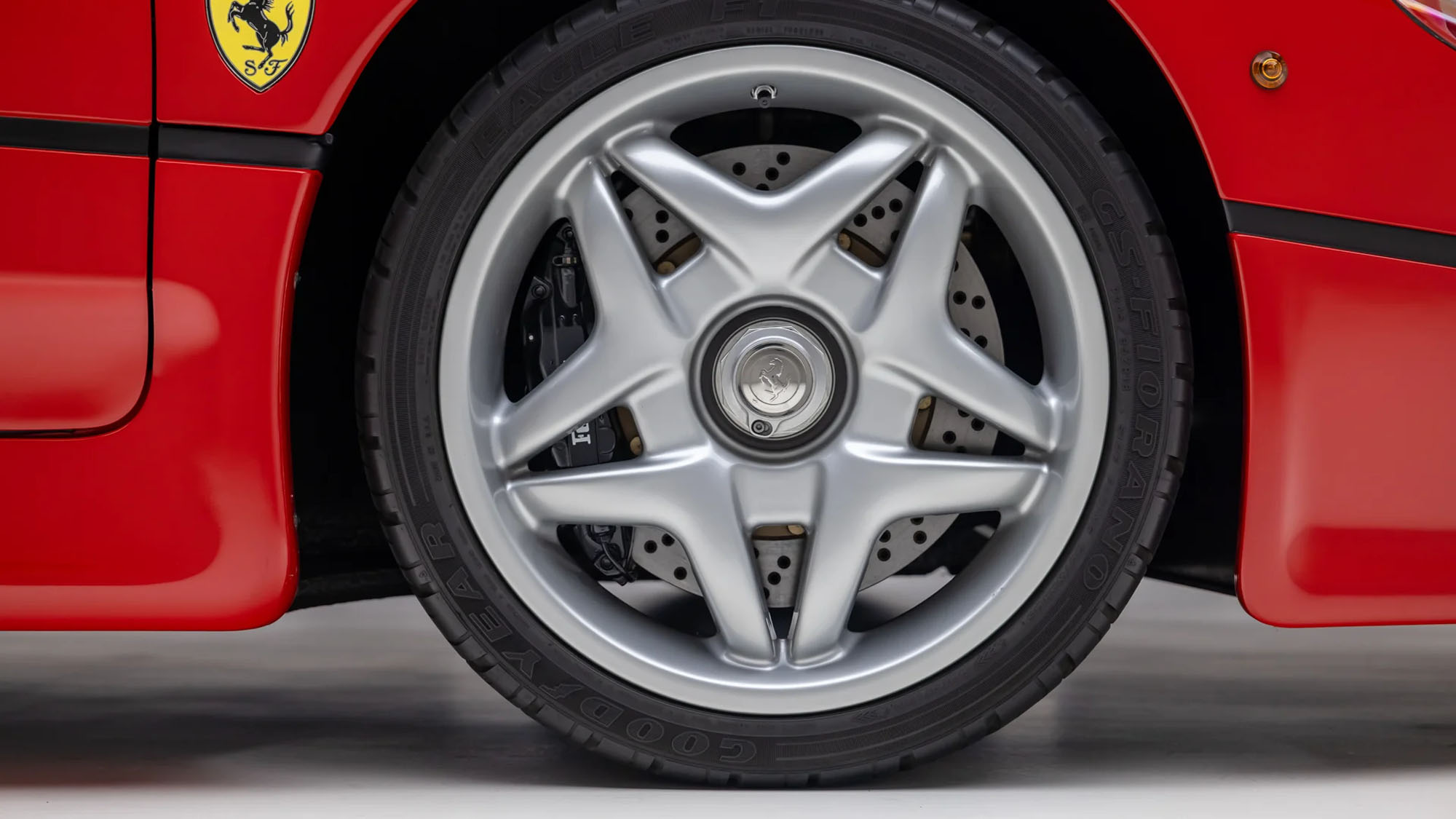
Preservation backed by a service record
Completed at Ferrari’s Maranello factory in August 1997, chassis 107165 was first delivered through Maranello Sales Ltd. in Surrey, England. Its subsequent history spans private collections in Japan and China, time in Germany, and eventual arrival in the United States. That trail gives the car a documented international background alongside its exceptionally low recorded mileage.
Its Rosso Corsa paint, exposed carbon-fiber interior, leather upholstery and factory switchgear are reported to remain in outstanding condition. The service record includes work in Germany in 2015, 2021 and February 2025. More recently, Ferrari of Newport Beach carried out a fresh service and a Ferrari Classiche inspection.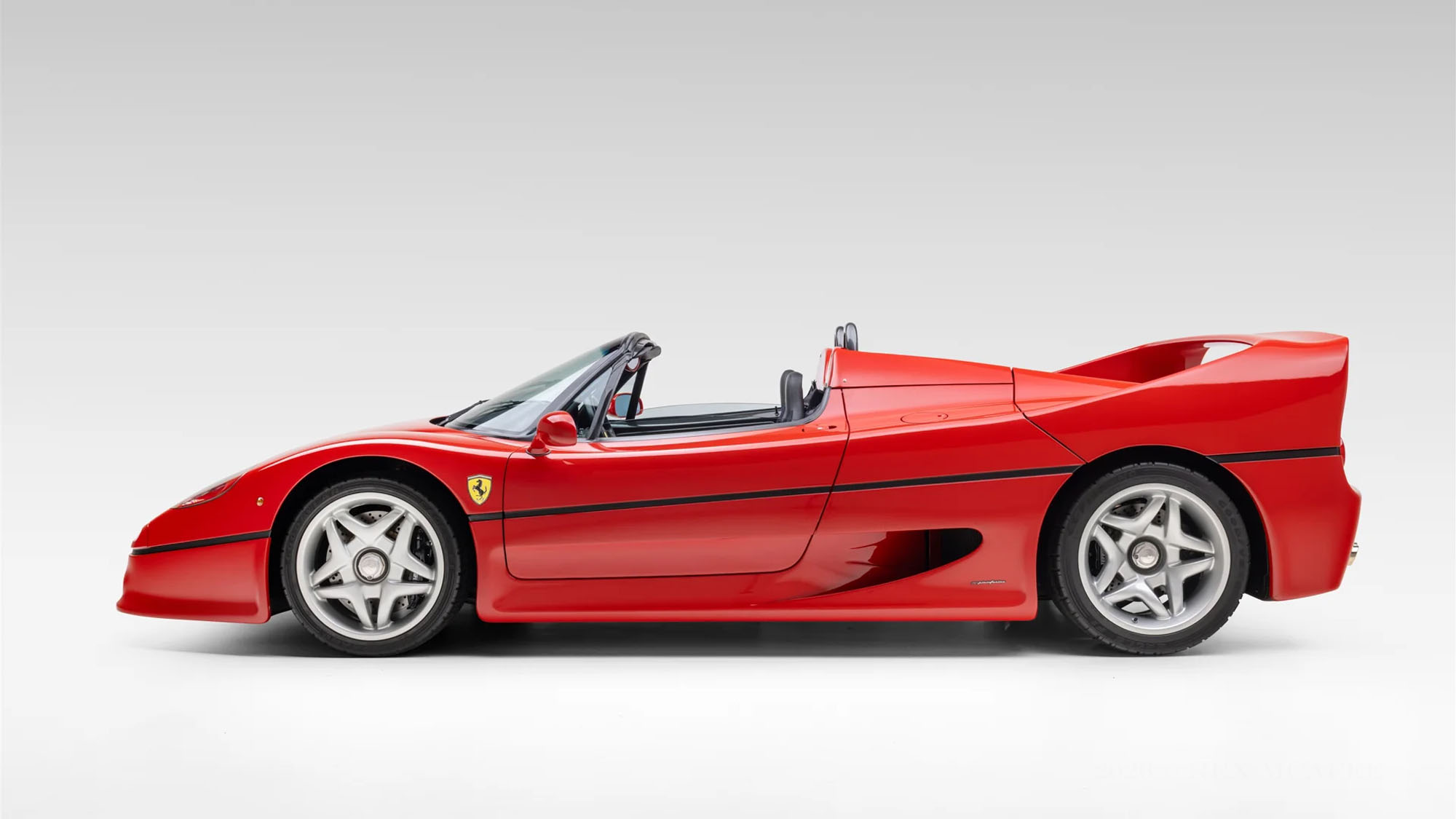
For a car with so little use, the service entries matter: they document attention across several years and a recent inspection, rather than relying on odometer mileage alone to tell the ownership story. The available details don’t specify individual maintenance procedures or intervals, so the record is best read as evidence of documented servicing, not as a full account of every component’s condition.
Factory equipment still with the car
The accessory collection is unusually extensive. It includes the removable hardtop and its dedicated flight case, a three-piece Schedoni luggage set, J.P. Tod’s driving shoes, the factory tool kit, a wheel socket, spare fuses and bulbs, a belt kit, and Ferrari-branded protective covers.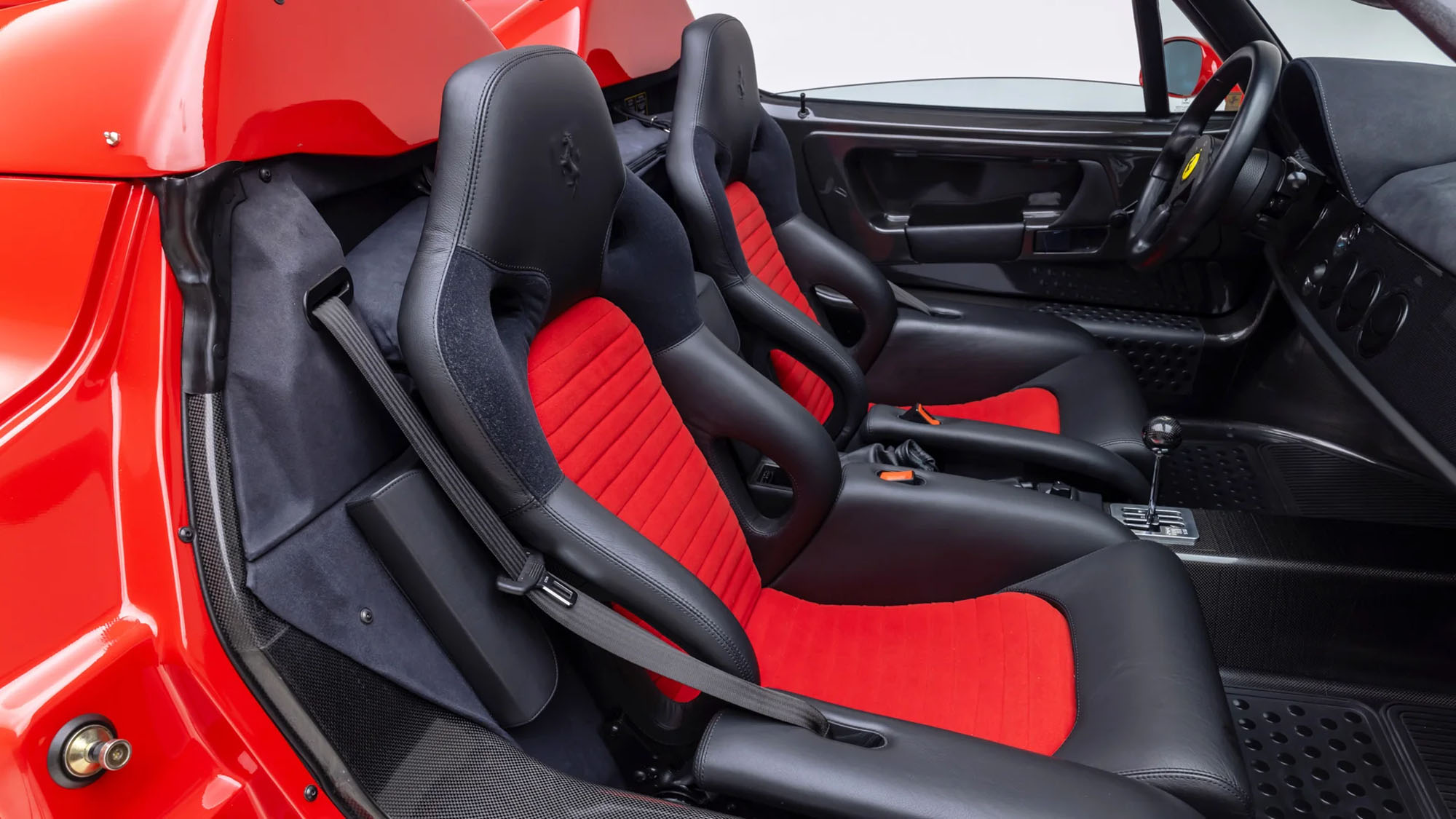
These pieces help complete the ownership package and preserve details of how the car was supplied. The hardtop and case, luggage, tools and small service supplies each have a practical place in the F50’s story; keeping them together also makes the car’s presentation more complete. Such items can be separated from a car over decades of ownership, so their presence stands out alongside the original cabin and paintwork.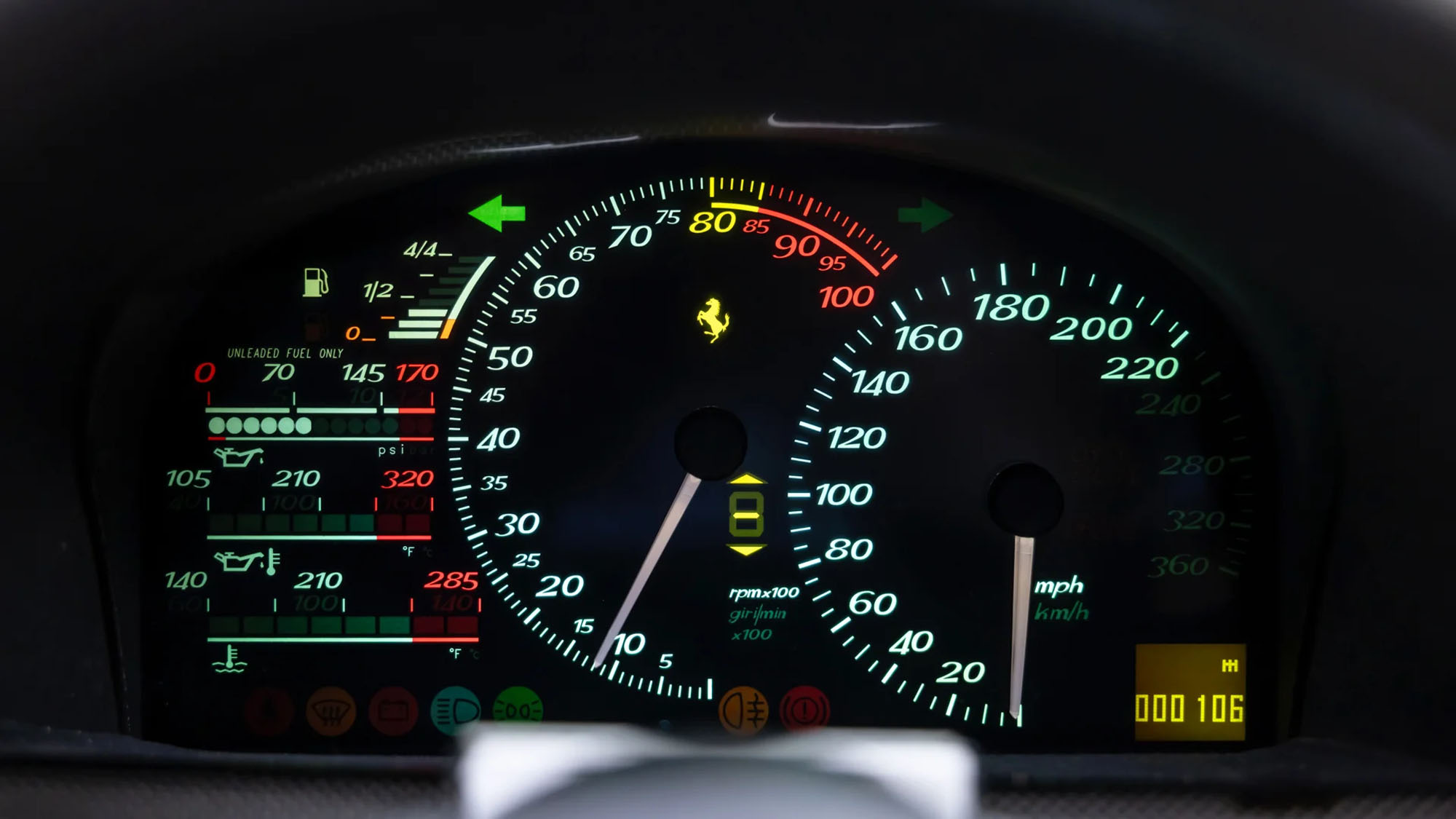
An unusually intact F50
With 349 examples produced, the F50 occupies a distinct place among Ferrari road cars. Its naturally aspirated V12, engine-as-structure layout, pushrod suspension and manual gearbox reflect an engineering approach centered on a close connection between driver and machine. Chassis 107165 brings those defining features together with 106 recorded miles, a documented service history and original accessories that are often absent from surviving cars.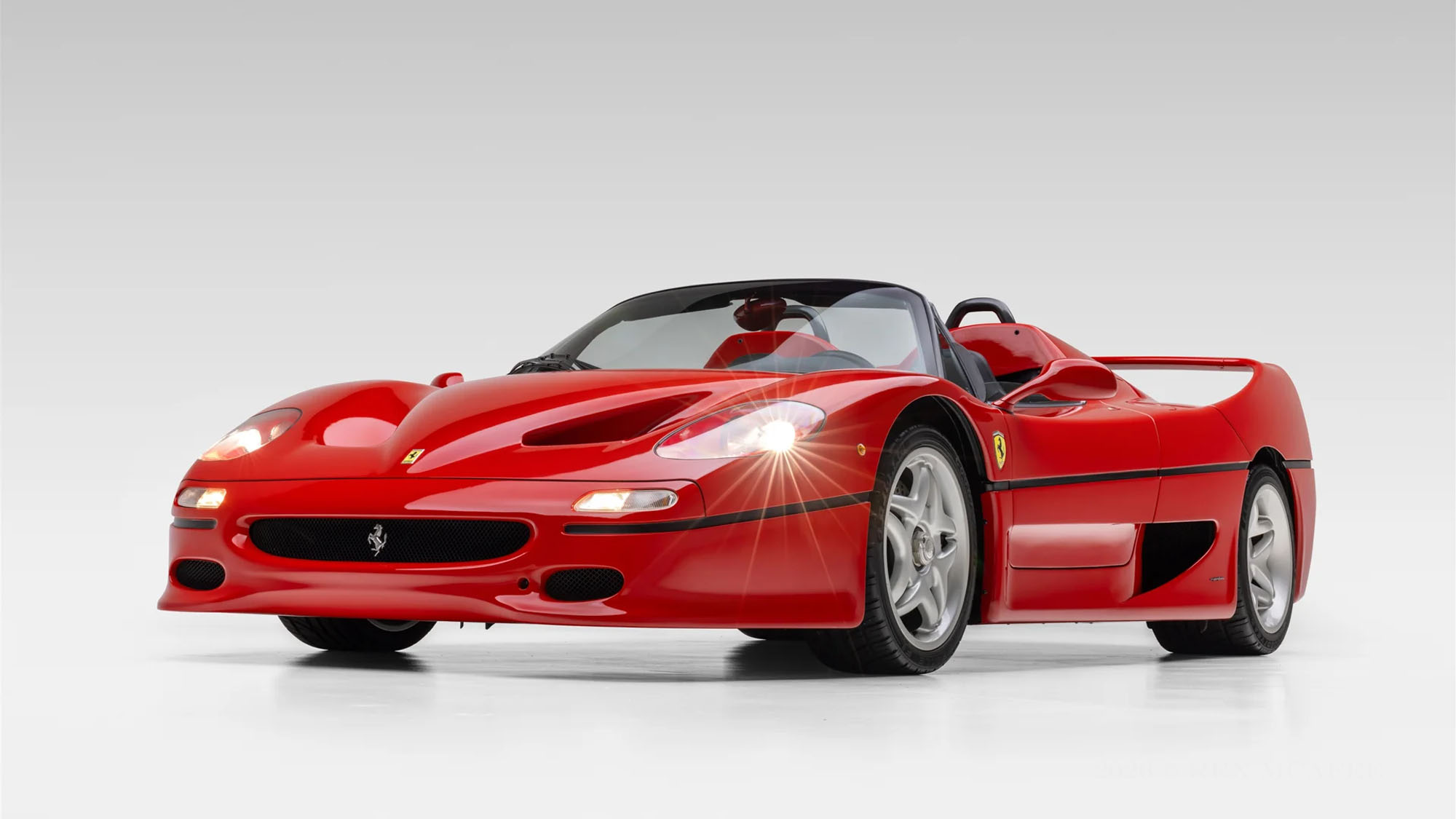
For anyone assessing this example, the strongest case rests on the combination: exceptionally limited use, preserved materials, service documentation and a broad set of factory equipment. The low mileage is the headline, but the car’s completeness gives that figure context. Chassis 107165 offers a rare look at an F50 that has retained much of the condition and kit with which it left Maranello.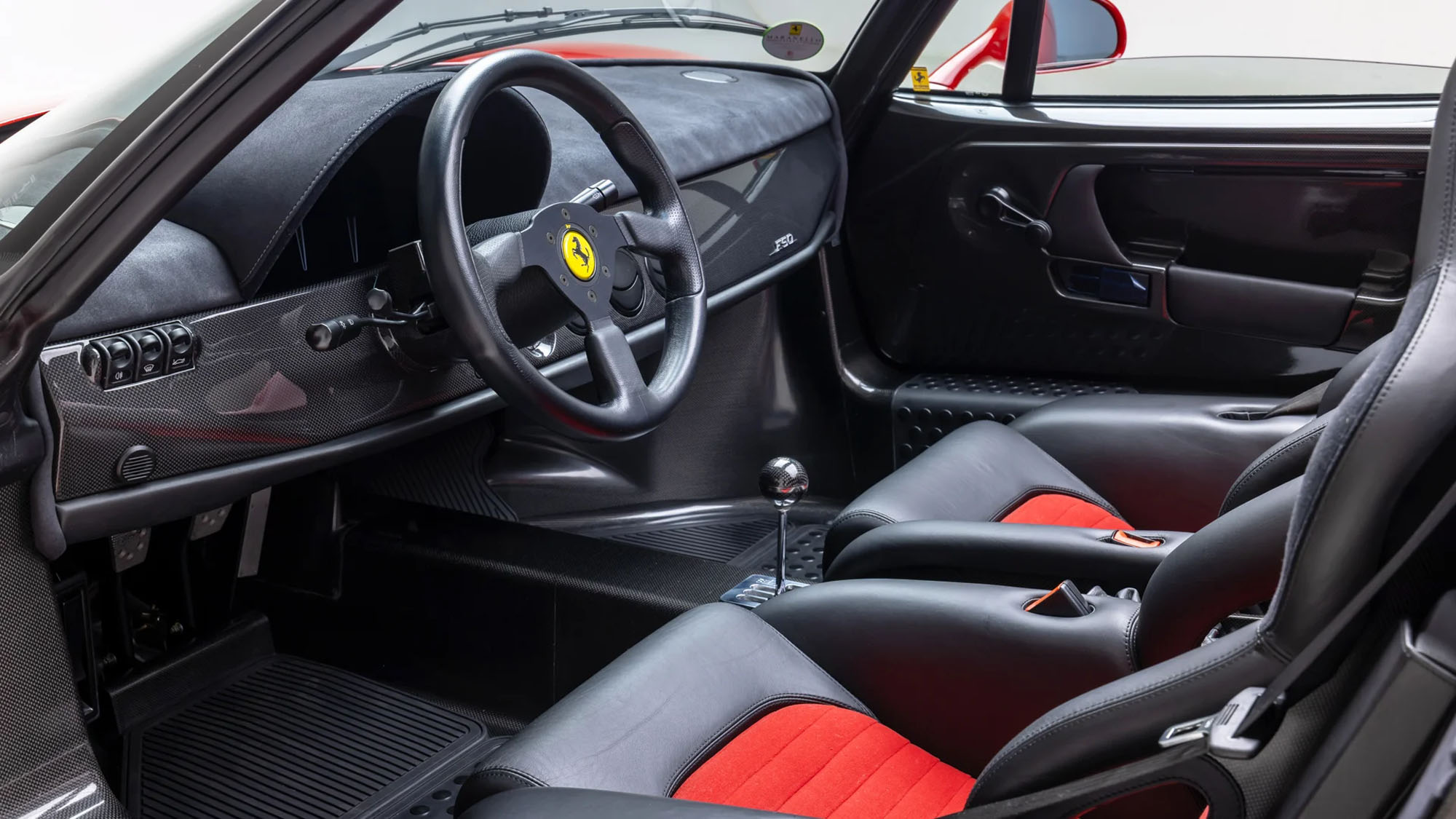
Further details are available from Broad Arrow Auctions.


