1970 Mercedes-Benz C 111-II Car 33 Heads to Auction With Its Four-Rotor Wankel
Mercedes-Benz will offer running C 111-II Car 33 at RM Sotheby’s in Paris on February 3, 2027, with its original 345 hp four-rotor engine.
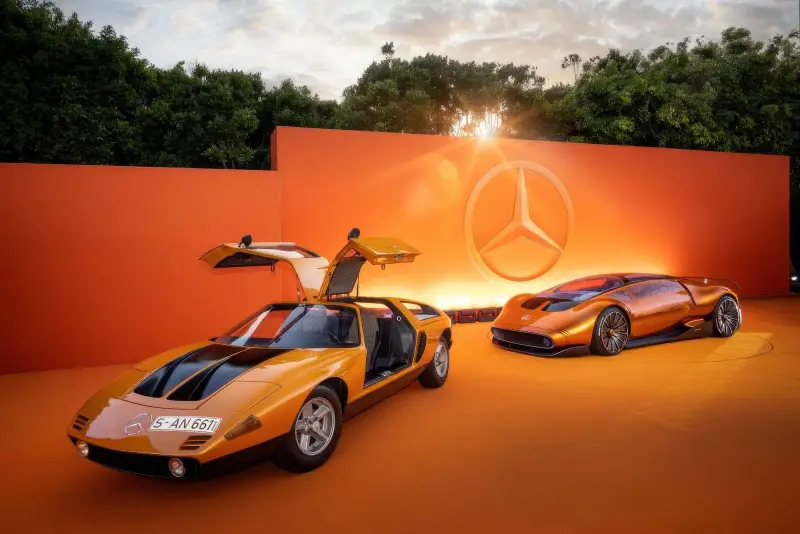
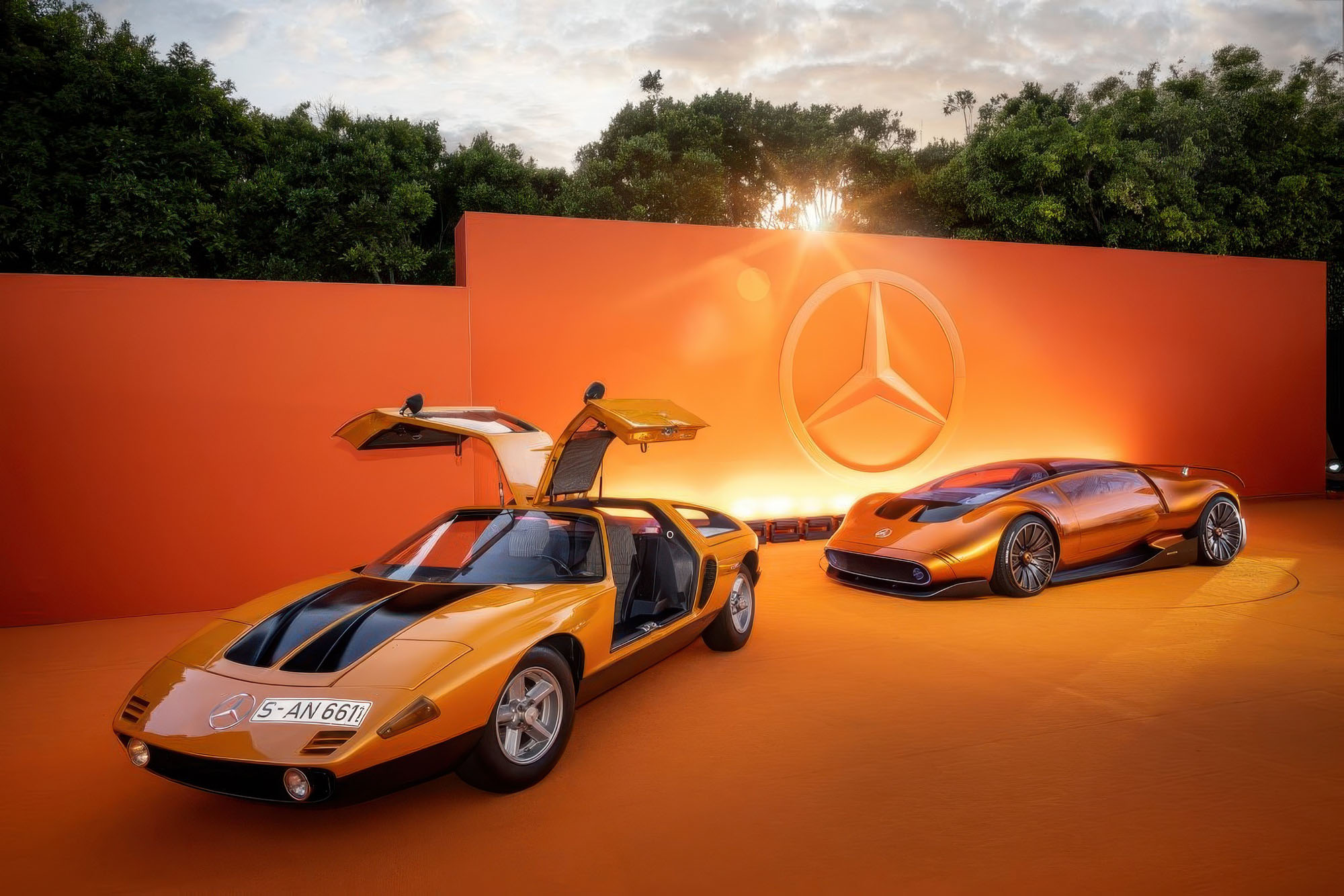
The 1970 Mercedes-Benz C 111-II known as Car 33 brings an unusually complete mechanical story to the auction block: it retains its original 2.4-liter, four-rotor Wankel engine, and Mercedes-Benz Classic restored it to running condition in 2024. RM Sotheby’s will offer the prototype on February 3, 2027, at the Palais du Louvre during Retromobile Paris. Mercedes-Benz has not disclosed an estimate.

That combination of factory development history and a running rotary powertrain is what makes Car 33 especially compelling. It was built to test ideas, not to reach production, and its record includes work on fuel delivery, temperature control and anti-lock braking. The experimental ABS no longer operates, but the car’s original four-rotor engine remains a central part of its identity.
Four rotors, five speeds and 345 horsepower
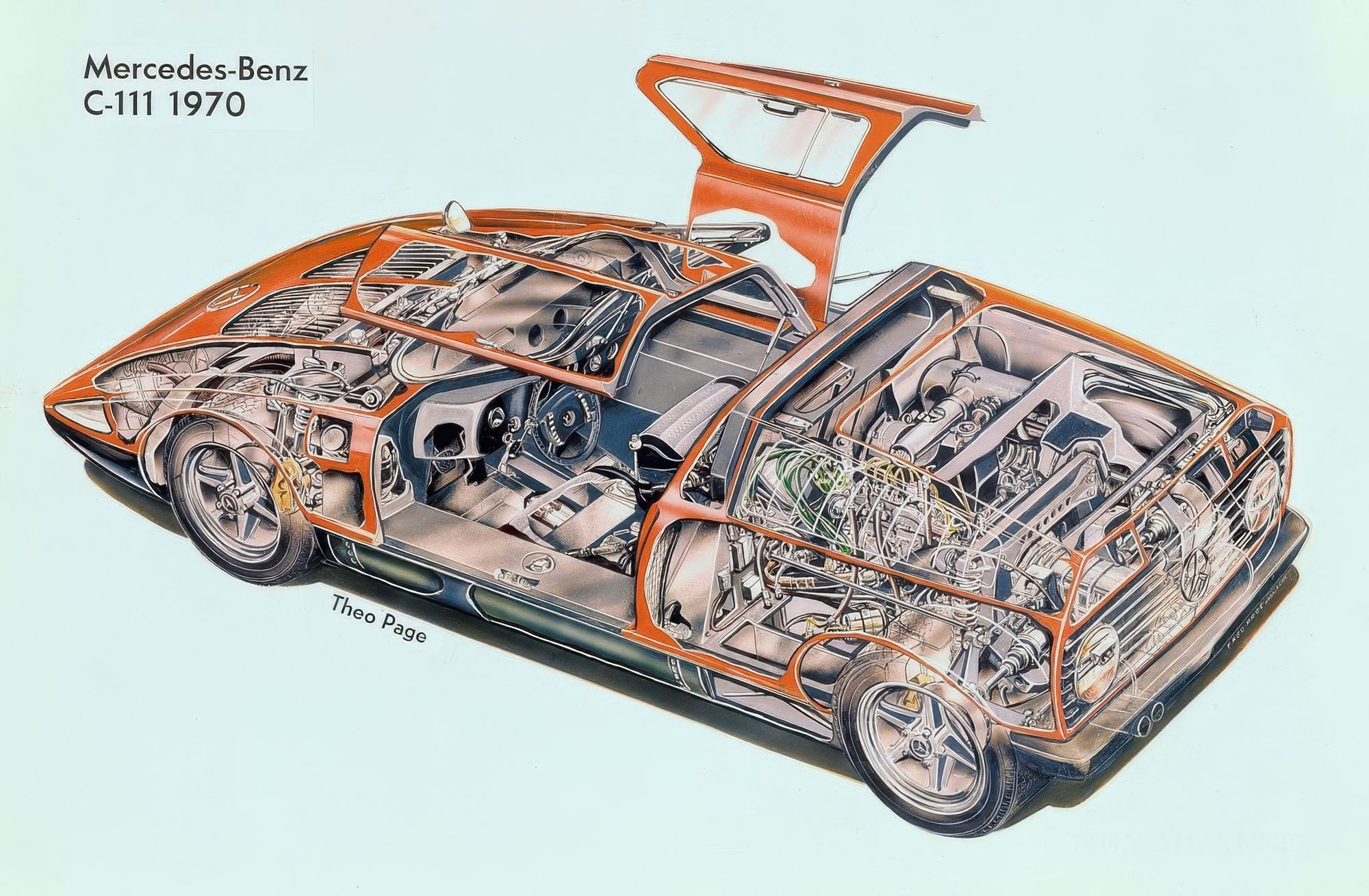
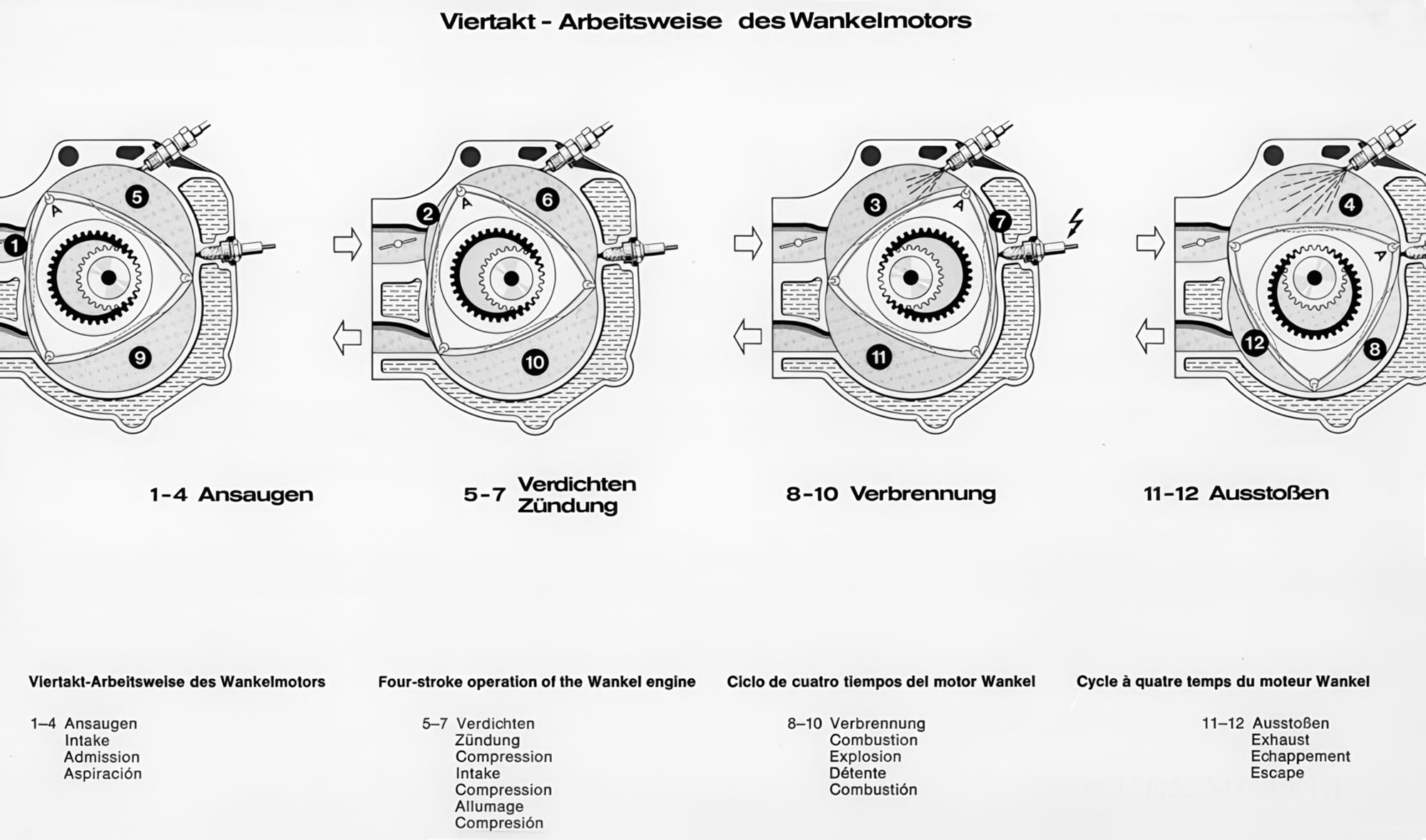
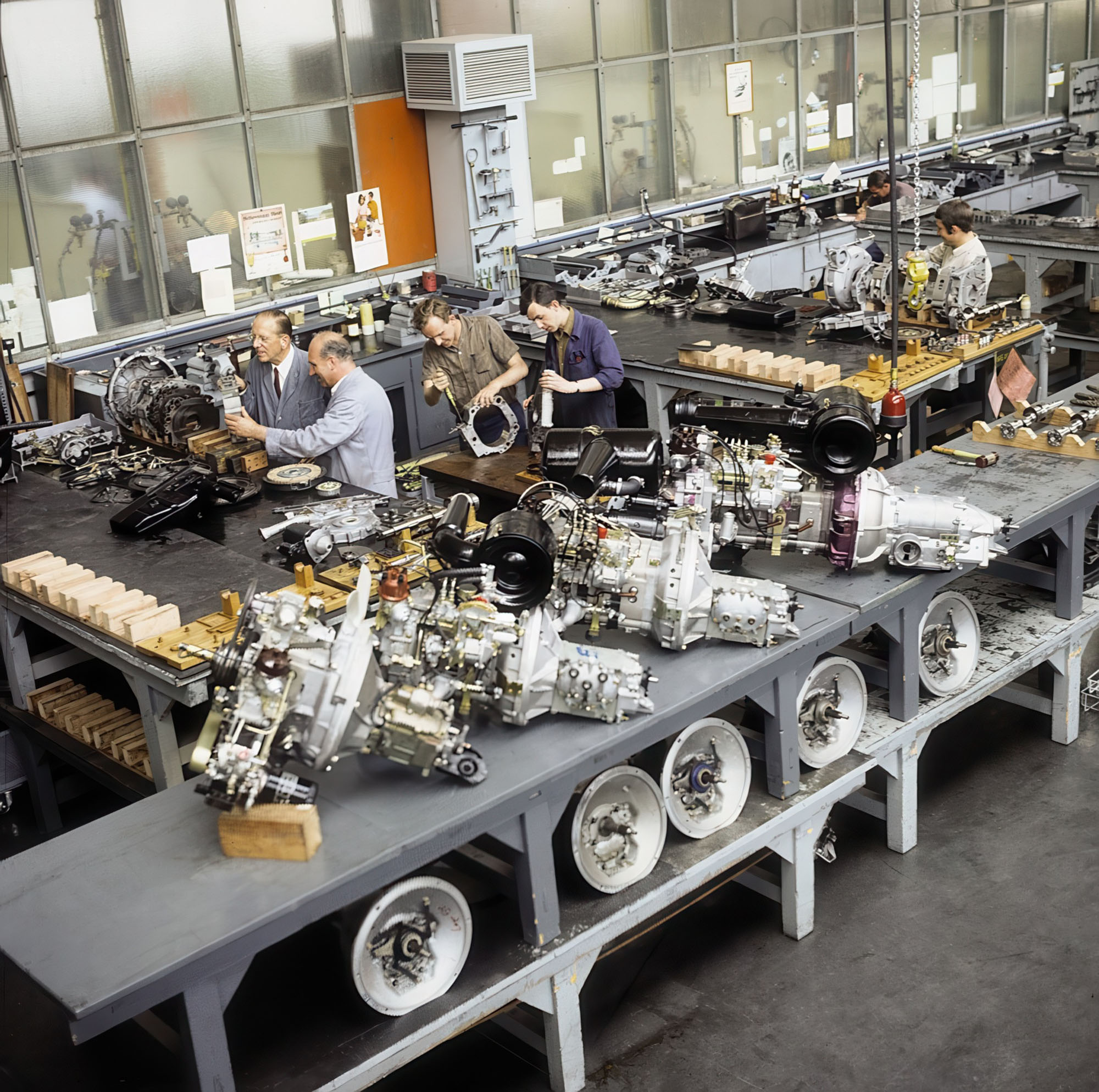
Car 33’s M 950 W 48 engine was installed in August 1970. Its 2,400 cc displacement is described as equivalent to a 4,800 cc reciprocating piston engine. Output is quoted at 345 hp (257 kW) at 7,700 rpm, with 289 lb-ft (392 Nm) of torque from 4,000 to 5,500 rpm. The engine weighs 478 lbs (217 kg), and its compression ratio is 9.3:1.
Power goes through a Fichtel & Sachs MF 215/2 dual-disc clutch and a ZF DS-25/1 five-speed manual transmission. The ratios are 2.857, 1.72, 1.21, 0.92 and 0.705:1, with a 2.86:1 reverse and a 4.22:1 final drive. Fifth gear’s overall ratio is 2.975:1. That manual gearbox and broad torque band give the specification a direct, mechanical character that suits a prototype built to explore high-speed performance.
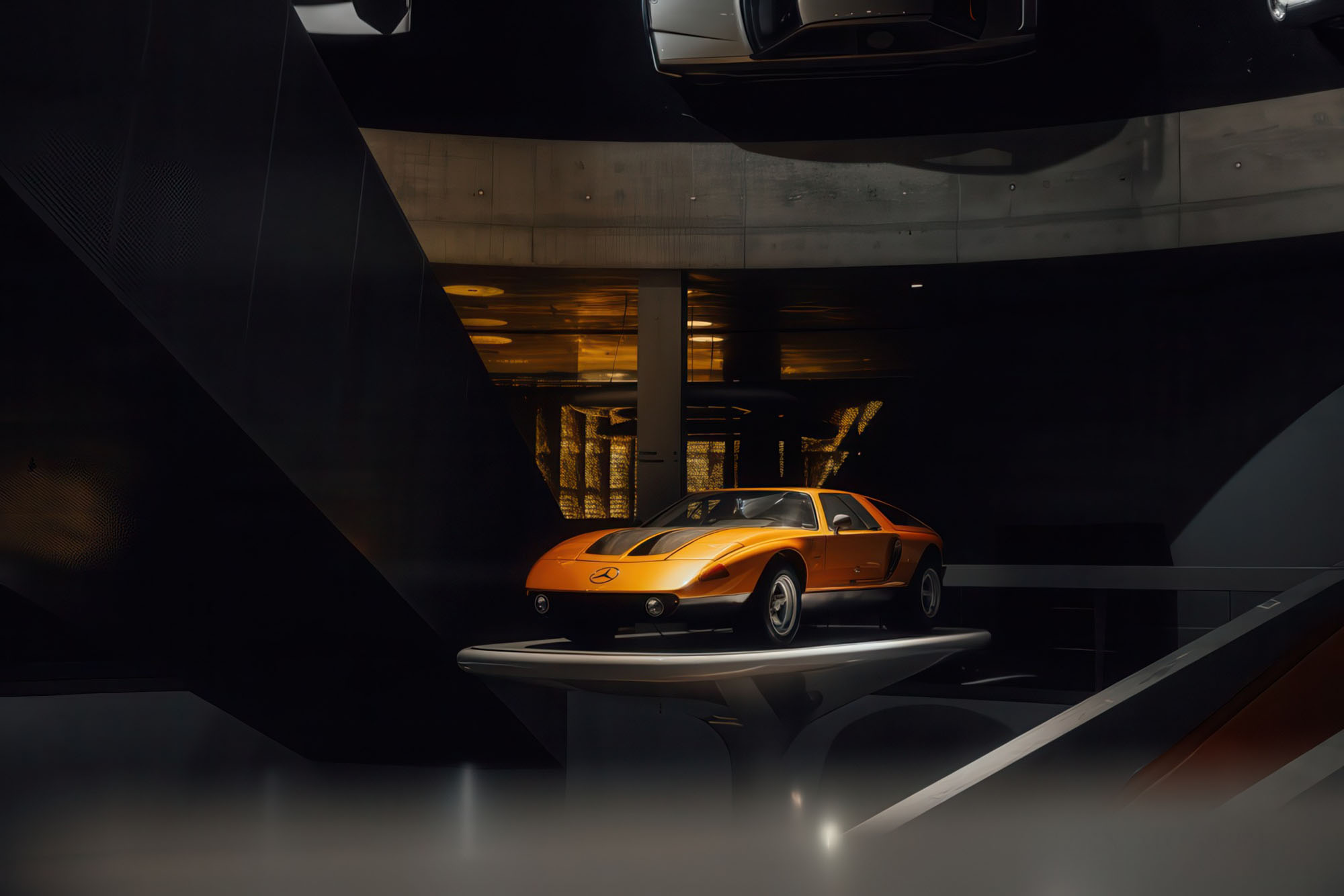
Mercedes-Benz lists a maximum speed of 186 mph (300 km/h) and a 0–62 mph time of 4.8 seconds. The car weighs 2,734 lbs (1,240 kg), with a 103.1-inch (2,620 mm) wheelbase. Its fiberglass-reinforced plastic body is finished in Weißherbst, over gray-and-white houndstooth upholstery.
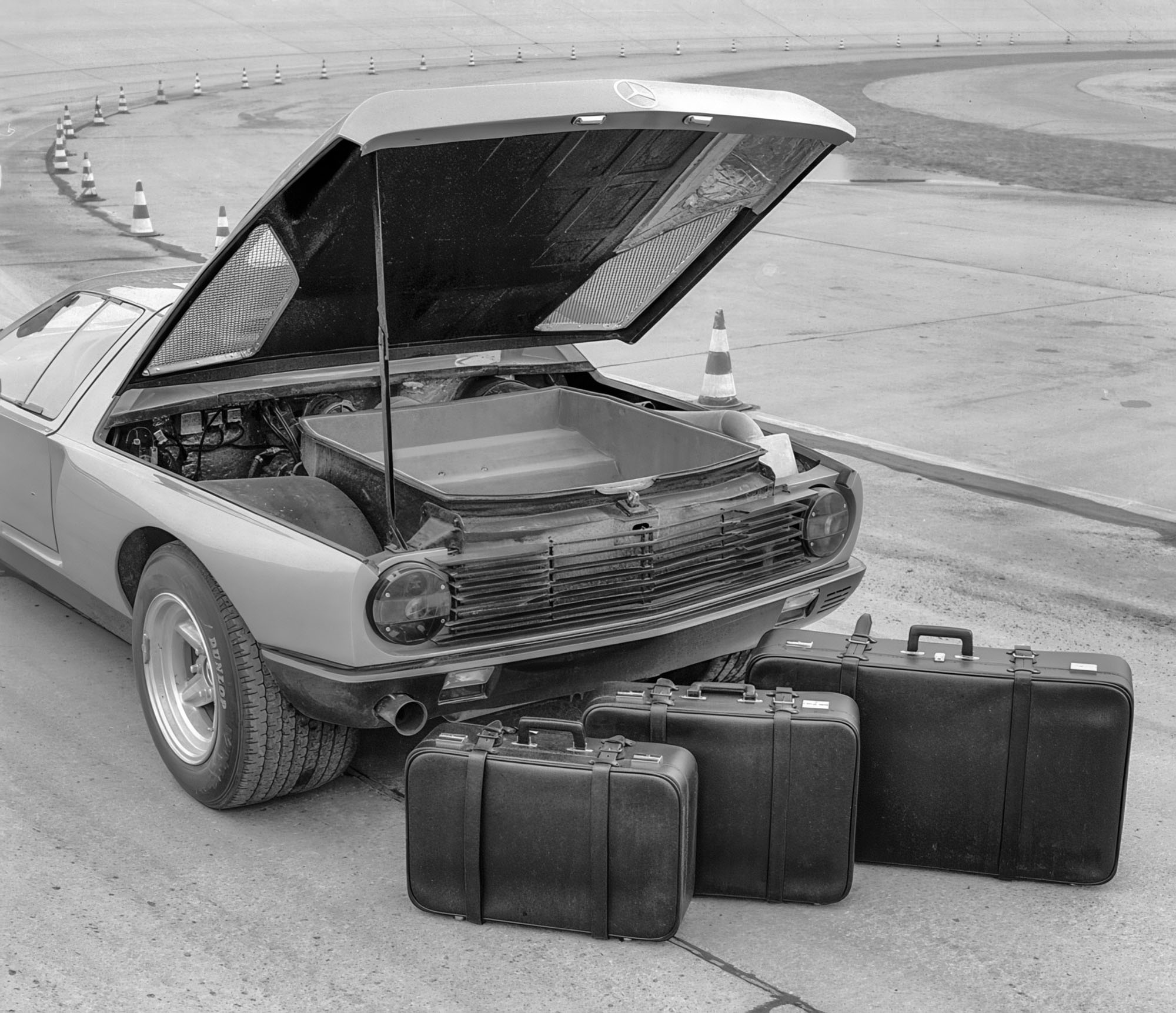
Road specification pairs 8 J × 15 H wheels, ET 20, with 215/70 VR15 90W TL Michelin XWX tires. The car also comes with period magnesium racing wheels, but those are for display only. Its listed racetrack fitment is 10 × 15 H, ET 0 at the front and 13 × 15 H, ET 30 at the rear, with Dunlop CR82 Comp 204 racing tires in 430/1160 × 15 and 530/1360 × 15 sizes. The fuel tank holds 30.6 gallons (116 liters).
A factory test car with a long public life
Car 33 worked as a development vehicle, including fuel-system, temperature and ABS testing at Hockenheim. Its career offers a useful reminder of what an experimental car represents: a test bed shaped by specific engineering questions, with systems and components that may not all survive in working order decades later.
The prototype entered Mercedes-Benz’s permanent collection in 1975 and has been displayed at the Mercedes-Benz Museum since 2006. Its public history also includes a 1971 presentation to conductor Herbert von Karajan and an appearance in the first German edition of Playboy in 1972.
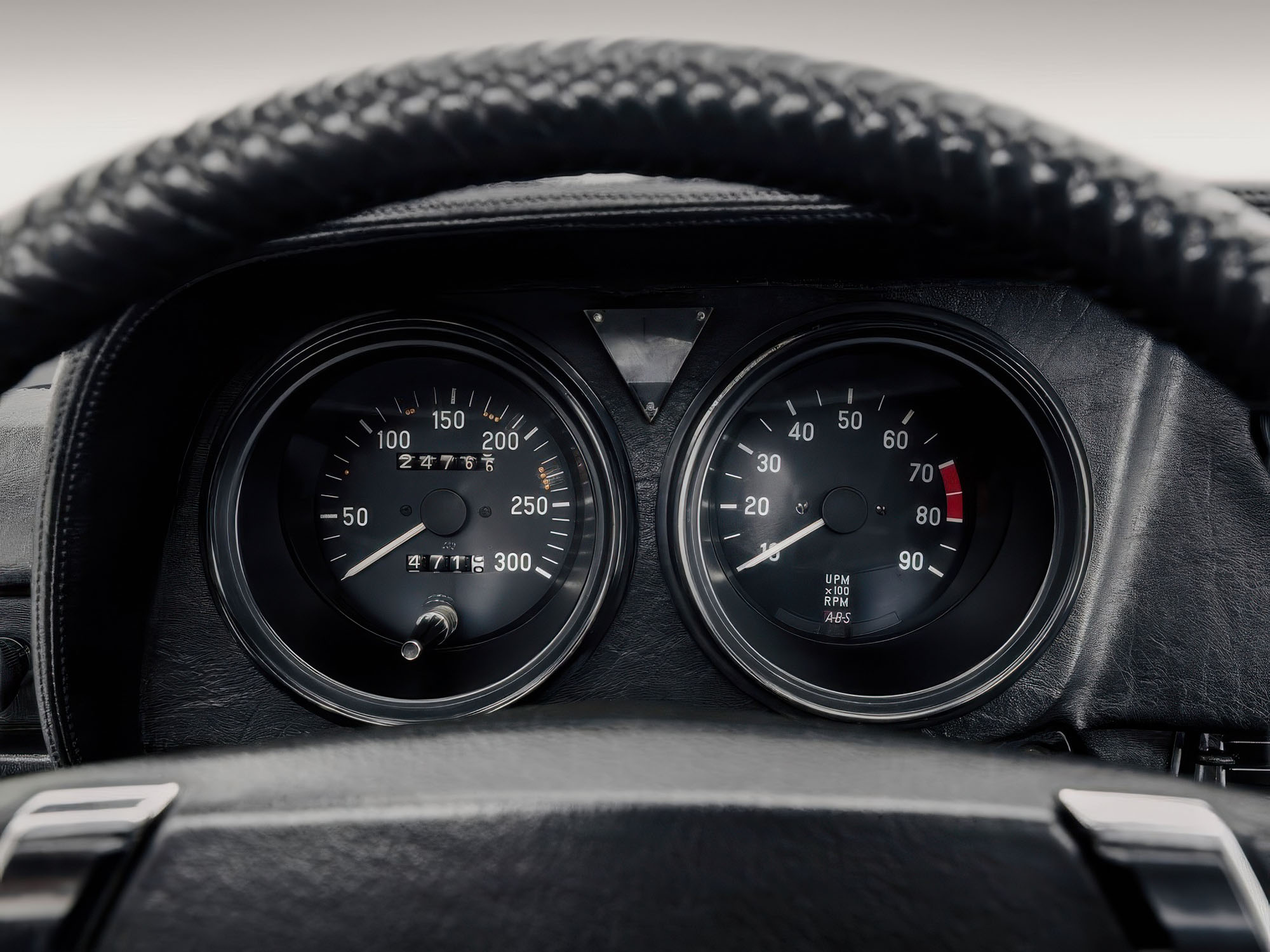
Mercedes-Benz Classic overhauled the powertrain in 2024 to return the car to running condition, while retaining the exterior and interior patina. Car 33 then appeared at the 2024 Pebble Beach Concours d’Elegance. Its odometer recorded 24,766 kilometers in October 2026. For a prospective buyer, that combination matters: the car has received substantial mechanical work while keeping the visible evidence of its age.
The C 111 program’s wider reach
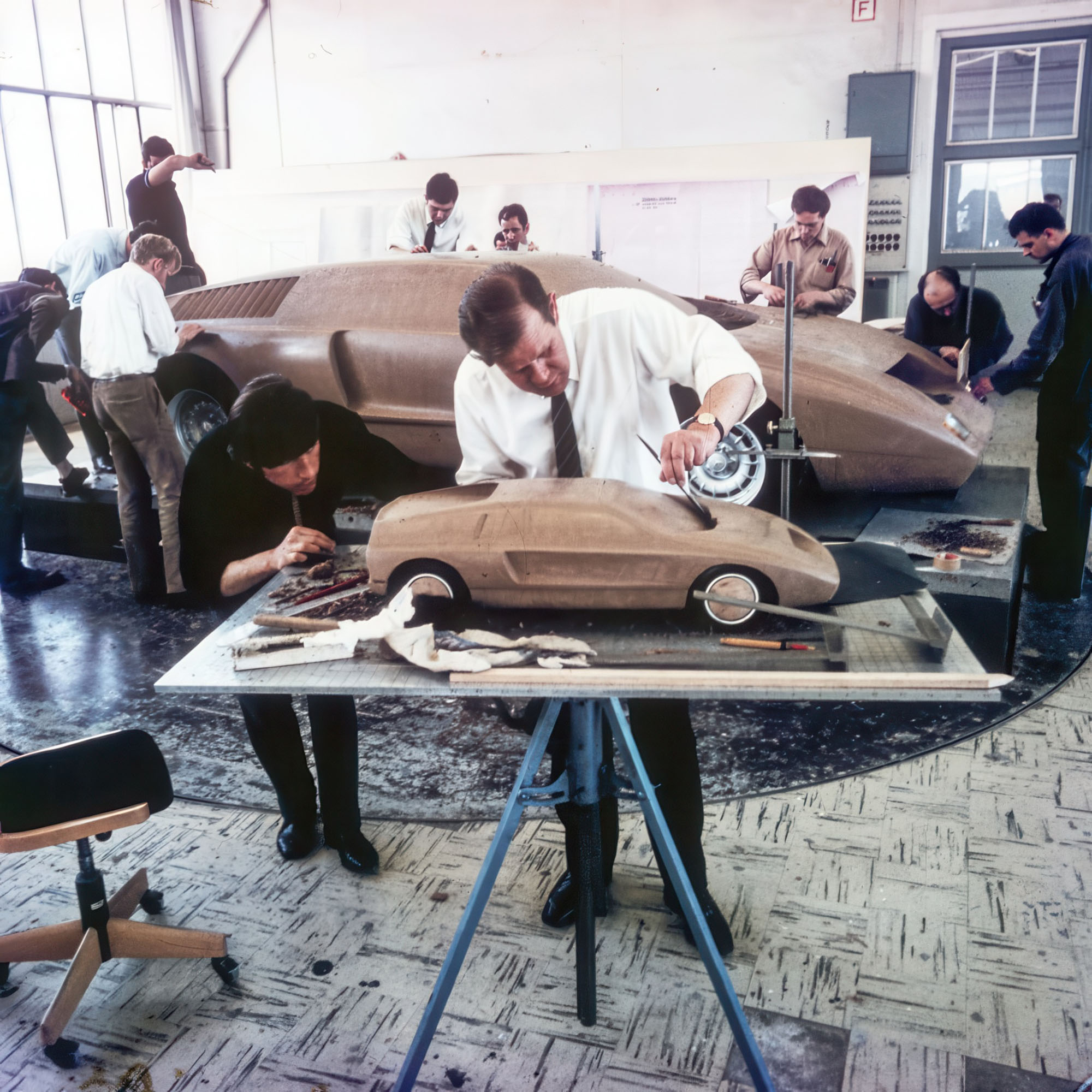
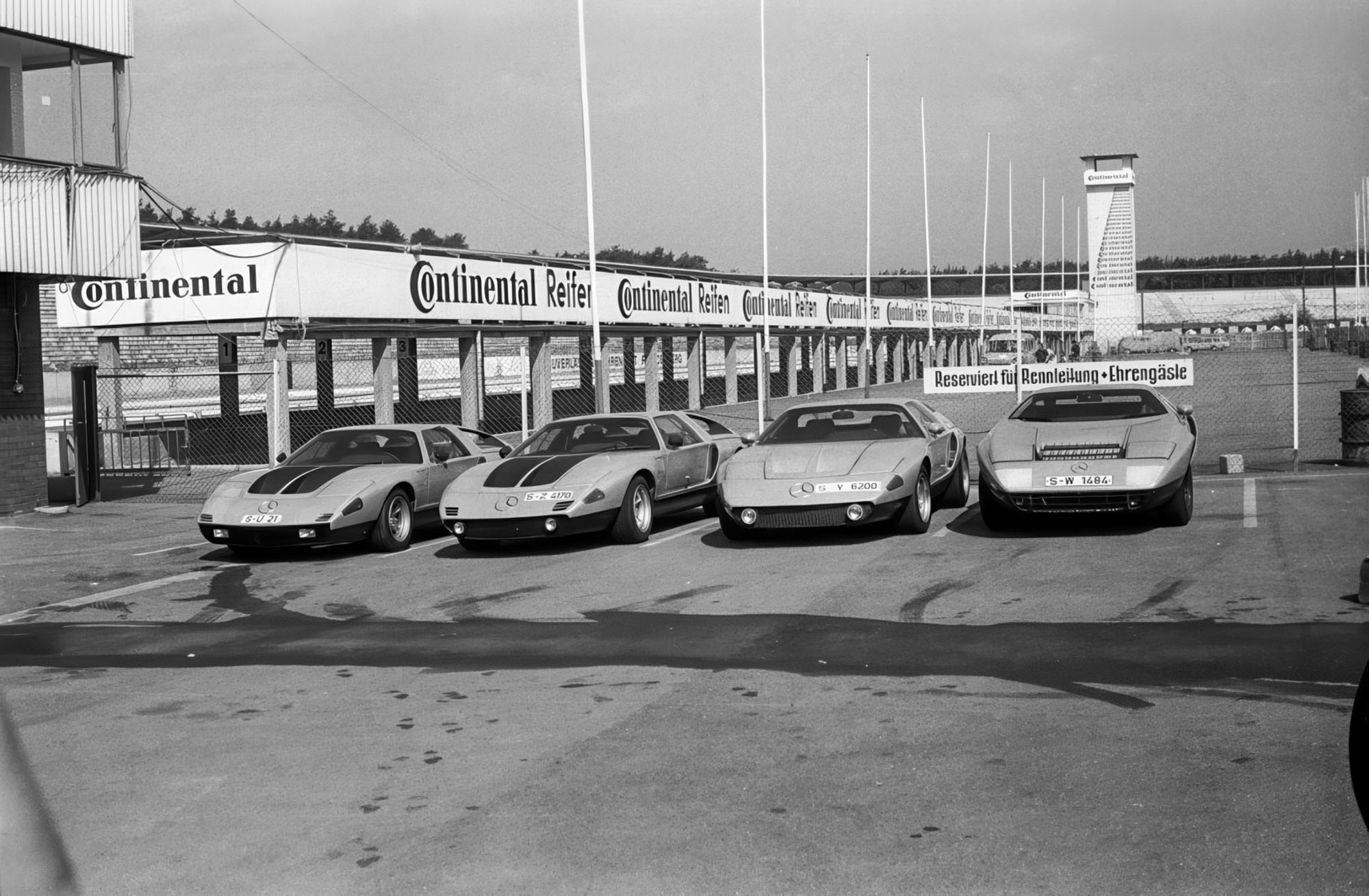
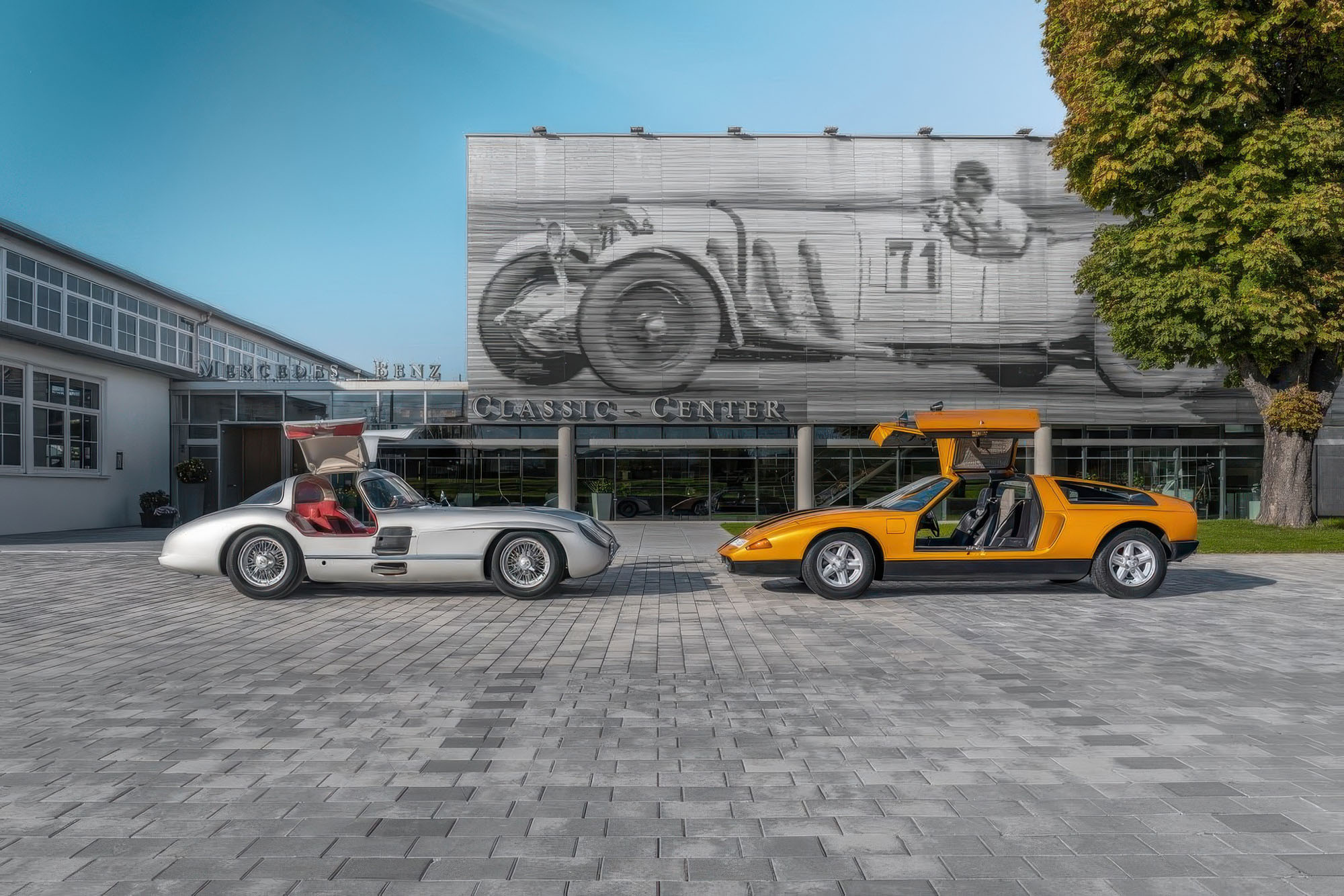
Mercedes-Benz introduced the C 111 at the 1969 Frankfurt Motor Show with gullwing doors, fiberglass bodywork and rotary-engine technology. The revised C 111-II arrived in Geneva in 1970. The series did not enter production; emissions requirements, production costs and the 1973 oil crisis all worked against that outcome.
The program continued beyond the rotary-powered cars. Later diesel- and V8-powered derivatives pursued speed records, culminating in the 494-hp C 111-IV. At Nardò in 1979, it set a circuit world record of 251.02 mph. Car 33 is part of that experimental lineage, though its own significance rests on its original four-rotor configuration and its role in the test fleet.
A rare release from the factory collection
Mercedes-Benz built 17 C 111 prototypes, and 13 remain in its collection. The manufacturer has not previously sold one. It has contractually committed not to sell another C 111 for at least 25 years, while proceeds from this sale will support development of the Mercedes-Benz Museum in Stuttgart.
Car 33 is the third C 111-II constructed, and its internal number is 33. The chassis-production record identifies it as chassis 25781, fitted with a four-rotor M 950 engine. The C 111-II was part of a larger sequence of experimental cars: earlier prototypes moved from three-rotor engines to four rotors, while later cars explored diesel and V8 power.
The sale follows Mercedes-Benz’s €135 million sale of the 300 SLR Uhlenhaut Coupé in 2022 and the €51.155 million auction of a W 196 R Streamliner in 2025. Those results establish the scale of recent releases from the historic collection, but no estimate has been provided for Car 33.
For enthusiasts, the defining detail is not just rarity. Car 33 pairs a documented factory test role with a restored, running four-rotor engine, five-speed manual gearbox and surviving period equipment. Its February 2027 appearance in Paris will put one of Mercedes-Benz’s most unusual engineering experiments in private hands for the first time.


