Real Manual Swaps, Ferrari’s By-Wire Clutch and the Rise of Virtual Gears
From six-speed conversions to simulated EV shifts, these systems offer very different levels of driver involvement—and the clutch pedal is the key.
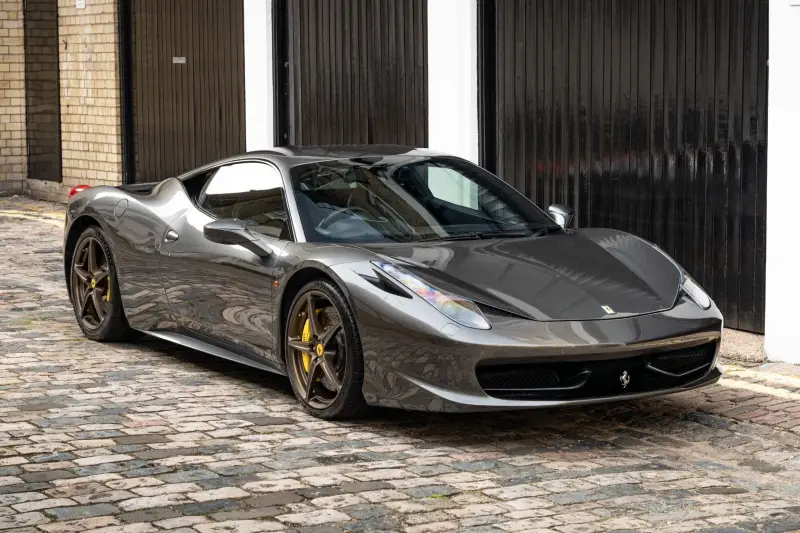
Manual shifting has returned to some high-end cars in forms that range from a full gearbox conversion to software that mimics gear changes in an EV. The hardware may look similar from the driver’s seat, but the experience differs sharply: some systems make the driver work a clutch and risk a bad shift, while others simply give an electronic transmission a new control.
That distinction helps explain the strong response to Ferrari’s 12Cilindri Manuale. Its clutch pedal and gated lever don’t connect mechanically to the gearbox, yet reviews have been enthusiastic. Top Gear called it “an all-time great manual.” The debate around that verdict makes more sense when the latest systems are sorted by what they ask the driver to do.
Full conversions put the clutch back in the loop
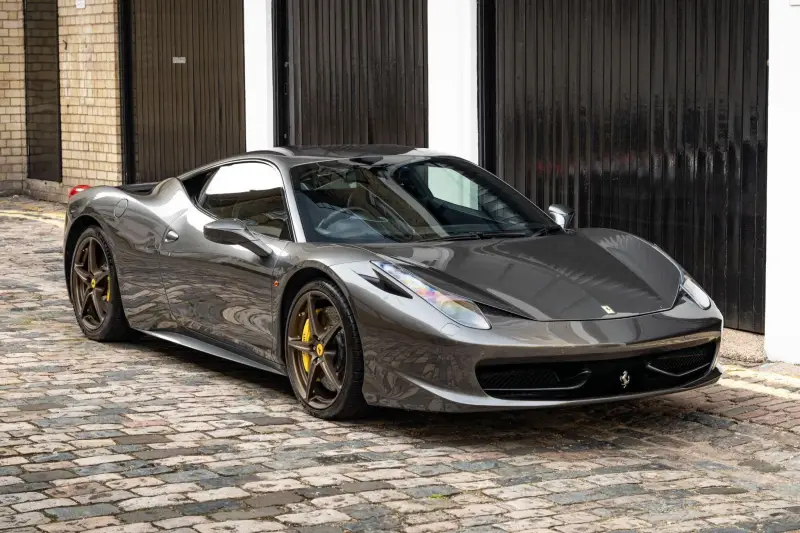
The most direct route to a manual is to replace the automatic transmission with a manual gearbox. It’s also the most involved and expensive approach, especially in cars that were never designed to accept one.
Ferrari’s 458 was the first mid-engine model from the marque to lose its gated manual option. Miami-based Modificata, founded by GT racer Jeff Segal, has converted a 458 Speciale by removing its seven-speed dual-clutch transmission and fitting a six-speed manual with a gated shifter. The job required a clutch pedal and pedal box to fit in the footwell, along with integration between the gearbox and the car’s ECU. So far, the conversion is a one-off.
Texas shop European Auto Group (EAG) took on a 458 Italia conversion in 2019. Owner Art Bartosik said customers were “screaming for a manual 458 and 488.” EAG had prior experience converting a 430 Scuderia, whose gearbox shared parts with the regular F430’s manual. The 458 presented a different challenge: there was no factory manual gearbox to adapt, so the shop had to source one elsewhere. EAG planned 10 or 11 cars, though the publicly documented result is a prototype.
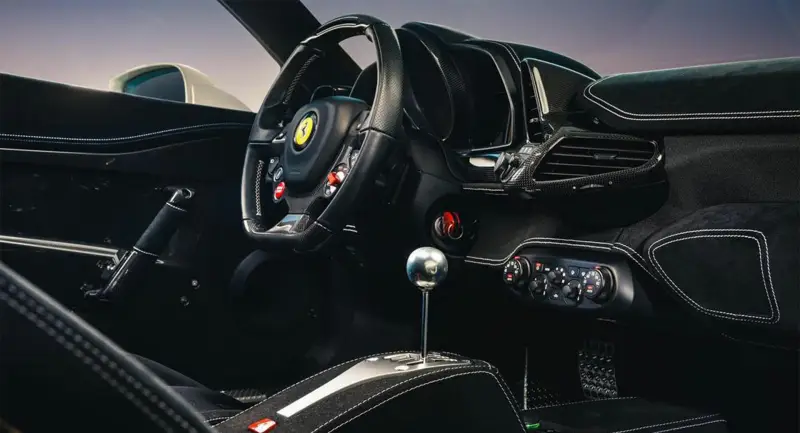
Manual conversions have also reached Ferrari’s V12 cars. Ferrari built 30 examples of the 599 GTB Fiorano with a six-speed manual, and specialists have since converted cars originally fitted with the F1 gearbox. PistonHeads found a 599 GTO with a manual conversion completed by the specialist selling it.
Porsche owners have paid for similar work. One 991 GT3 RS had its PDK replaced with the 911 R’s gearbox for about $45,000. The conversion called for a pressure plate, clutch, single-mass flywheel, hydraulics, pedals, shifter, extra wiring looms and coding. It also required replacing the PDK car’s electronically controlled limited-slip differential with a mechanical unit.
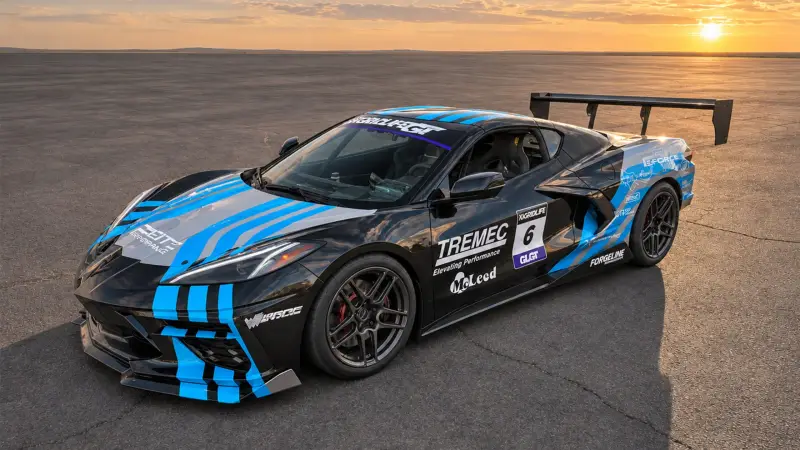
Peitz Performance of Tomball, Texas, brought a particularly ambitious conversion to the 2026 SEMA Show: a C8 Corvette fitted with Tremec’s TR-9060 six-speed manual transaxle. Corvette chief engineer Tony Roma has said GM has no plans to offer the C8 with a manual. Tremec rates the TR-9060 for up to 1,000 hp and 800 lb-ft, while Peitz developed its own MoTeC control system to make the Corvette work without expecting a dual-clutch transmission. The listed price is $74,528.99; a new 2027 Corvette Stingray starts at $73,795 with delivery.
These builds give the driver a real clutch and gears, with the consequences that come with them. They also show why the gearbox is only part of the job. Pedal packaging, electronics, wiring and control systems can make or break a conversion.
Ferrari makes a manual experience by wire
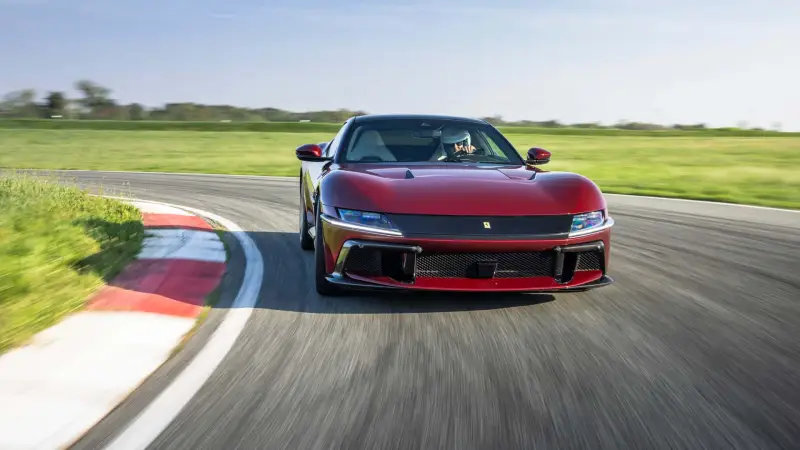
Ferrari’s 12Cilindri Manuale keeps the regular car’s eight-speed dual-clutch transmission behind its 819-hp V12. Ferrari removes the paddles and substitutes a gated lever and clutch pedal that operate through its “Manuale By-Wire” system. The mechanism weighs 5 kg (11 lb). It also marks the first Ferrari with a clutch pedal since the California and the first manual V12 from Maranello since the 599 GTB.
A sensor reads clutch-pedal travel and uses that input to control engagement of the transmission’s clutch packs. The lever selects the first six gears and reverse. Ferrari gives the pedal about 14 kg (31 lb) of resistance, and the lever, knob, gate and pedals draw on details from earlier Ferrari models.
The system is designed to let the driver make mistakes. The car starts in automatic mode to preserve its fuel economy ratings, but using the clutch switches control to the manual gears. The engine can stall if the driver mishandles the pedal. In manual mode, the car also won’t blip the throttle on downshifts, leaving heel-and-toe work to the driver.
Ferrari’s patent for a clutch-by-wire pedal was published by the US patent office on May 14, 2026, weeks before the Manuale’s debut. Departing commercial chief Enrico Galliera said the manual was the most-requested feature from Ferrari clients in recent years. Production is capped at 1,499 coupes, with Italian pricing from €590,000—roughly €190,000 above a regular 12Cilindri.
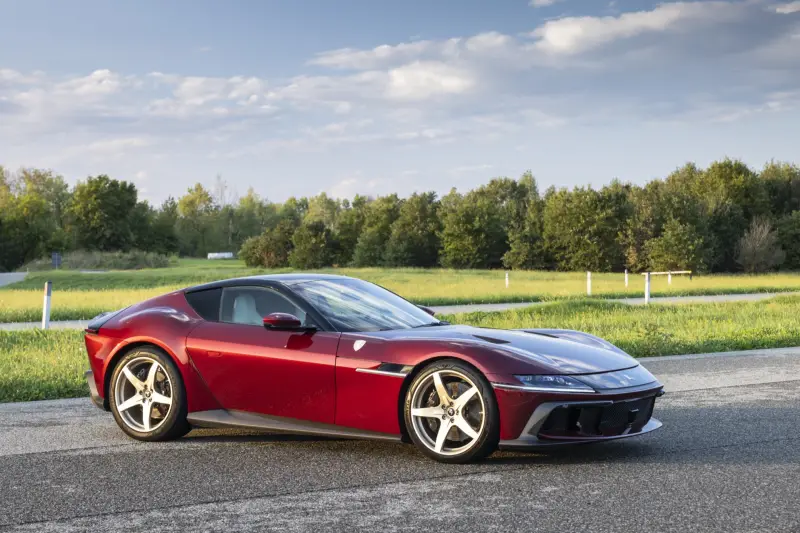
Reviews have differed on how convincing the transmission feels, but most have praised the experience. Top Gear was especially impressed. Motor Sport’s Andrew Frankel called the car brilliant but imperfect, while Auto Express had reservations about the gearbox even as it credited the system with adding another dimension to the supercar. Chasing Cars put the distinction in perspective: it “matters, but not as much as you’d think.”
Koenigsegg arrived at a similar idea with the CC850. Its version of the Jesko’s nine-speed Light Speed Transmission uses an Engage Shift System to offer a six-speed manual mode, with both clutch pedal and shifter operating by wire. The gearbox has no synchros or shift forks; pedal movement controls pressure in its clutch packs. Christian von Koenigsegg demonstrated that the system can stall when he eased off the clutch with the parking brake on, accidentally stopping a CC850 on a show stand.
Porsche has also filed a patent describing a dual-clutch transmission with a clutch pedal and H-pattern shifter, including a possible application in hybrid cars. That could matter for a hybrid 911: Porsche’s hybrid-friendly manual patents describe a potential way to bring manual-style controls to a setup that otherwise can’t take a conventional manual.
A gate can still be an electronic control
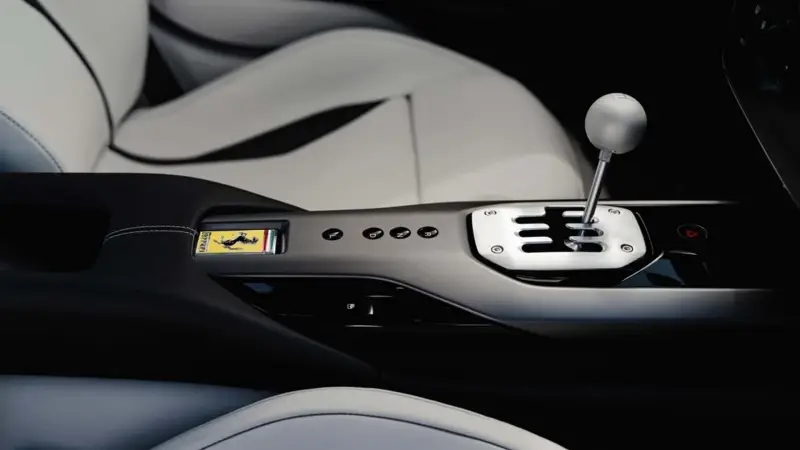
Rezvani’s Quick Shift keeps the gated lever but leaves the transmission itself alone. Rezvani Engineering, the technology arm of Rezvani Motors, built the first working prototype and showed it online on May 15, two months before Ferrari announced the Manuale. Italy’s Studio Carrozzi worked with the company on the design.
The $25,000 kit is offered for the Ferrari 458, 488 and F12. Moving the lever through its machined metal gate sends the same electronic shift commands as the factory paddles, which remain on the steering wheel. Rezvani says installation requires no permanent transmission changes, can be reversed, and preserves the car’s factory DCT speed and rev-matching.
Versions for the Lamborghini Huracán and Aventador are in development. Rezvani is also taking $500 refundable deposits for a C8 Corvette version. Ferris Rezvani describes the appeal this way: “Modern cars have amazing technology, but along the way they’ve lost the emotion.”
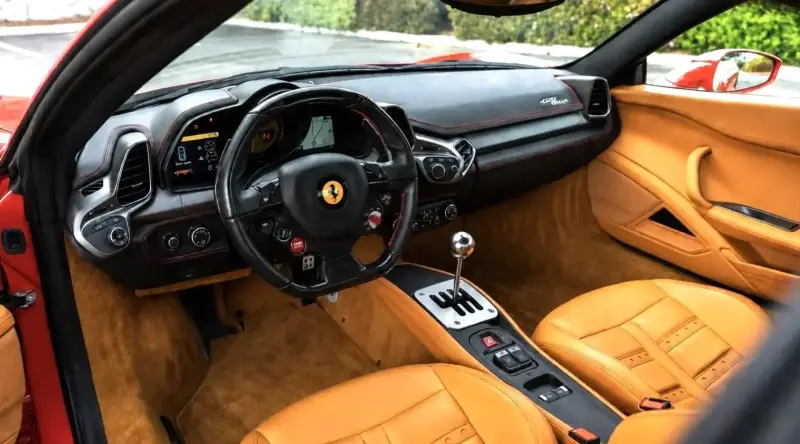
The Quick Shift delivers the sound and feel of moving a lever through a gate, but there’s no clutch pedal and no need to lift off the throttle between shifts. The transmission still handles the work. Carscoops described the gate as an alternative to the paddles, which is a fair description: the hardware adds a tactile control without adding the timing and coordination of a conventional manual.
MockShift is pursuing a similar idea for the C8 with a gated manual and sequential shifter kit that retains the factory dual-clutch. That gives Corvette buyers an unusual choice: keep the DCT and add a different control, or pay for a full six-speed conversion.
EVs simulate shifts without giving up a manual
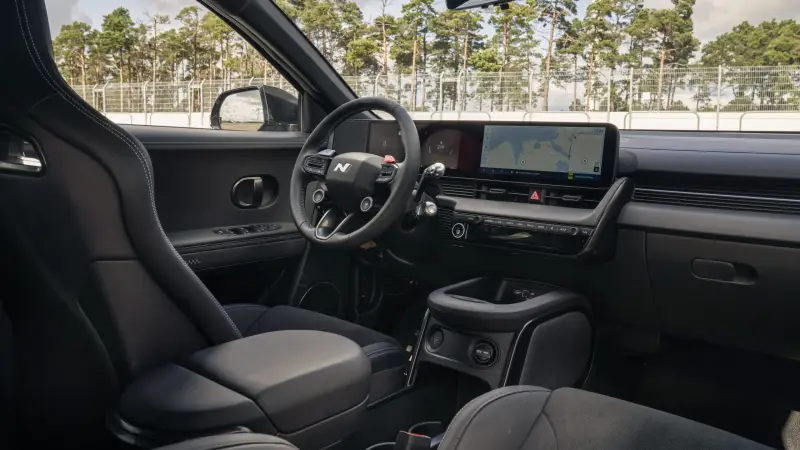
Virtual gears are the least mechanically involved option, but they address a different problem. Electric cars have no conventional multi-speed gearbox to lose. Hyundai introduced simulated shifts and a virtual rev limiter in the Ioniq 5 N in 2023, giving the driver more to manage than a single, uninterrupted surge of acceleration.
Porsche added E-Shift to the Taycan in June 2026. The software draws on the characteristics of PDK to simulate an eight-speed transmission, including “noticeable gearshift jerks” and gear-specific drag torque. E-Shift is standard on the Turbo GT and optional on other Taycan models. Porsche also synchronized the simulated second-to-third upshift with a real shift in the Taycan’s rear gearbox, so the two events coincide for that change. CAR magazine liked the feature enough to say it wouldn’t buy a Taycan without it. Honda has taken virtual shifting to a smaller car with its Super N.
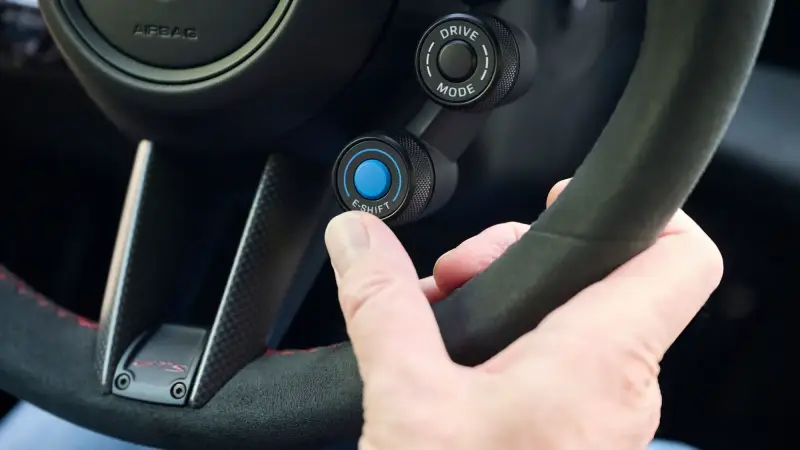
Simulated shifts don’t recreate a manual gearbox, but they can give an EV driver a more active role in how acceleration feels. There’s no lost clutch pedal to mourn, because the car never had one.
The clutch pedal is the useful dividing line
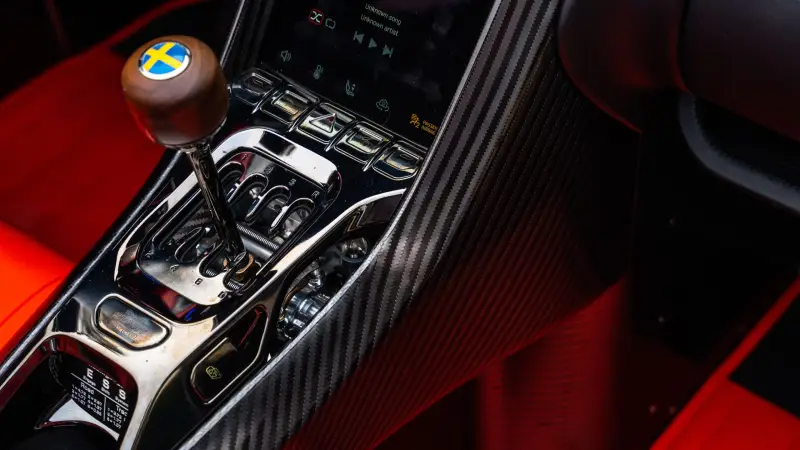
Rank these systems by how much they ask of the driver and the full conversions sit at the top. In a manual C8 or converted 458, a poorly timed shift is the driver’s responsibility. By-wire systems with a clutch pedal come next: the 12Cilindri Manuale and Koenigsegg CC850 can stall, and Ferrari leaves downshift rev-matching to the driver.
A gated shifter without a clutch pedal gives less involvement. Rezvani’s machined gate may be satisfying to use, but it sends commands to the same DCT that the paddles control. Virtual EV gears ask the least of the driver, while adding a new layer of interaction to cars without a multi-speed transmission.
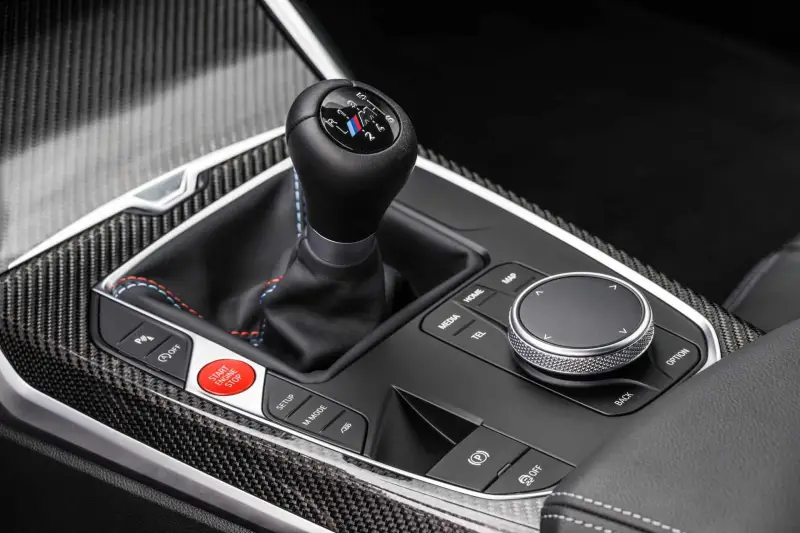
By-wire controls could also help keep clutch pedals in cars where a conventional manual gearbox is difficult to package. BMW M has said that declining demand, fewer suppliers and the challenges of 48-volt mild-hybrid technology are making manuals harder to sustain. Porsche’s hybrid 911 can’t use a conventional manual because its electric motor is integrated into the dual-clutch transmission.
That leaves the driver’s inputs as a practical measure of what each system offers. If the pedal affects the car and careless work can stall it, there’s a meaningful manual skill involved. A gated lever without a clutch can still be enjoyable, but it offers a different kind of satisfaction. Ferrari’s buyers have shown that many enthusiasts are willing to pay roughly €190,000 extra for the by-wire version, and the reviews suggest that a real clutch pedal’s feel may matter as much as the mechanical connection behind it.


