1963 Ferrari 250 GT Lusso Chassis 5117: A Classiche-Certified V12 Grand Tourer
Chassis 5117 pairs a 3.0-liter Colombo V12 and four-speed manual with documented history, a Reggie Jackson ownership chapter and Ferrari Classiche certification.
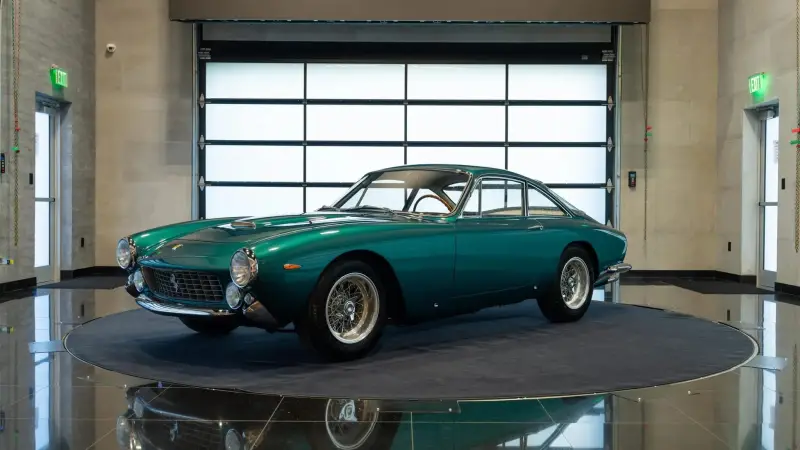
Chassis 5117 shows what made the Ferrari 250 GT Lusso such a compelling grand tourer: competition-derived V12 hardware wrapped in a body shaped for elegant road use. This 1963 example, offered for sale on Bring a Trailer, is the 125th of 350 Lussos built during the model’s 18-month production run. Its appeal rests on more than rarity: the car brings together a documented history, Ferrari Classiche certification and a specification that balances period sporting character with a more considered cabin.
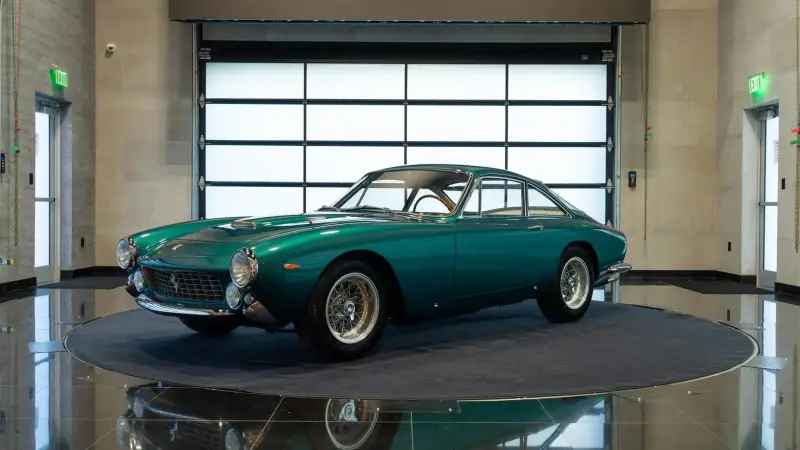
A Lusso with a recorded history
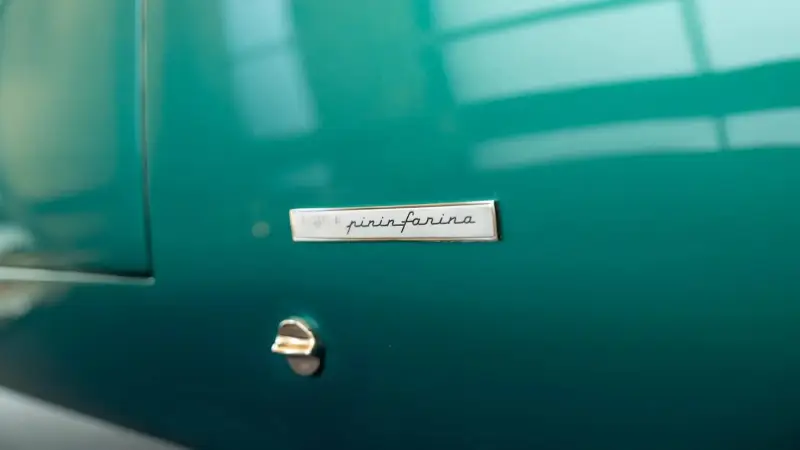
Ferrari introduced the 250 GT Lusso at the 1962 Paris Motor Show as the final road-focused model in the 250 family. Pininfarina handled the design, while Scaglietti built the steel body, using aluminum for the opening panels. That division of work produced the Lusso’s distinctive fastback form while keeping its identity rooted in Ferrari’s established 250 GT engineering.
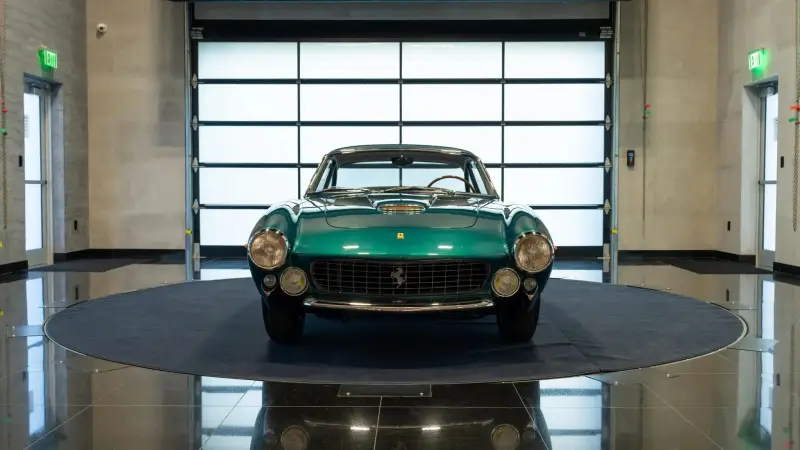
Chassis 5117 was completed on October 19, 1963, and first delivered to Gioacchino Veri in Rome. After changing hands among European owners, it reached the United States in 1970 through Luigi Chinetti Motors. That transatlantic chapter gives the car a clear early path from its original delivery to its later American history.
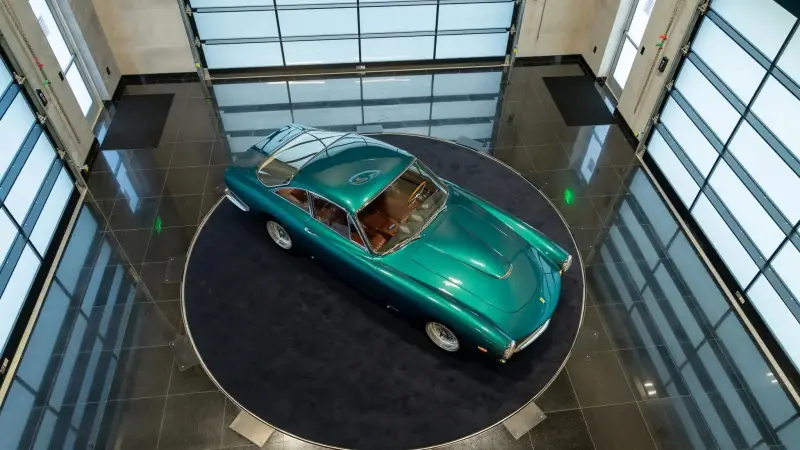
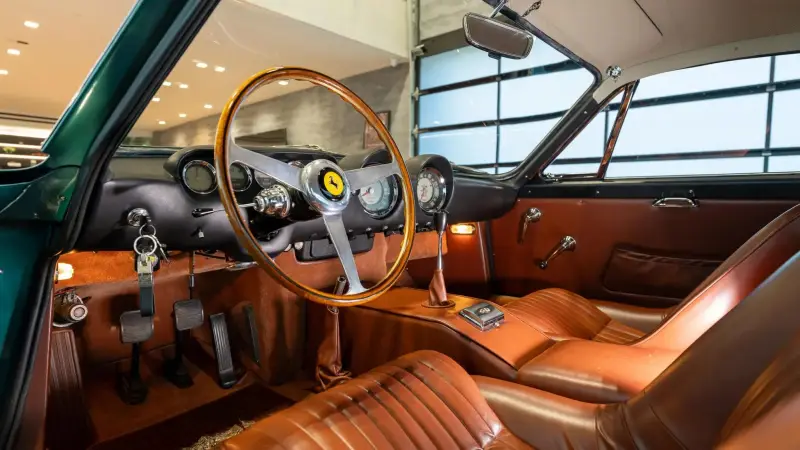
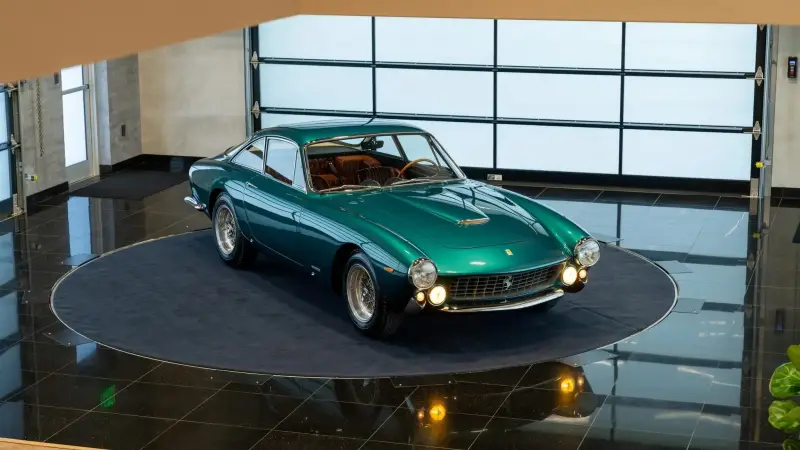
Reggie Jackson acquired the Ferrari in 1998 and commissioned a comprehensive refurbishment by Grand Prix Motors in 2000. The work included changing the car’s earlier finishes to its present Pino Verde Metallizzato paint and Tobacco leather interior. Ferrari specialist Greg Jones later carried out additional work. The Lusso appeared at the 2009 Cavallino Classic and Meadowbrook Concours d’Elegance, received Ferrari Classiche certification in 2011, and took part in the 2014 FCA Ferraris on Oak Street Concours d’Elegance in Chicago.
Colombo V12 and four-speed manual
Power comes from a naturally aspirated 3.0-liter Colombo V12 with an aluminum block and cylinder heads. Triple Weber carburetors feed the engine, and dual ignition coils and distributors complete the stated ignition setup. The listing doesn’t provide a horsepower or torque figure, so the mechanical story here is best read through the engine’s layout and its period hardware rather than an unsupported output claim.
A four-speed manual transmission sends power to the rear wheels, with a replacement limited-slip differential in the driveline. That pairing suits the Lusso’s grand touring brief: the driver has a manual gearbox to manage the V12’s delivery, while the limited-slip unit helps share drive between the rear wheels. The source gives no gear ratios or details about the differential’s installation, so those particulars would need to be established from the car’s records or a close inspection.
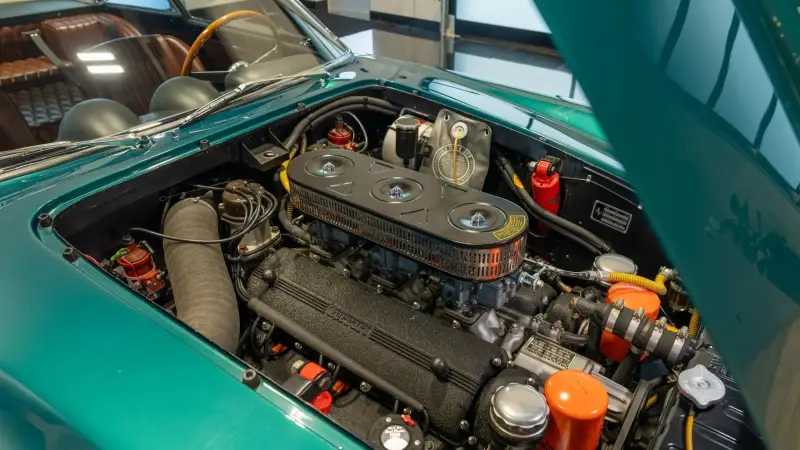
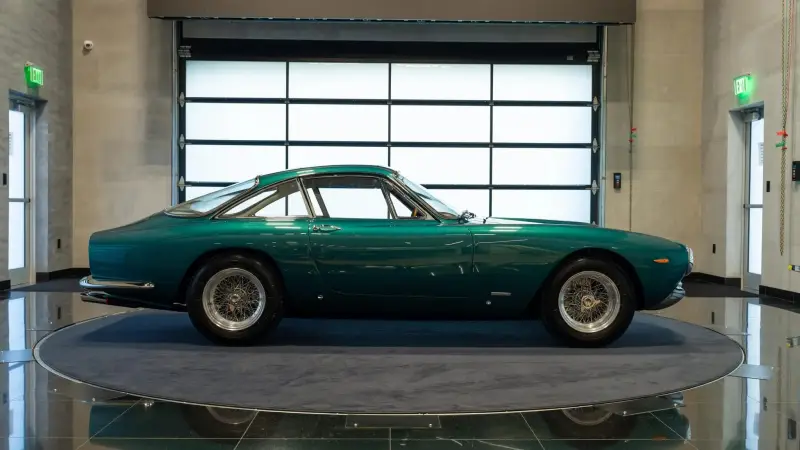
The chassis uses independent double-wishbone suspension at the front and a solid rear axle, with coil springs and Koni shock absorbers. A solid axle is a simpler arrangement than independent rear suspension, while the front wishbones provide separate wheel control across the nose. Vacuum-assisted Dunlop disc brakes work at all four corners. The listed rolling stock consists of 15-inch Borrani wire wheels, secured with three-eared knock-offs and fitted with Michelin XVS tires.
Details in the body and cabin
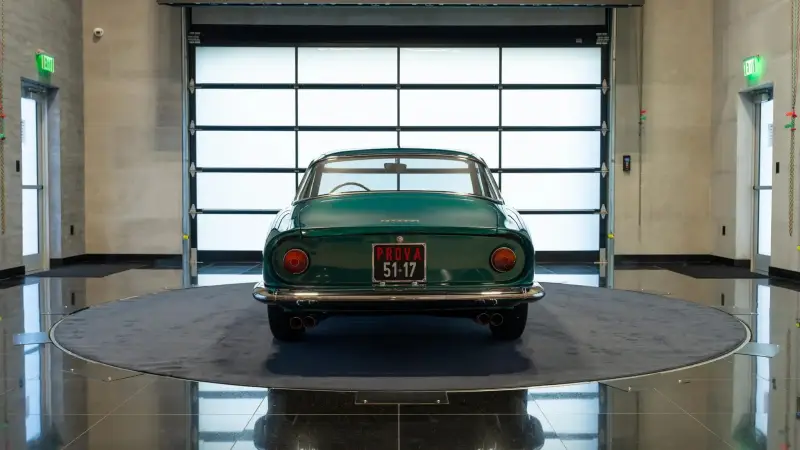
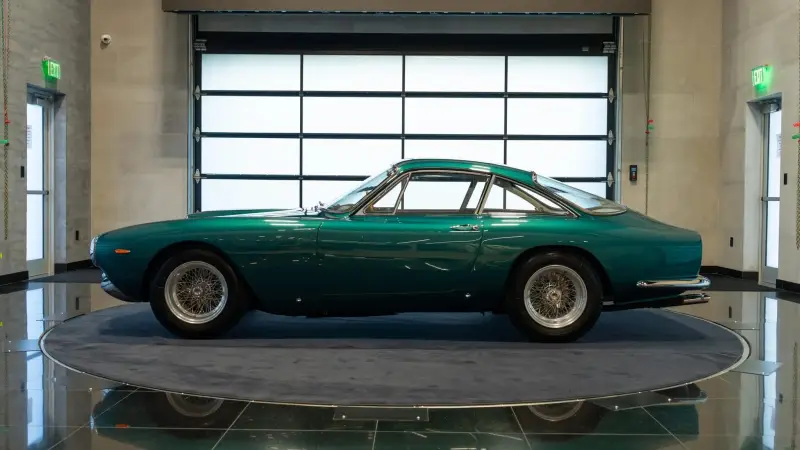
The Lusso’s shape is easy to recognize in its low-profile nose, egg-crate grille and Kamm-style rear with an integrated spoiler. This example adds Marchal driving lights, a three-piece front bumper and quad exhaust outlets. Those visible details give the car a more specific identity without obscuring the basic Pininfarina and Scaglietti design.
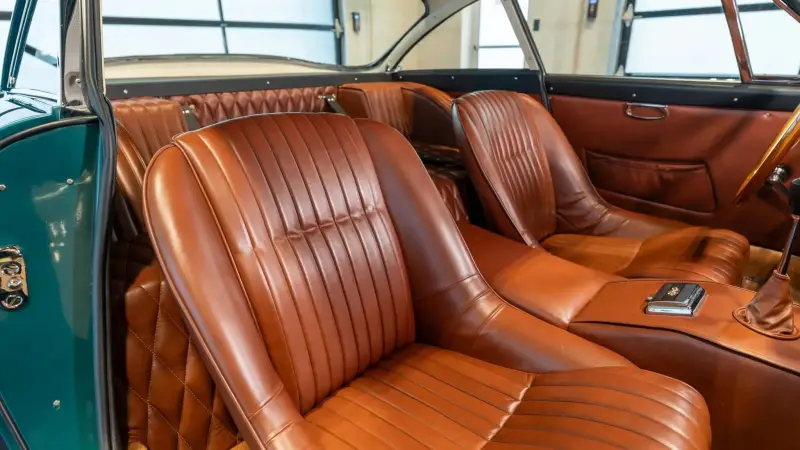
Inside, Tobacco leather covers the fixed-back bucket seats, door panels and center console; a rear luggage shelf continues the cabin’s finish behind the seats. A wood-rimmed steering wheel and centrally positioned Veglia instruments keep the dashboard’s character tied to the period. The five-digit odometer shows approximately 30,000 kilometers, or 19,000 miles. That reading is a useful reference point, though it doesn’t by itself establish total distance traveled or the extent of mechanical work.
The combination of Classiche certification, concours appearances and the 2000 refurbishment gives prospective buyers several concrete threads to follow when assessing the car’s condition and history. The stated specification also leaves practical questions for an inspection: how the replacement limited-slip differential behaves, what service the V12 and Weber carburetors have received, and how the suspension, brakes and Michelin tires present today.
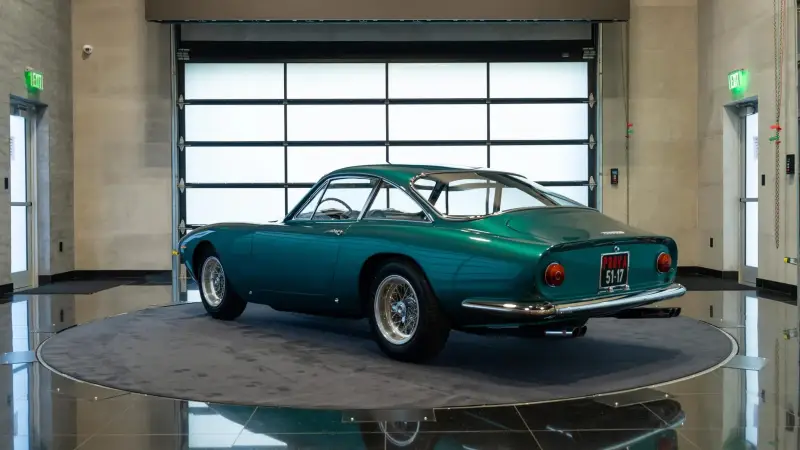
With only 350 examples produced, chassis 5117 carries the Lusso’s scarce-production appeal alongside a substantial ownership trail. Its central attraction remains the way the 3.0-liter Colombo V12, four-speed manual and carefully finished cabin bring Ferrari’s sporting machinery into a road-going GT. For the next custodian, the records and present mechanical condition will complete the picture behind this well-documented 1963 Ferrari.