1974 Ferrari Dino 246 GTS Chassis 08454: Rare Verde Medio Niyinsky Example
Chassis 08454 pairs rare Verde Medio Niyinsky paint and Ferrari Classiche certification with a 2.4-liter V6, five-speed manual and layered restoration history.
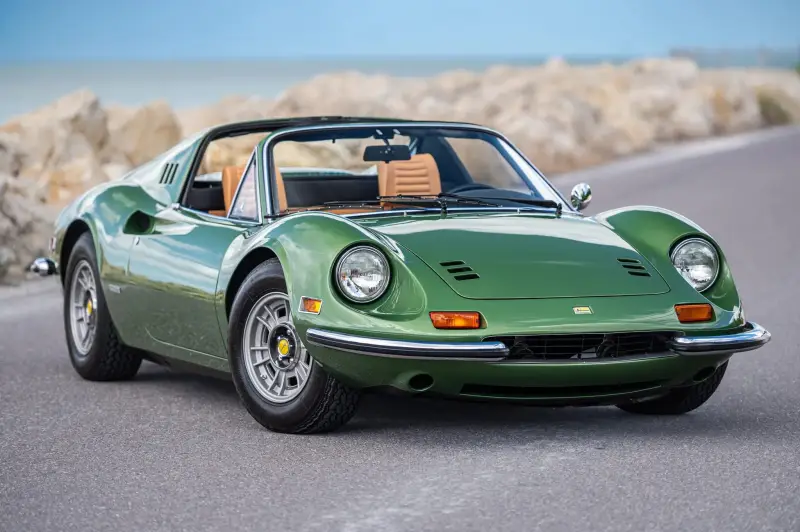
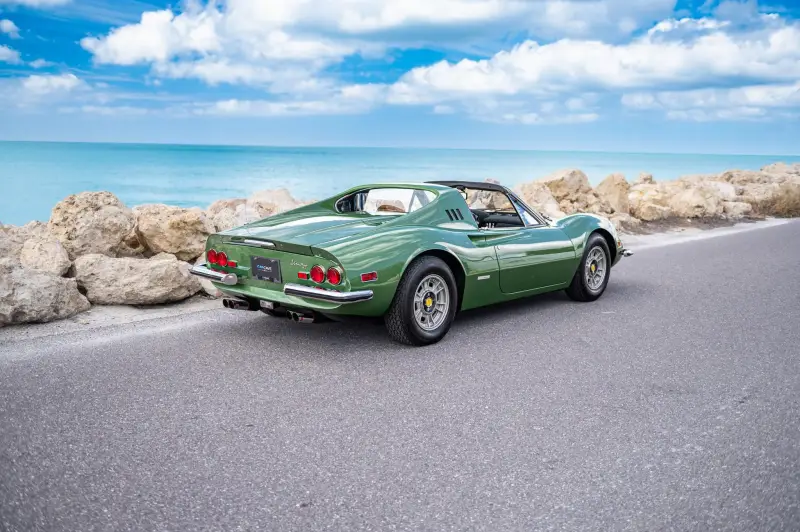
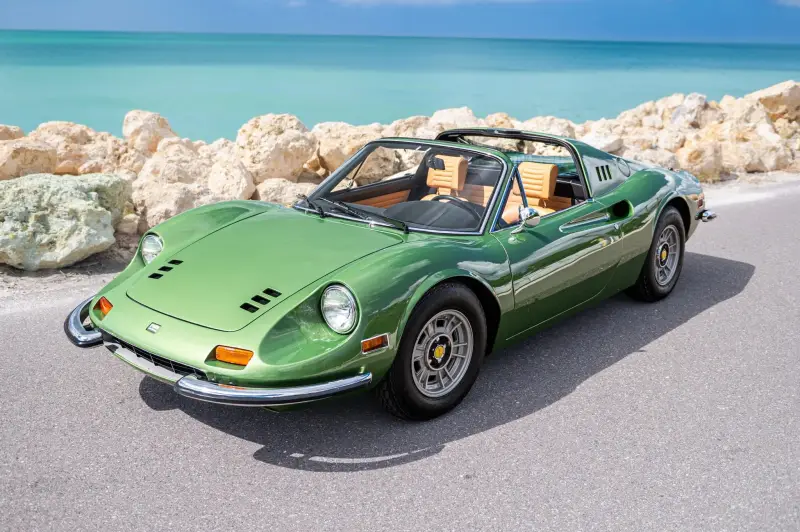
A rare factory color, a documented ownership trail and a restoration that returned the car to its original finish give this 1974 Ferrari Dino 246 GTS a story beyond its mid-engine V6. Chassis 08454 is offered for sale on Bring a Trailer. Its Verde Medio Niyinsky paint, Beige cabin and Ferrari Classiche certification make provenance a central part of the car’s appeal.
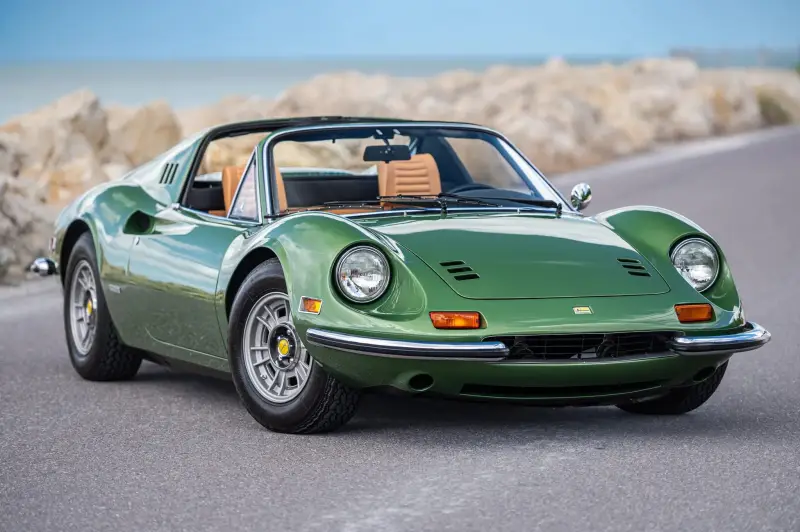
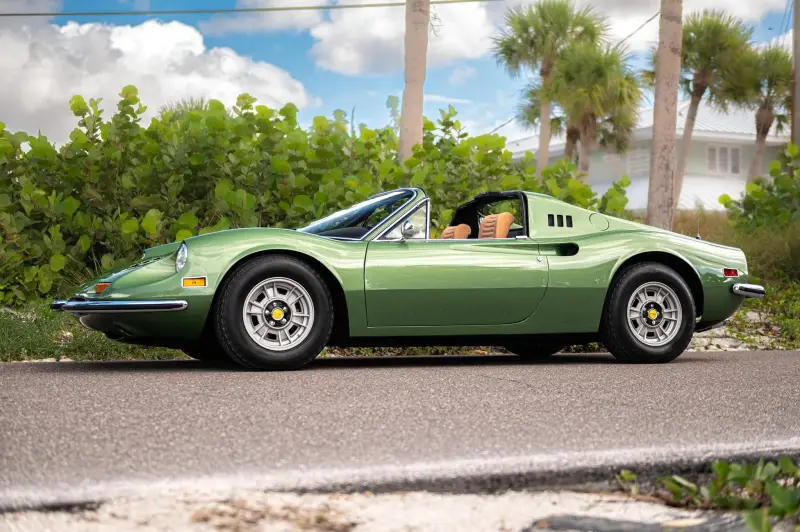
Completed in May 1974, the Dino was ordered through Bill Harrah’s Modern Classic Motors in Reno, Nevada. Its original combination was Verde Medio Niyinsky over Beige leather. The unusual green takes its name from Nijinsky II, the celebrated racehorse, and the car is reportedly one of just three Dinos delivered in that color. That claim makes the factory specification a particularly distinctive detail, though the available information does not identify the other examples.
A color that came back
The car’s finish changed during its early years. After passing through Hollywood Sports Cars to socialite and oil heiress Sandra West, it was acquired by her lawyer from her estate following her death in 1977. The Dino changed hands several times over subsequent decades. Its original green was replaced by yellow in the late 1970s, then by red after bodywork in the 1980s.
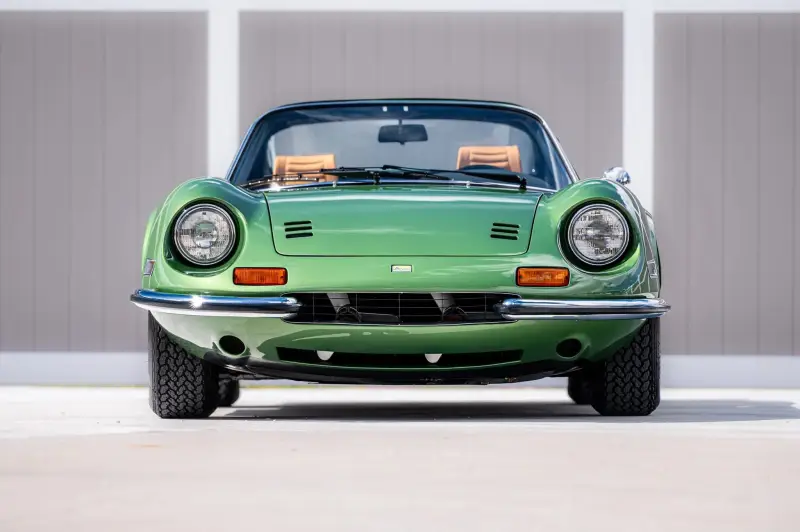
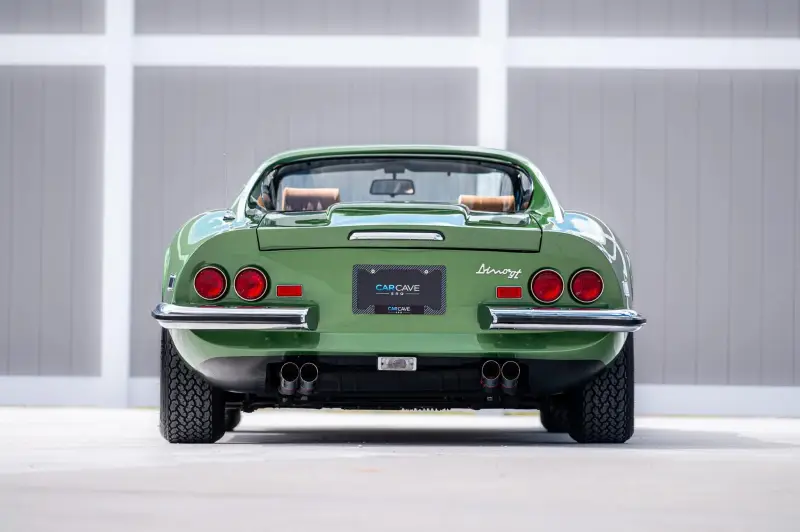
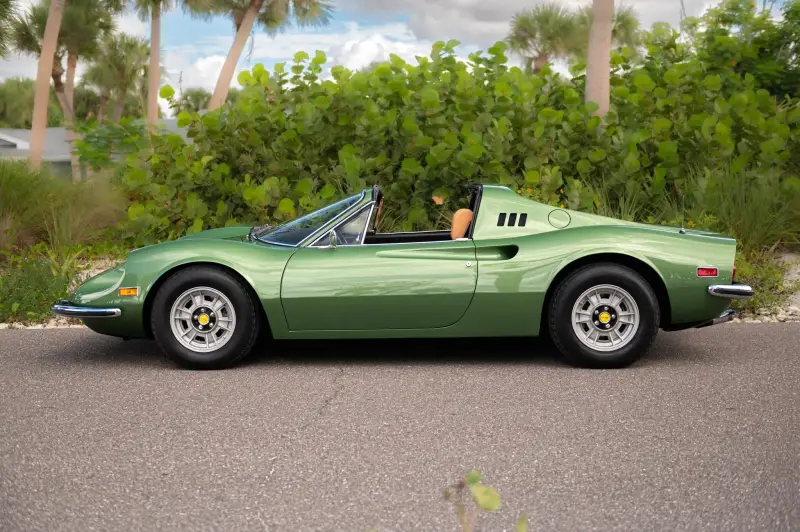
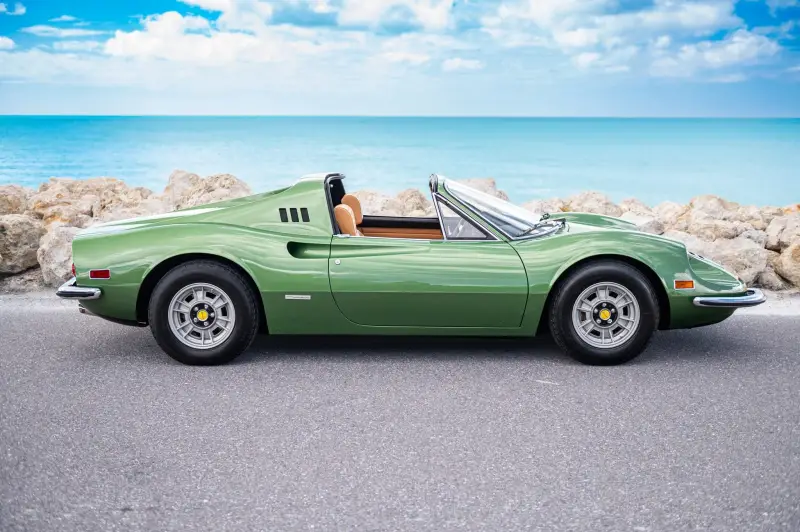
A refurbishment at Legendary Motorcars in Gazelle, California, around 2014 brought the Scaglietti-built bodywork back to Verde Medio Niyinsky. Ferrari Classiche certification followed in 2015. Together, those details connect the visible finish to the car’s original specification and provide an important part of its documented history. The color’s return also gives this example a different presence from the yellow and red versions it wore during earlier stretches of its life.
For a collector examining the car, the finish history is more than a paint-chip detail. The sequence—from green to yellow, then red, and back to green—helps explain the restoration story and why the present color matters. The listing identifies the refurbishment and certification, but does not provide further technical detail here about the bodywork or the scope of the restoration.
Mid-engine V6, five-speed manual
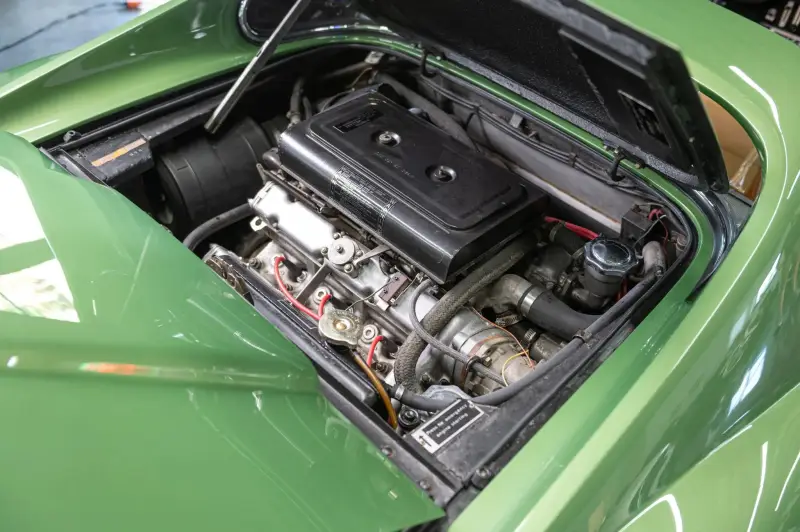
Power comes from a mid-mounted 2.4-liter Tipo 135CS 65-degree V6, with dual overhead camshafts per cylinder bank, triple two-barrel Weber carburetors and Magneti Marelli ignition. The engine sends drive to the rear wheels through a five-speed manual transaxle. Its gated shifter follows the dogleg pattern, a tactile feature that puts the transmission’s mechanical character right in the driver’s hand.
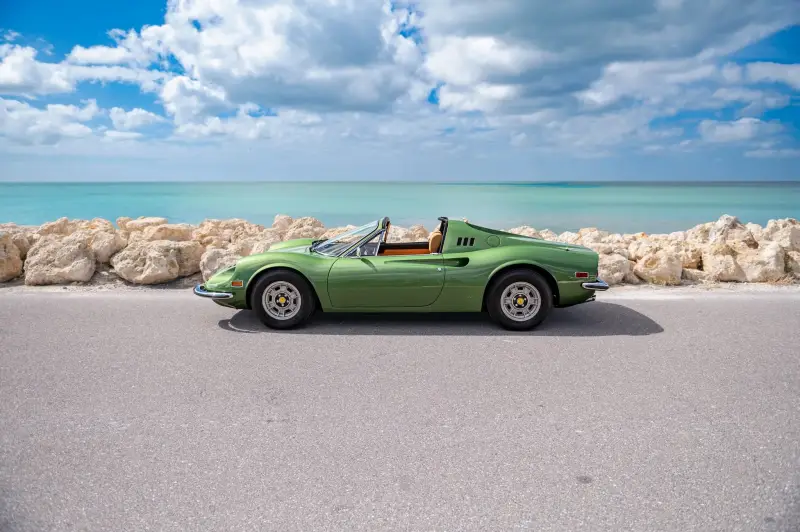
The chassis uses unequal-length A-arm suspension, Koni coilover shock absorbers and anti-roll bars at both ends. Power-assisted ventilated disc brakes serve all four corners. Fourteen-inch Cromodora five-lug alloy wheels wear Dino-branded center caps and Michelin XWX tires. Taken together, that hardware describes a conventional, driver-focused arrangement for a sports car of this type: independent suspension at each corner, braking on all four wheels and a manual gearbox linked to the rear transaxle.
The specification also suggests where a hands-on inspection should focus. Buyers will want to assess the condition and operation of the carburetors, transaxle, suspension and braking system, along with the tires and wheel condition. The information available identifies the fitted components but does not state recent service dates, wear measurements or mechanical test results, so those details should be checked directly in the sale materials.
A cabin with period cues
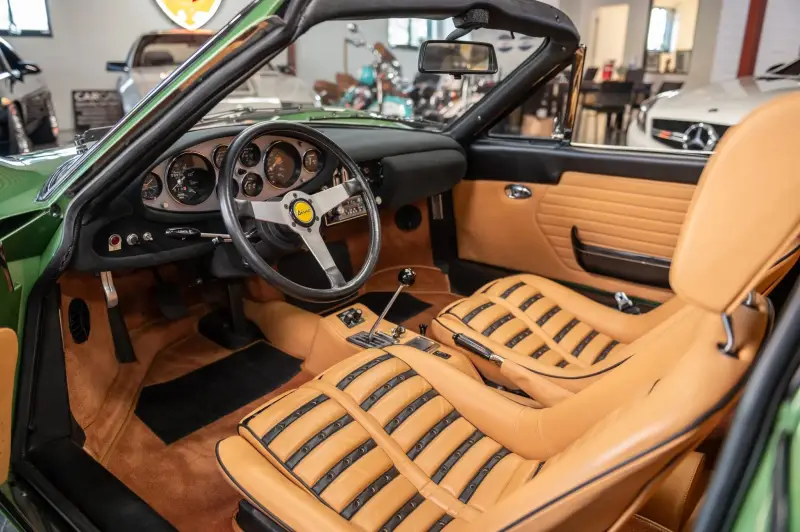
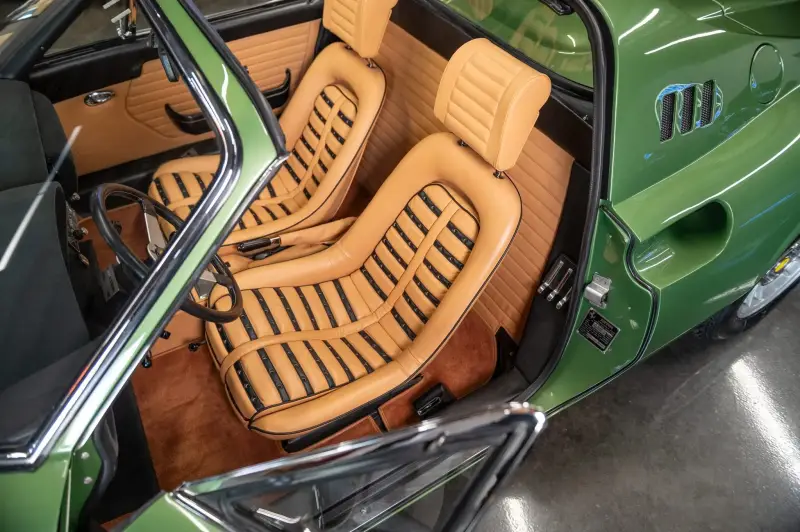
Inside, the re-trimmed Daytona-style seats are upholstered in Beige leather with black inserts and piping. Matching trim continues across the door panels and rear bulkhead. A leather-wrapped MOMO steering wheel carries a Dino horn button, while gray mouse-fur dashboard trim, power windows and an AM/FM stereo with an eight-track player retain period flavor.
Dino-branded Veglia Borletti instruments include a 170-mph speedometer and a tachometer with a 7,750-rpm redline. Supplementary gauges monitor engine functions. Those controls and displays put the V6’s operating information directly in view, while the manual shifter and steering wheel make the driver’s connection to the car part of the cabin’s character.
Why the 246 GTS matters
The Dino began with a competition-derived V6 developed in memory of Enzo Ferrari’s son, then grew into one of Maranello’s most influential road-car families. The 246 GTS adds a removable targa roof to the mid-engine layout. Its combination of distinctive styling, a balanced chassis and a manual transmission helps explain why the model remains a touchstone among Ferrari road cars.
Chassis 08454 brings that familiar mechanical recipe together with an unusually specific identity: a rare reported factory color, a history that spans several finishes, a return to its original green and Ferrari Classiche certification. The 2.4-liter V6 and dogleg five-speed supply the driving hardware; the restoration and ownership trail give this example its particular character. For anyone considering it, the next useful step is to review the sale documentation closely and assess the car’s current mechanical condition alongside its provenance.