Ferrari 296 Challenge Stradale: A 661bhp Track Special and Its V8 Predecessors
Ferrari’s 296 Challenge Stradale pairs a lighter, non-hybrid V6 with track-focused aero and chassis work, continuing a lineage that began before the 360.
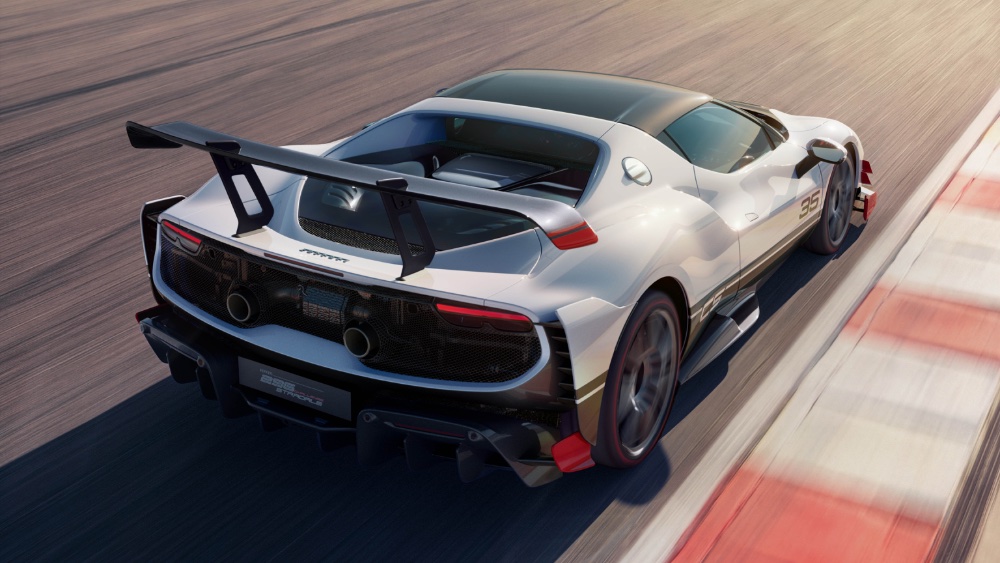
The 296 Challenge Stradale’s biggest change is what Ferrari has taken out: its hybrid traction system. The result is a rear-drive, 661bhp V6 special developed alongside the 296 Challenge Evo racer, with a claimed Fiorano lap of 1min 18.5sec—half a second quicker than the 296 Speciale despite giving away 207bhp. That trade puts the emphasis on lower weight, aerodynamic grip and a sharper response to driver inputs. It also brings the Challenge Stradale into a line of mid-engined Ferrari specials that reaches back beyond the better-known 360.
Unveiled at Barcelona’s Finali Mondiali on November 21, the new car uses a 2992cc, 120-degree twin-turbo V6 with a dry sump. It makes 661bhp at 8000rpm and 546lb ft at 6250rpm, and continues to an 8500rpm limit. Ferrari quotes a dry weight of 1330kg, 140kg below the GTB. Claimed acceleration is 0-62mph in 2.8sec and 0-124mph in 7.9sec, with a maximum speed above 186mph. The hybrid Speciale reaches 124mph in 7.0sec, so its additional power remains a clear advantage on a straight.
Reworking the V6 and transmission
Removing electric drive meant more than deleting a motor. Ferrari revised the driveline with a flexplate and inertia mass to manage torsional vibration. A mechanical compressor now runs the air-conditioning, while a belt starter-generator handles starting and charging. Boost control and variable valve timing have also been recalibrated to sharpen response as the throttle opens, where electric assistance previously helped fill the gap.
There are structural changes inside the engine, too. Die-casting the timing cover allows thinner walls, and a shell-moulded bedplate replaces the sand-cast part to improve strength and fatigue resistance. Challenge-derived turbochargers and insulation keep exhaust heat working for the turbines; an enlarged exhaust reduces back pressure. The eight-speed dual-clutch gearbox uses racing shift logic under high load and at high revs, with changes taking about 170 milliseconds. A separate calibration covers less demanding driving, while revised intake and exhaust sound transmission lets more of the engine’s character reach the cabin.
Aero, brakes and driver feel
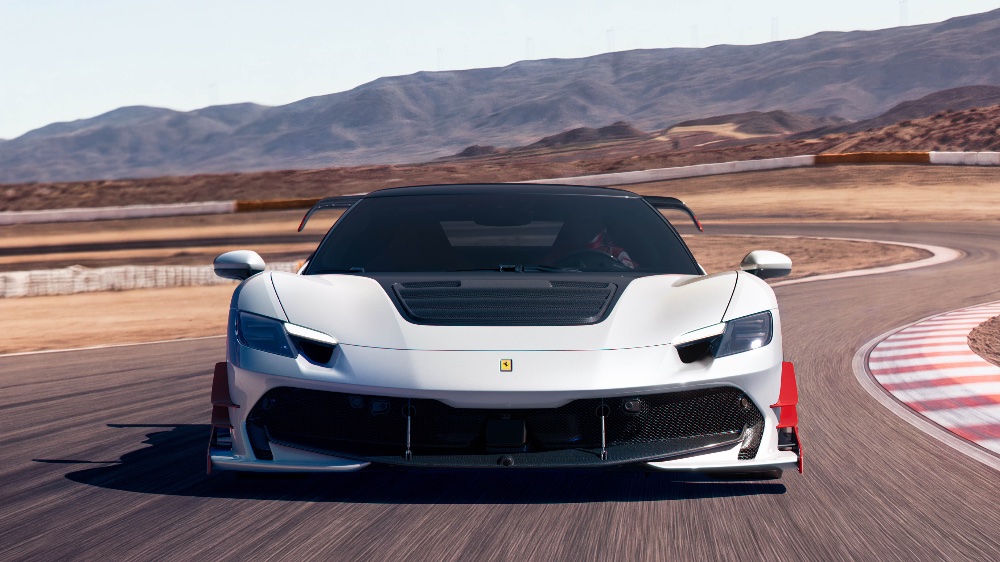
At 155mph, Ferrari claims 617kg of downforce, 72 per cent more than the GTB. The fixed rear wing contributes 270kg; the splitter, enclosed underbody and diffuser provide the rest. Ducts linking the underside with the bonnet area are intended to make downforce less sensitive to pitch, helping the balance stay more consistent as the car brakes and accelerates.
Dedicated suspension geometry and semi-active damper settings support the added grip. Helper springs keep the main springs located as the suspension extends, and bespoke Pirelli tyres work with predictive slip control and ABS Evo. Carbon-ceramic discs measure 398mm at the front and 380mm at the rear. Extra cooling addresses the loss of regenerative braking. Senior product manager Matteo Turconi describes a firmer brake pedal, a stiffer throttle spring and heavier steering—details that suggest Ferrari wants the car to feel more deliberate at the controls.
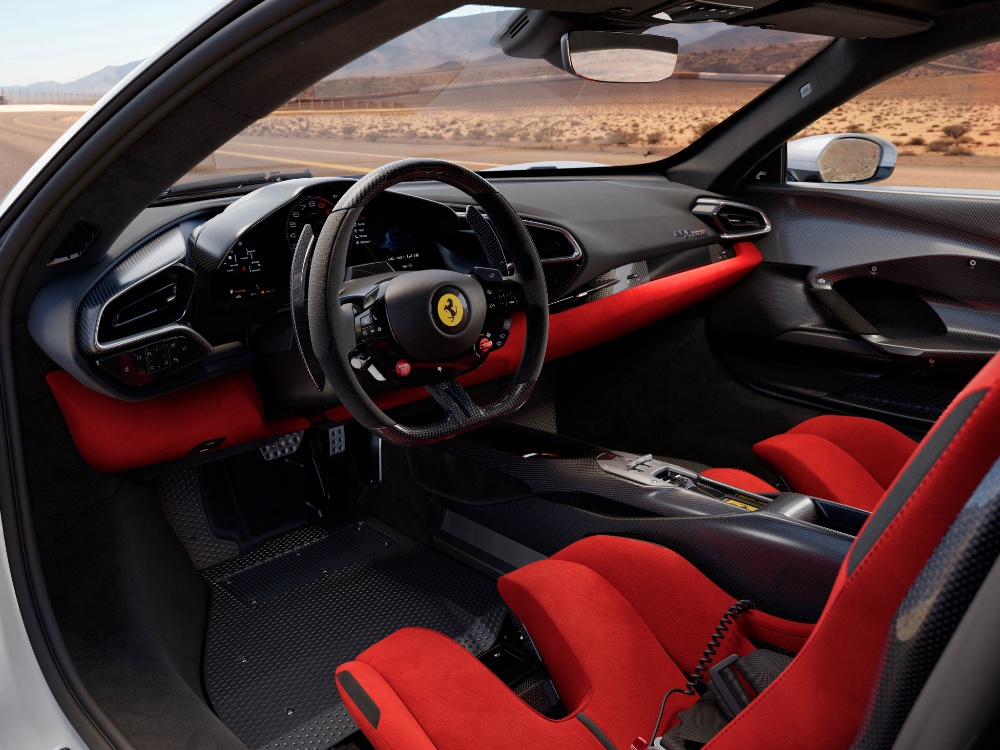
The cabin follows the same track-day brief. Carbon-fibre door panels lose their armrests and pockets, and buyers can specify exposed chassis sections beneath the seats and centre console. Optional tubular carbon seats save 25 per cent against the usual racing seats. A cupholder and wireless charging pad remain, a small reminder that this is still a road car expected to make the trip home after a circuit session.
Launch reports put the price at around £260,000, with deliveries expected in 2027 and no production cap announced. Ferrari describes the Challenge Stradale as a regular range model alongside the Speciale, available without the established ownership history associated with allocations for special-series cars. That wider availability would mark a notable change for this kind of Ferrari, if it holds through deliveries.
The specials before the 296
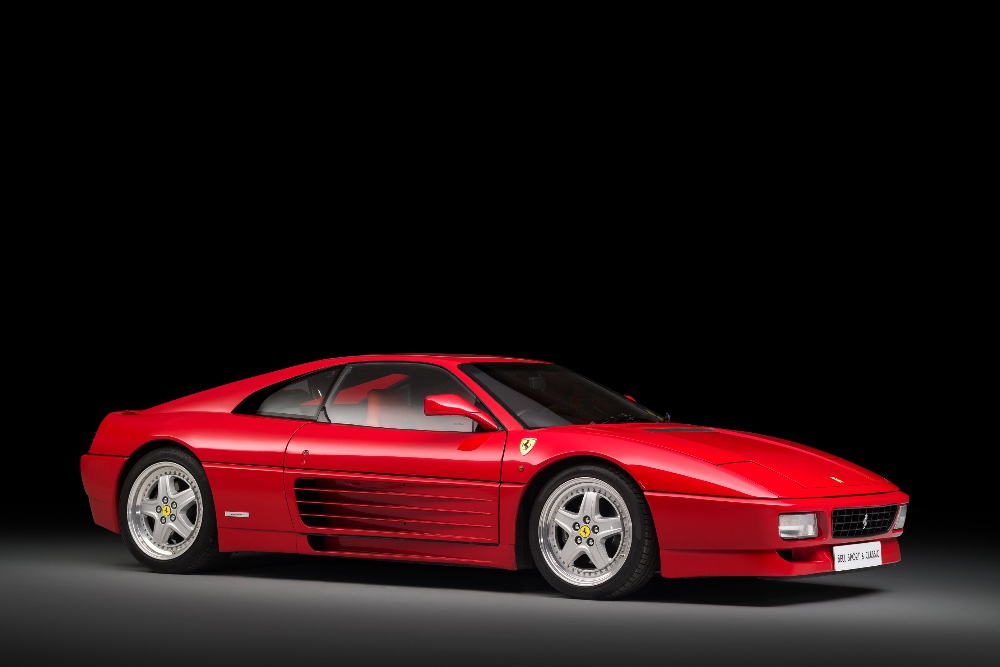
The 360 Challenge Stradale may be the name most closely associated with Ferrari’s modern track-focused V8s, but the 348 GT Competizione arrived first. Announced in late 1993, it was limited to 50 road cars, including eight right-hand-drive examples for Britain. Carbon-Kevlar doors and bumpers cut weight; fabric-covered bucket seats, 18in Speedline wheels and revised suspension alignment sharpened the package. Its 3.4-litre V8 produced 316bhp at 7200rpm and 239lb ft at 5000rpm. Performance estimates put 0-62mph at 5.0sec and top speed at 175mph. Unassisted steering, fixed dampers and a five-speed manual with an exposed metal gate kept the driver busy, without traction control. A numbered steering-wheel plaque identified each car, with deliveries following in 1994, shortly before the F355 arrived. Image courtesy of Bell Sport & Classic.
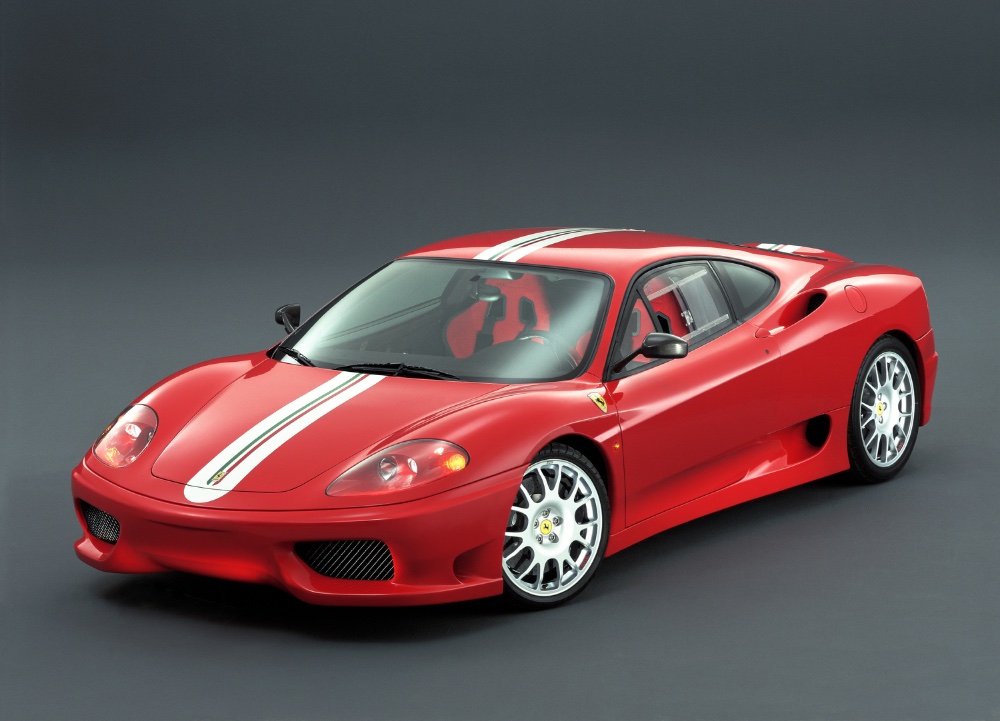
The 2003 360 Challenge Stradale brought carbon-ceramic brakes and titanium springs, with exposed aluminium replacing carpet in parts of the cabin. Depending on specification, it shed up to 110kg against the Modena; its springs were 20 per cent stiffer, and its ride height lowered the centre of gravity by 15mm. The 3.6-litre V8 delivered 419bhp and 275lb ft, with peak power at 8500rpm. Ferrari quoted 4.1sec to 62mph and 186mph. Its single-clutch F1 gearbox could make its quickest shifts in 150 milliseconds, while optional sliding side windows saved more weight. The owners’ register puts production at about 1300, though Ferrari never published a total.
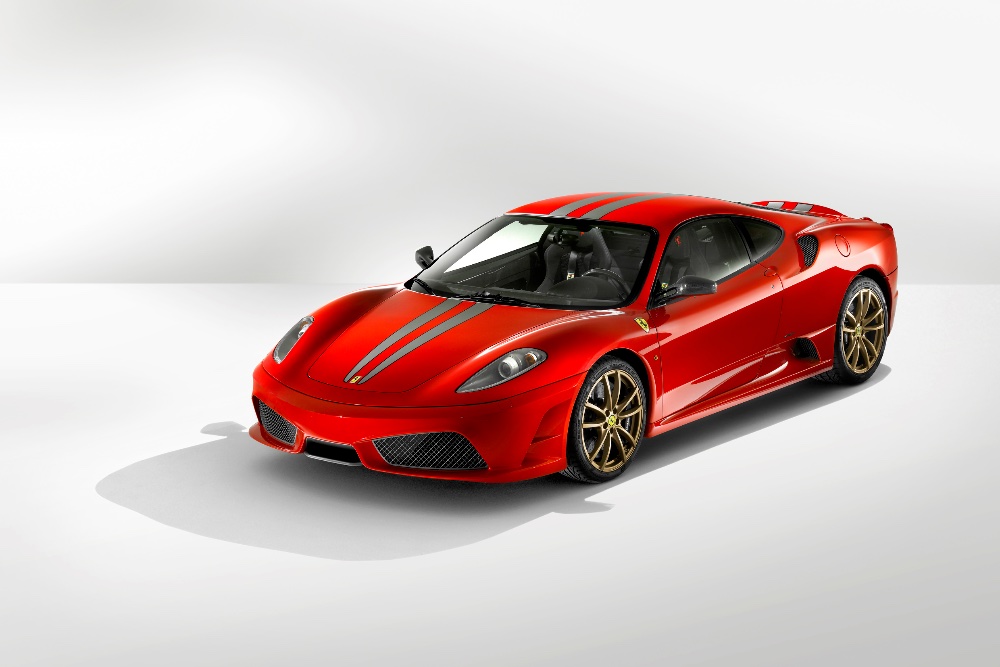
Michael Schumacher helped develop the 2007 430 Scuderia. Its F1-SuperFast2 transmission cut the interruption during an upshift to a claimed 60 milliseconds, while an electronic differential and F1-Trac managed the 4.3-litre V8’s 503bhp and 347lb ft. Revised pistons raised compression to 11.88:1, and ion-sensing combustion monitoring improved control of the firing process. Ferrari removed about 100kg against the F430, giving a quoted dry weight of 1250kg, and fitted 398mm front carbon-ceramic discs. Claimed figures were under 3.6sec to 62mph and 199mph. It was the last of these V8 specials with a single-clutch F1 gearbox; around 1800 coupés are estimated to have been built.
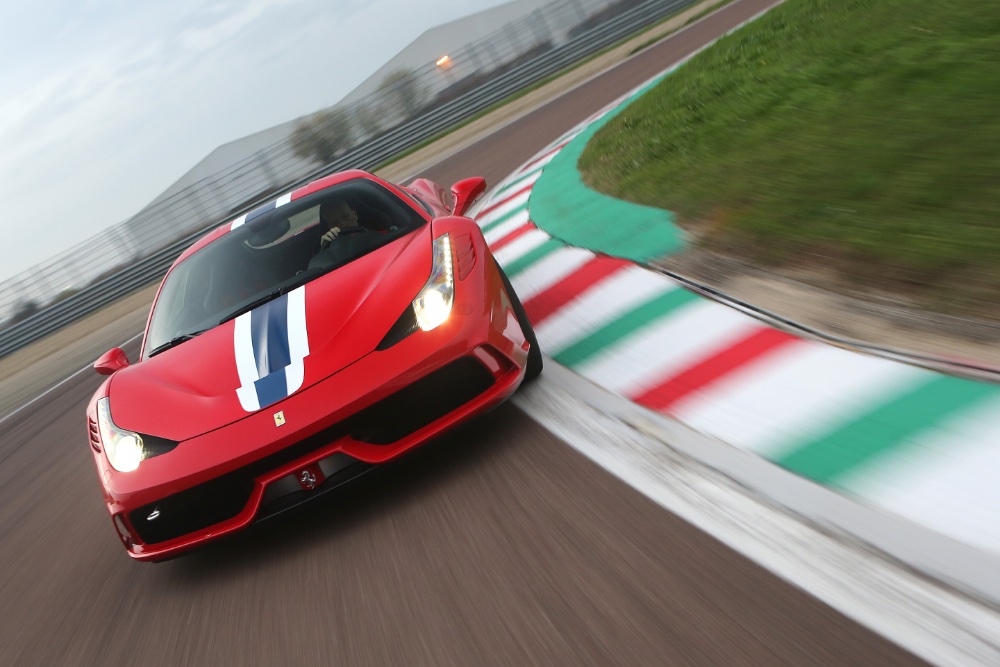
The 2013 458 Speciale pushed the naturally aspirated 4.5-litre V8 to 597bhp at 9000rpm and 398lb ft. A 14:1 compression ratio, intake ducts shortened by 10mm and five per cent more valve lift helped deliver that output. It weighed 90kg less than the Italia: 8kg of the saving came from the lighter engine and 13kg from unsprung components, including forged wheels and brakes. Ferrari quoted 3.0sec to 62mph and a top speed above 202mph. A seven-speed dual-clutch gearbox, Side Slip Angle Control and movable aerodynamic surfaces brought power delivery, traction and downforce into the same package. Production is commonly estimated at around 3000 coupés, without a factory total.
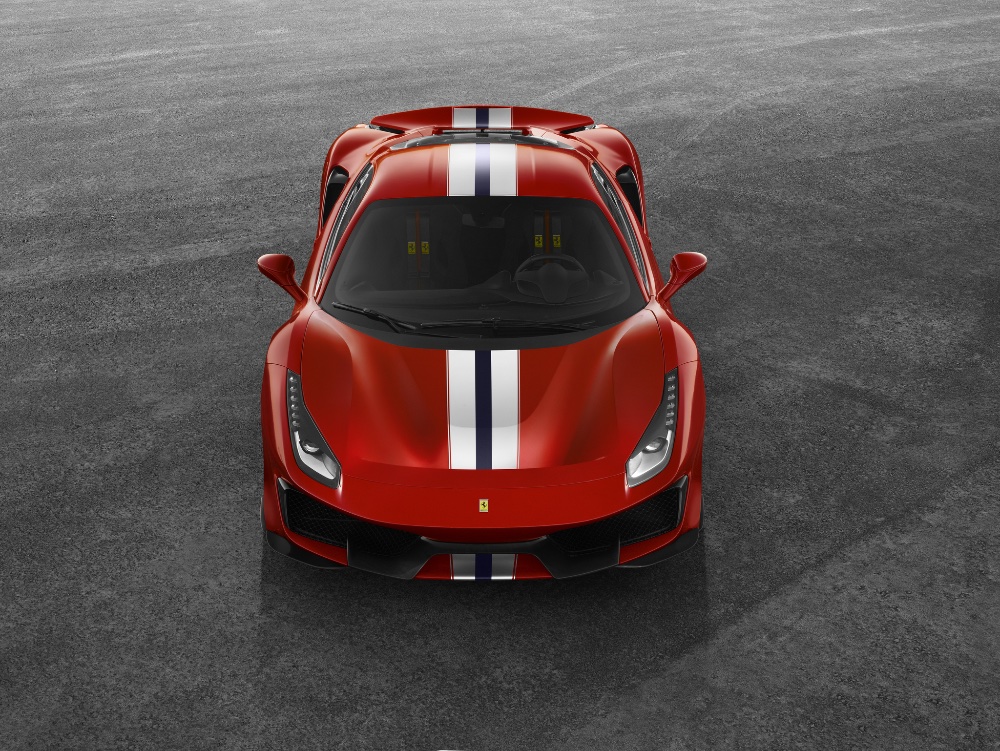
Turbocharging returned with the 2018 488 Pista. Its 3.9-litre V8 produced 710bhp and 568lb ft, with full torque available at 3000rpm in seventh gear and lower gears electronically restricted. Titanium connecting rods, carbon-fibre intake plenums and cooling developed from the 488 Challenge supported the engine. A 90kg reduction against the GTB helped bring 0-62mph down to 2.85sec, with a top speed above 211mph. The nose-mounted S-Duct added front downforce, and Ferrari Dynamic Enhancer adjusted brake pressure to make oversteer more progressive when traction control was switched off. Optional carbon-fibre wheels weighed 40 per cent less than the GTB’s standard rims. Production is estimated at approximately 3500 coupés; the F8 Tributo had no equivalent.
The 296 Challenge Stradale changes the formula with a V6 and no hybrid drive, but its purpose is familiar: less mass, more usable grip and a closer connection between driver and machine. Its Fiorano claim makes the case for that balance; the chassis, brakes and aero will show how it works once deliveries begin in 2027. More information is available from Ferrari.


