Lamborghini Temerario Spyder Brings 920bhp Hybrid Power and a Retractable Hardtop
The open-top Temerario pairs a 10,000rpm V8 hybrid with an electrically retractable hardtop, and keeps performance close to the coupé.
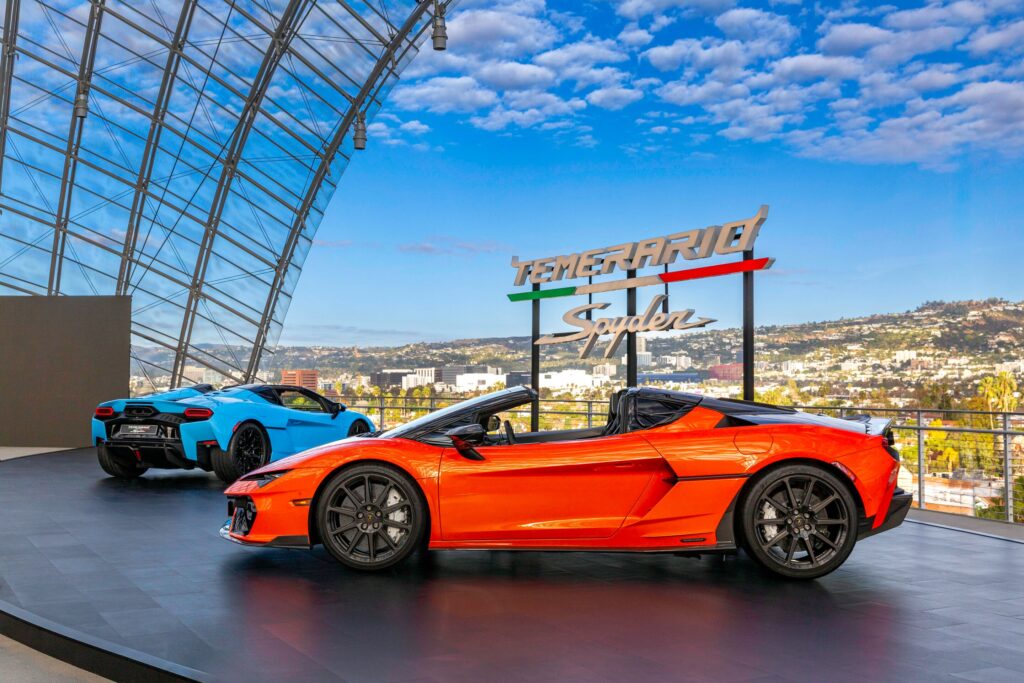
The Lamborghini Temerario Spyder keeps the coupé’s 920bhp hybrid powertrain and near-matching performance, then adds an electrically retractable hardtop designed around the car’s structure and weight balance. It’s Lamborghini’s first model with this type of roof, and deliveries are expected to begin in spring 2027.
The timing gives the Spyder a historical marker: it arrives 50 years after the 1976 Silhouette, Lamborghini’s first open-top production car. The new car’s roof stows vertically behind the seats, while an electrically adjustable rear window lets occupants manage cabin airflow and how much of the engine’s sound reaches them. That combination gives the driver more control over the open-air experience than a fixed rear screen would.
A roof designed around balance
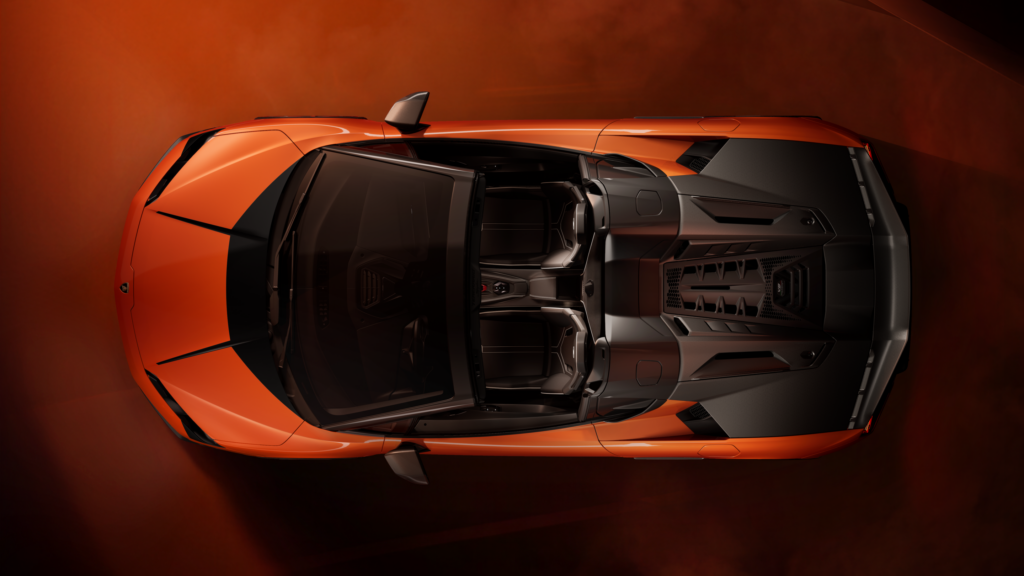
Ten electric actuators operate the hardtop. Lamborghini says the system preserves the car’s front-to-rear weight distribution and lowers the centre of gravity by 3mm when the roof is open. Those claims matter because a retractable roof adds moving hardware to a car whose handling depends on keeping mass under control. The manufacturer has chosen an all-electric mechanism rather than the electro-hydraulic arrangements commonly used for retractable roofs.
Opening the roof also changes the body structure’s job. Without a fixed roof tying the upper body together, the chassis has to manage torsional and bending loads while retaining the response expected of a supercar. The Temerario Spyder uses a modified all-aluminium spaceframe. Lamborghini claims it delivers six percent more static torsional rigidity than the outgoing Huracán Spyder, along with a nine percent improvement in bending stiffness. Those figures describe the structure’s resistance to twisting and flexing, both relevant to how the car feels over uneven pavement and through corners.
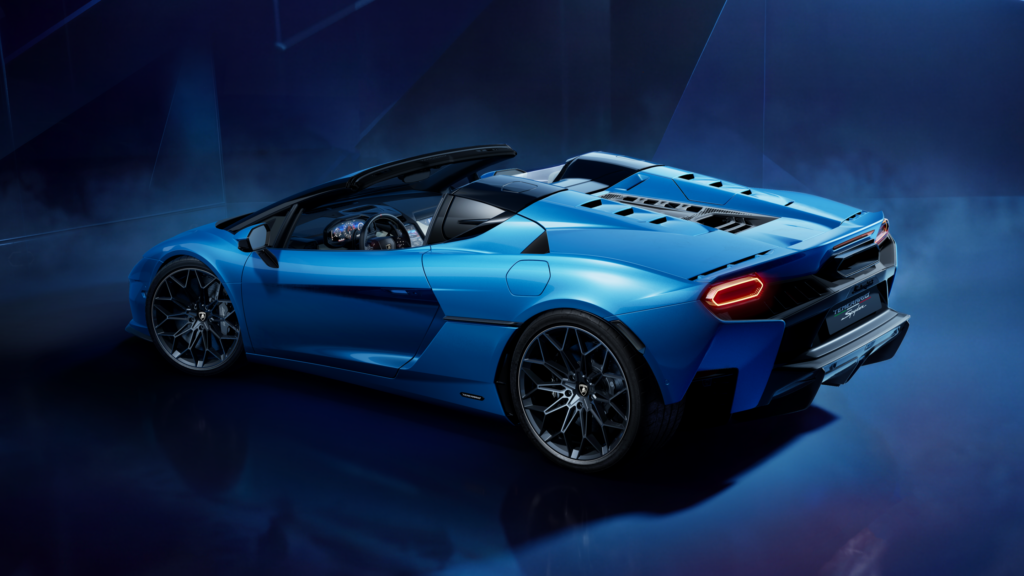
Visually, the Spyder stays close to the Temerario coupé’s angular design. The rear bodywork has been reshaped around a pair of aerodynamic cowls behind the seats, giving the open cabin a distinct profile while accommodating the roof system. The overall approach suggests Lamborghini has worked to make the folding hardware part of the car’s form, rather than treating it as an afterthought.
A 10,000rpm hybrid V8
The powertrain carries over from the coupé: a 4.0-litre twin-turbocharged V8 rated at 789bhp, supported by three electric motors. Two motors drive the front wheels, while the third sits within the eight-speed dual-clutch transmission. Combined output is 920bhp, with power delivered to all four wheels.
The V8’s 10,000rpm redline is the standout mechanical detail. With Launch Control engaged, it rises to 10,250rpm. That high-revving character sets the engine apart from the more familiar emphasis on turbocharged torque, while the electric motors add their response to the hybrid system. Lamborghini quotes a 0–62mph time of 2.8 seconds and a top speed of 213mph, figures it says are almost identical to those of the fixed-roof car.
Modes for road, track and open air
Five driving modes cover different uses: Città, Strada, Sport, Corsa and Corsa ESC Off. They work alongside three hybrid powertrain settings. In Città, the Temerario can travel on electric power alone, with up to 188bhp available. A three-stage Drift Mode lets the driver select varying levels of computer-assisted oversteer, adding a configurable element to the car’s behaviour.
Lamborghini has also recalibrated the Spyder’s suspension. The company claims a 20 percent reduction in secondary vibrations over uneven surfaces, a change aimed at making rough-road impacts less intrusive in the cabin. That detail matters in an open-top car, where occupants are more exposed to wind and road noise and where comfort can shape how often the roof stays down.
The cabin offers 46mm more legroom and 22mm more headroom than the Huracán Spyder. Three-stage neck warmers are fitted to support open-top driving in cooler conditions. Together with the adjustable rear window, they give occupants several ways to tailor airflow and comfort as speed and weather change.
Personalisation and delivery timing
Lamborghini offers 400 exterior colours through its Ad Personam personalisation programme, with bespoke interior finishes also available. The listed options include a 750W Sonus faber audio system and a lightweight titanium exhaust developed by Akrapovič. Lamborghini says the exhaust weighs 12 percent less than the standard system; no power or torque gain is stated.
Chairman and CEO Stephen Winkelmann described the Spyder as an extension of the Temerario experience, with open-air driving adding to the car’s performance and driving dynamics. UK pricing has not been confirmed, though it is expected to start at around £300,000. With deliveries due in spring 2027, the key details to watch are final market pricing and how the roof, suspension tuning and adjustable rear window work together in everyday driving.


