1964 Shelby Flip Top Cobra Heads to Mecum Kissimmee With $25 Million-Plus Estimate
Ken Miles’s 427-powered CSX2196 pairs a one-off chassis and aluminium body with a race history that runs from Sebring to Nassau.
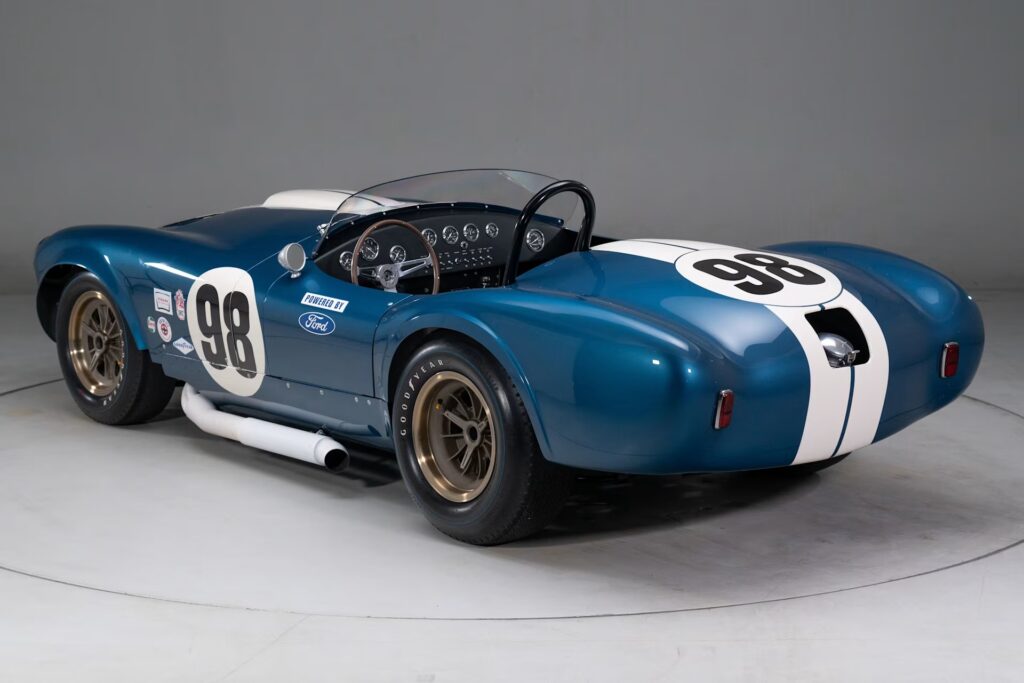
CSX2196 is a Cobra built to answer a specific engineering question: could Shelby American fit Ford’s big-block 427 V8 into its roadster? The resulting 1964 Shelby 427 Prototype Factory Team Cobra, better known as the “Flip Top,” is set to cross the block at Mecum’s Kissimmee auction in Florida on January 16, 2027. Mecum values it at more than $25 million.
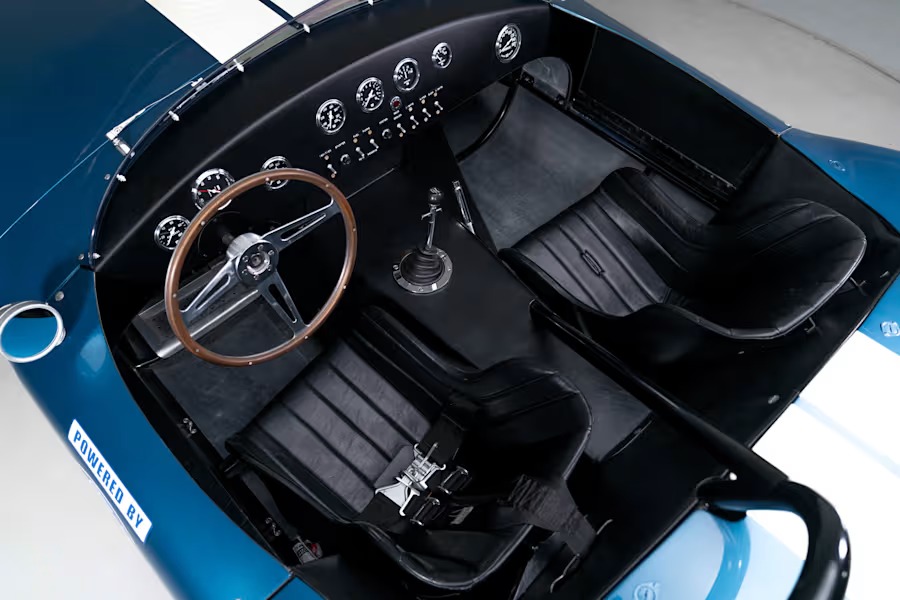
The estimate reflects a rare combination of competition history, unusual construction and claimed originality. Mecum says the car retains its powertrain, chassis, body, suspension, brakes, radiator and gauges. Before Kissimmee, it is scheduled to appear on Mecum’s stand at the inaugural Retromobile New York, opening November 19 at the Javits Center.
A roadster turned into a prototype
CSX2196 started as a 289-style Cobra roadster. Shelby American used it to test a 427 V8 installation, putting the car into competition at the 1964 Sebring 12 Hours. During practice, Ken Miles hit a tree and broke two ribs. The crew repaired the Cobra overnight, but its race ended after clutch, fuel and brake troubles, followed by engine failure.
The next stage of the car’s development took place at Shelby American’s workshop in Venice, California. Miles and the team rebuilt it around a chassis influenced by the Daytona Coupe, changing the suspension geometry and adding structural reinforcement. They also fitted a lightweight aluminium body with hinged nose and tail sections. Those large opening panels gave the prototype its “Flip Top” nickname and made access to the car’s mechanicals a defining feature of its shape.
The chassis and suspension work mattered as much as the engine swap. A more powerful V8 brought greater demands on the structure and running gear, while revised geometry changed how the car could put its power down. The Flip Top was a development machine, so its value as a piece of engineering history lies partly in those changes: it records Shelby American’s effort to turn a roadster platform into a competitive big-block Cobra.
Nassau exposed its pace and its limits
The rebuilt car was prepared for the 1964 Bahamas Speed Weeks in Nassau. In the Nassau Tourist Trophy, Miles opened with an eight-second lead on the first lap. The field included Roger Penske’s Chevrolet Corvette Grand Sport and Ferrari 250 LMs driven by Walt Hansgen and Bob Grossman. The pace was striking, but the result was short-lived: the engine failed after 18 of the race’s 23 laps.
That engine was an experimental all-aluminium Ford side-oiler V8, breathing through 58mm Weber carburettors. It produced more than 500bhp, according to the supplied details, in a car weighing around 816kg. Those figures explain the prototype’s appeal as more than a bodywork curiosity. It combined a very high output for its era with a relatively light chassis, placing extra importance on the suspension, brakes and structure that Shelby American had revised during the rebuild.
Its brief race record also captures the trade-off familiar in experimental competition cars: a fast setup can demonstrate a package’s potential before its durability has been fully established. The Flip Top showed speed at Nassau, but the engine failure ended its run before the full race distance. Its subsequent preservation makes that short, intense development period unusually tangible.
Preserved in Nassau specification
After the Nassau event, Shelby American focused its resources on the Daytona Coupe and Ford GT40 programme, where Miles would become lead development driver. CSX2196 was sidelined and sold in late 1965. It then passed among Californian racers. Nevada collector Bob Lee sold it in 1999 to its current owner, who commissioned a four-year restoration by Peter Klutt’s Legendary Motorcar Company.
The restoration returned the Cobra to its 1964 Nassau specification. That work included tracking down the original engine block; the owner hired a private detective to locate it. The effort speaks to the challenge of restoring a one-off competition car, where a period-correct appearance depends on recovering specific pieces rather than simply fitting parts that look right. Mecum’s description of the car’s retained major components makes the condition and identity of those parts central to the upcoming sale.
Since restoration, the Flip Top has earned a Premiere Award at the Shelby American Automobile Club National Convention, appeared at Pebble Beach and taken first in class at Amelia Island. Those show results add to its public record, while the restored Nassau configuration keeps the focus on the car’s most distinctive competition chapter.
A high estimate against a notable auction history
The Cobra last went to auction at RM in 2010, when bidding reached $1.45 million but failed to meet the reserve. Mecum’s current valuation of more than $25 million would put it above the $13.75 million paid for the first Cobra, CSX2000, in 2016. It would remain below Carroll Shelby’s Daytona Coupe, which sold for $42.9 million at Gooding Christie’s Pebble Beach sale in August, a record for an American car at auction.
Those comparisons frame the scale of Mecum’s estimate, but the Flip Top has its own case: a named development driver, a documented 427 experiment, a distinctive chassis and body, and a restoration aimed at its Nassau form. The car is listed for January 16 at Kissimmee. Its next chapter will be decided by bidders weighing that singular engineering story against a competition career cut short by mechanical failure.


