1965 Ford Mustang K-Code Coupe: 271-HP 289, Four-Speed and Poppy Red Style
A Poppy Red 1965 Mustang pairs Ford’s 271-hp K-Code 289 with a four-speed manual and period details that show why early Mustangs caught on.
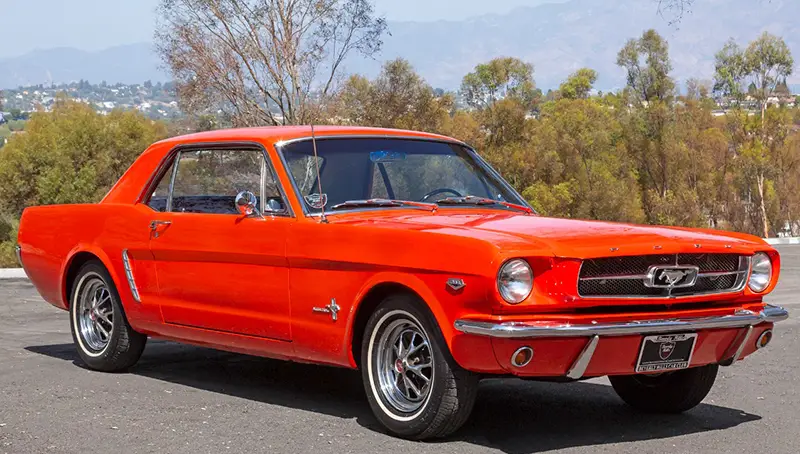
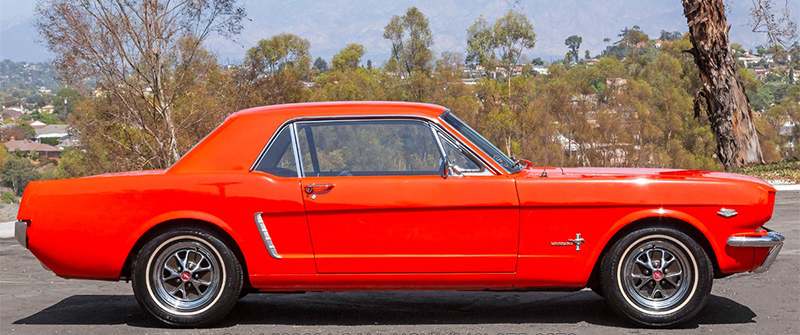
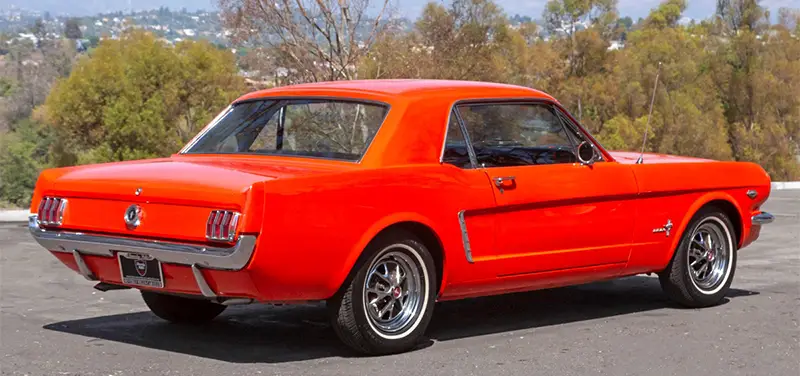
The 1965 Ford Mustang Coupe K-Code brings together the details that made the early Mustang more than a sharp-looking hardtop: a high-performance 289 V8, a four-speed manual and compact, familiar styling. Finished in factory Poppy Red over a black interior, this example puts the rare K-Code specification at the center of its appeal.
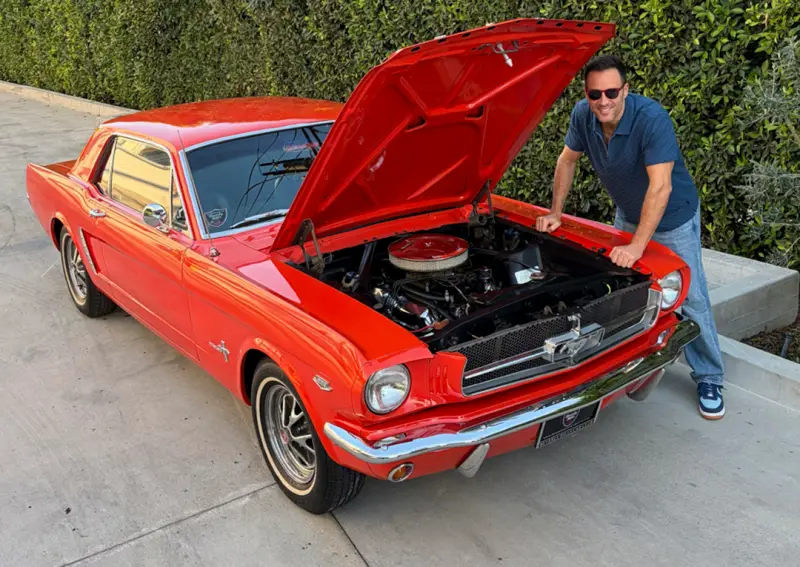
Its story also fits the Mustang’s broader pull. A pink 1967 Mustang coupe belonging to the writer’s Greek aunt made a lasting impression in Australia, drawing attention wherever she drove it. That personal memory gets at something the Mustang’s launch quickly proved: its design could travel well beyond the American showrooms where Ford first introduced it.
A first-year formula that stuck
Ford introduced the Mustang on April 17, 1964, as a hardtop and convertible. The fastback followed in August. The new car paired sporty proportions and styling with an accessible starting price: the hardtop cost $2,368. Its lines borrowed from European sports cars, while the Mustang name suggested a looser, wilder image. Together, those choices gave Ford a car with a clear identity and broad appeal.
The launch reached well beyond the usual motoring audience. Ford presented the car at the New York World’s Fair and bought prime-time television advertising on CBS, ABC and NBC. The ads put its looks and price in front of a wide audience. The response came quickly: more than 22,000 orders arrived on the first day, and 100,000 Mustangs had sold within four months. By March 1966, one million were on the road.

The car also reached buyers often overlooked in sports-car marketing at the time: 42 percent of Mustangs were sold to women. That breadth helped establish the model as a cultural fixture, while the performance options gave enthusiasts more reason to pay attention as the lineup developed.
What makes the K-Code different
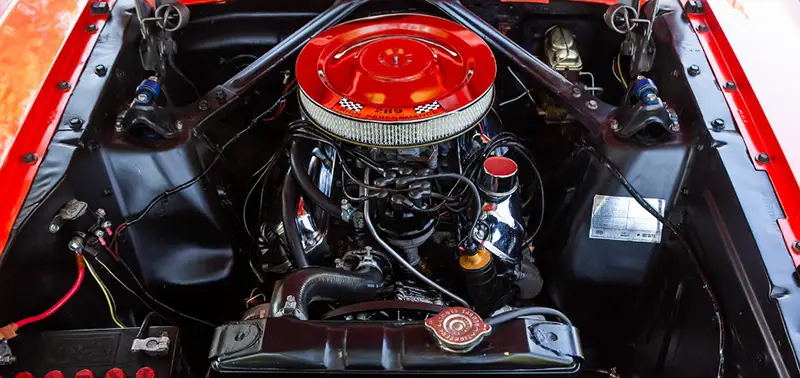
The K-Code was Ford’s high-performance version of the 289, rated at 271 horsepower at 6,000 rpm and 312 lb-ft of peak torque at 3,400 rpm. It was available from 1964 to 1967. The source estimates that about 13,000 K-Code Mustangs were built during a period when Ford produced 1.8 million Mustangs, making the option uncommon in the larger run.
The performance hardware gives the specification substance beyond its badge. Under the hood, the K-Code’s harmonic damper measures 2 inches wide, compared with 1 inch on a standard 289. It uses a centrifugal-advance, dual-point distributor; standard 289s had a vacuum-advance, single-point unit. The K-Code also received a solid-lifter camshaft, with .460-inch total valve lift using 1.6:1 rockers and 310 degrees of advertised duration. Threaded rocker studs and an Autolite 480-cfm four-barrel carburetor round out the engine’s listed distinctions.

In the early Mustang range, the K-Code supplied a factory route to more performance. A Shelby GT 350 offered another step, using a modified 289 HiPo engine at considerably greater cost, according to the source. For this coupe, the four-speed manual makes the K-Code’s character especially appealing: it gives the driver direct control over the V8’s output and keeps the mechanical experience central.
Equipment and cabin details
This coupe retains the early Mustang’s recognizable exterior cues: chrome trim and bumpers, Mustang script, running-horse badges and “High Performance 289” fender emblems. Its 14-inch styled steel wheels wear Cooper Trendsetter thin whitewall tires. Up front, disc brakes use Wilwood calipers, an equipment detail worth distinguishing from the car’s period styling.
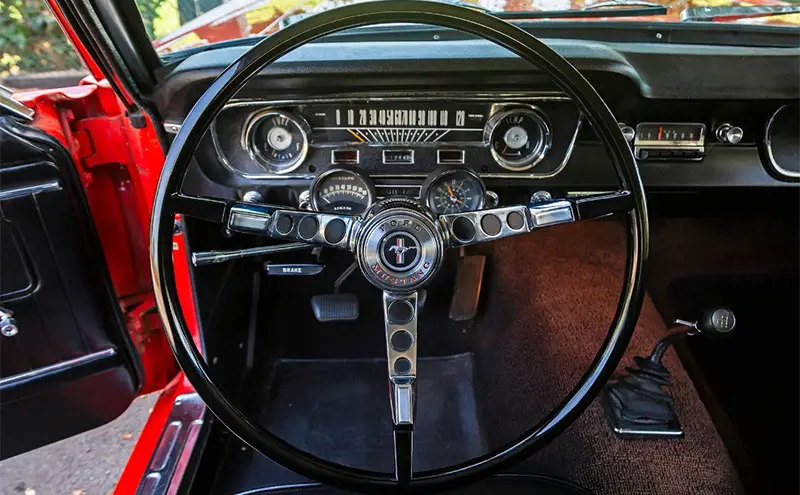
The cabin has front bucket seats, a rear bench, lap belts and a three-spoke steering wheel. Its horizontal speedometer cluster reads to 120 mph, while a steering-column-mounted Rally-Pac adds a tachometer and clock. Dual side mirrors and a push-button radio complete the listed interior equipment. The trunk includes a jack and spare tire.
A performance option with a lasting following
The car is described as mechanically sound, though no inspection details or specific maintenance history are provided. Buyers looking closely at a K-Code Mustang will want to verify the engine’s identifying hardware and assess the condition of the drivetrain, brakes and interior in person; the listed specifications give a useful starting point for that inspection.
The appeal here comes from the combination: factory Poppy Red paint, a black cabin, the 271-hp K-Code 289 and a four-speed transmission, all in the first full model year of the Mustang. The hardware helps explain why the K-Code remains a sought-after early specification, while the coupe’s straightforward layout preserves the original pony-car idea: usable size, distinctive styling and V8 performance in one package.