1995 Porsche 993 Carrera 4 Cabriolet: Air-Cooled Six, Manual Gearbox and AWD
This 33,679-mile 993 pairs a 3.6-liter air-cooled flat-six and six-speed manual with all-wheel drive, open-air motoring and a distinctive factory color combination.
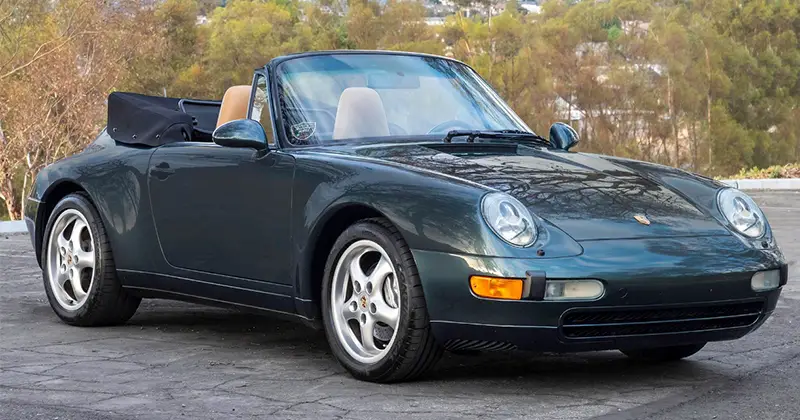
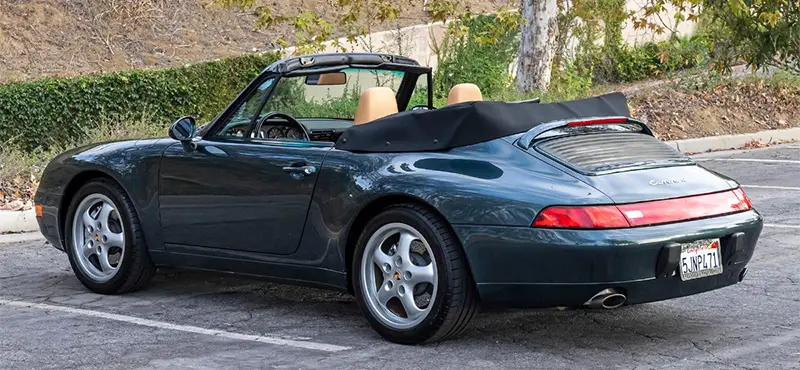
The appeal of this 1995 Porsche 993 Carrera 4 Cabriolet comes from a rare mix of qualities: a 3.6-liter air-cooled flat-six, a six-speed manual transmission, all-wheel drive and a power-operated soft top. Finished in Aventurine Green Metallic over Cashmere Beige, this example has 33,679 miles showing on its odometer. Its configuration makes it a useful snapshot of the 993’s broad reach: a familiar 911 silhouette with the traction and open-air character of a Carrera 4 Cabriolet.
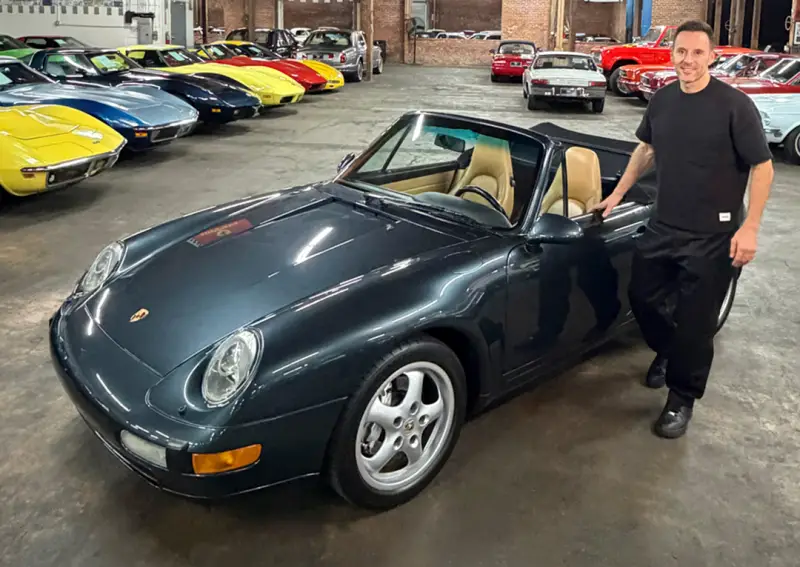
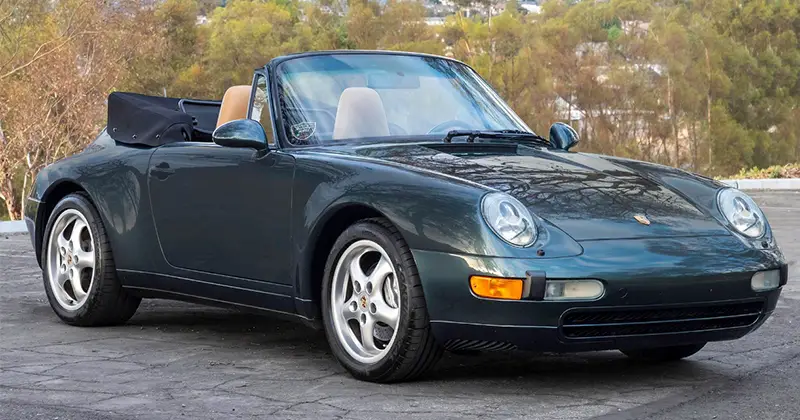
The car is equipped with a six-speed manual, putting the driver directly in charge of the flat-six’s output. The Carrera 4 designation identifies its all-wheel-drive layout, which adds traction across the driven wheels. Those two features give the car a distinct mechanical brief: a driver-operated gearbox and additional grip, packaged in a convertible 911. The description identifies the engine as a 3.6-liter air-cooled flat-six but does not state horsepower or torque figures, so the character here is best understood through the hardware and configuration rather than an unsupported output claim.
It rides on 17-inch Cup II-style wheels fitted with Continental tires. That wheel and tire setup is part of the car’s visible specification, while the all-wheel-drive system shapes how power reaches the road. The listing describes the car as mechanically sound. For a buyer assessing a used 993, that claim is a starting point for inspection: service records, condition of the drivetrain and operation of the convertible equipment help establish how the car has been maintained.
A convertible cabin with useful equipment
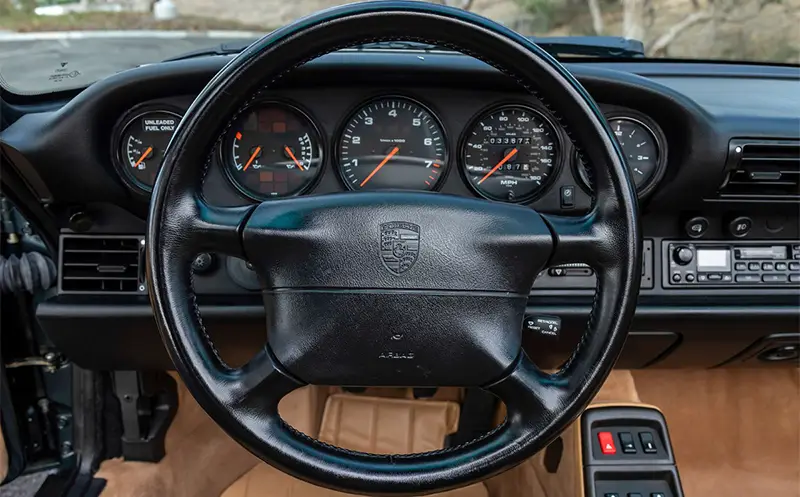
Inside, Cashmere Beige trim sets off a driver-focused cabin fitted with power sport seats, air conditioning, cruise control, power windows and electrically adjustable exterior mirrors. The instrumentation is by VDO, with an analog clock, an OEM Porsche stereo and a four-spoke steering wheel. These details keep the interior rooted in the car’s period while giving it the everyday equipment expected of a well-appointed 911.

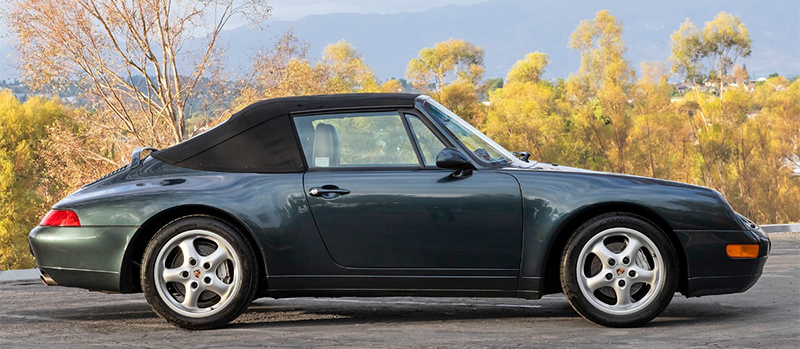
The black soft top is power-operated and comes with a matching boot cover. A wind deflector is also included, a practical addition for open-top driving that helps manage airflow through the cabin. The top’s operation and condition matter to the ownership experience: they’re part of what makes a Cabriolet usable, not just an occasional sunny-day novelty.
Why the 993 marked a turning point
Porsche launched the 993 in 1993, when the early-1990s recession was beginning to ease. Demand was strong from the car’s late-1993 debut, and by August 1995 the 993 was the only model range Porsche offered. The model carried the weight of the company’s fortunes on the 911, and its early success continued. Its place in the lineage is also clear: the 993 was the final 911 generation with an air-cooled engine before the water-cooled 996 arrived in 1998.
The 993 kept the basic body-shell architecture associated with the 964 and earlier 911s, but the redesign went well beyond a fresh set of panels. Porsche replaced the previous car’s more linear forms with smoother surfaces, fuller wheel arches, revised bumpers and lower headlamps. The result looks familiar from a distance, yet the details give the 993 a more integrated, muscular stance.
Designer Harm Lagaay described the 964’s wheel-arch shapes as resembling “big lips.” On the 993, he saw the bulges as more muscular and smoothly integrated. Tony Hatter, who co-designed the 993’s exterior with Lagaay, developed that visual direction through revised panels, an enlarged retractable rear wing and teardrop mirrors. The lower headlamps and smoother front treatment sharpened the car’s expression without abandoning the 911’s recognizable form.
Design shaped by a long route to Porsche
Hatter’s path to the 993 began in Harrogate, Yorkshire, where he grew up with die-cast cars and the brochures his father brought home. A 1971 trip to Leeds to see the Steve McQueen film Le Mans deepened his interest in Porsche and racing design; he particularly remembers the proportions of the 906 Carrera 6. He later studied Industrial Design (Transport) at Lanchester Polytechnic in Coventry, then continued at London’s Royal College of Art in a course initially sponsored by Chrysler.
That background matters because the 993’s design had to balance change with continuity. Retaining the established 911 architecture gave the new body a clear family resemblance; the softer surfacing, flared arches and revised lighting made it read as a distinct generation. In this Cabriolet, the design’s smooth lines meet the practical details of a powered roof, wind deflector and rear-drive-derived all-wheel-drive layout.
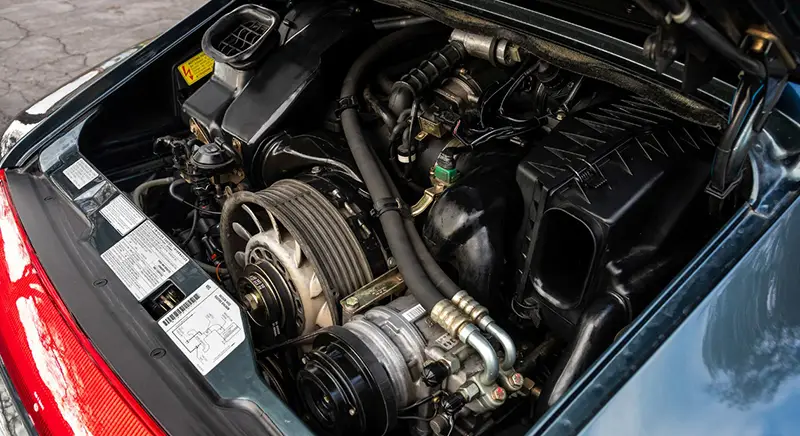
Provenance and equipment add useful context to this particular car. Its factory option sticker and color code remain under the hood, and it comes with manufacturer’s literature, a tool roll, jack and spare tire. Those pieces help document the car and provide equipment associated with its original specification. Together with the reported mileage and the unusual green-and-beige combination, they give a prospective enthusiast concrete details to verify alongside the mechanical condition.
The 993 Carrera 4 Cabriolet makes its case through the combination: air-cooled six-cylinder character, six-speed control, all-wheel-drive traction and open-air use. This example’s specification and surviving factory details make it a particularly clear expression of that formula. The next step for anyone considering it is straightforward: inspect the car’s condition and documentation closely, with special attention to the drivetrain and power-operated top.


