1956 Mercedes-Benz 190SL: The Four-Cylinder Roadster with Gullwing Style
Max Hoffman helped shape the 190SL for a wider audience. This 1956 example pairs a matching-numbers M121 with Hellgrün Metallic paint and Gullwing-style seats.
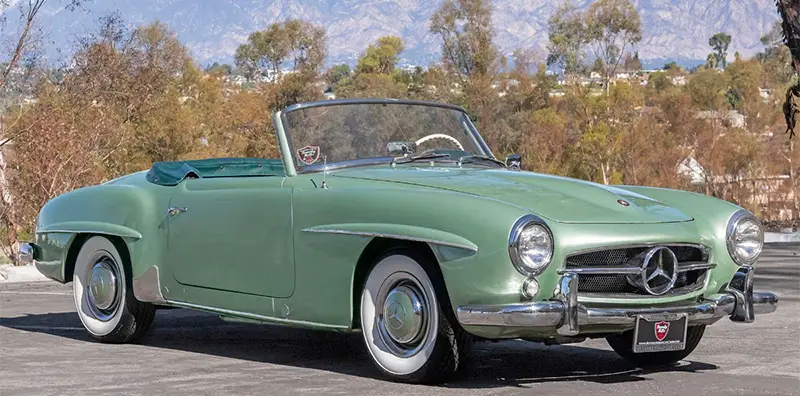
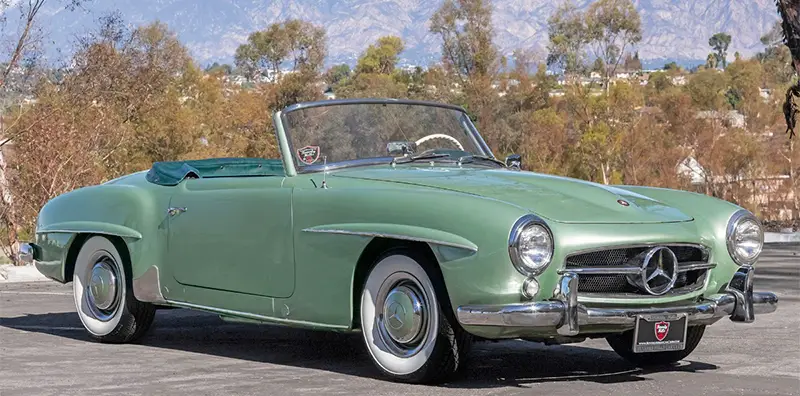
The Mercedes-Benz 190SL makes its case through balance: Gullwing-inspired lines, a four-cylinder engine and a roadster layout suited to relaxed touring. A 1956 example at Beverly Hills Car Club brings that character into focus with its matching-numbers engine, rare Light Green “Hellgrün” Metallic paint and optional Gullwing-style seats.
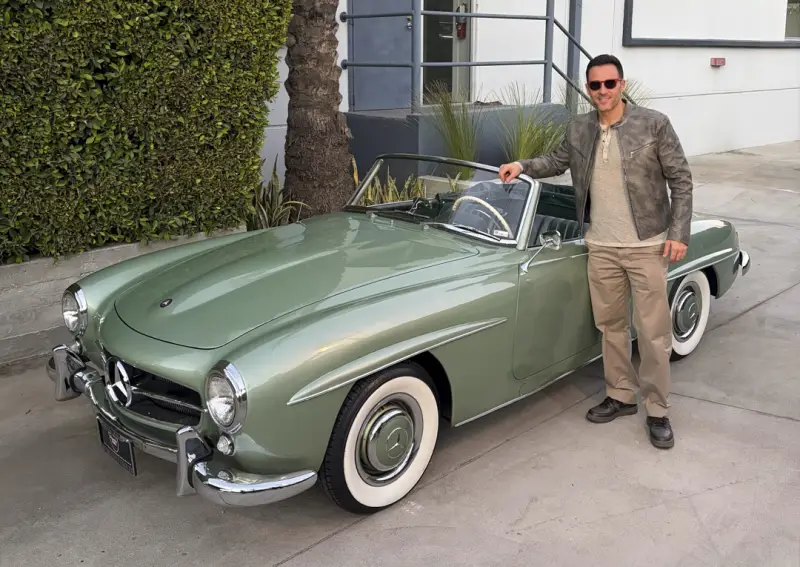
A smaller SL with a different brief
The 190SL grew from a postwar push to put Mercedes-Benz back into sports-car competition. In 1951, company leaders commissioned the “300 Super Light,” a name shortened to SL. The 300SL went on to establish the family’s sporting credentials, but Max Hoffman saw room for a less expensive companion with broader appeal.
Hoffman, an Austrian-born New York importer, had a strong sense of what American buyers might want. He helped steer several European cars toward that market, including the Porsche 356 Speedster and BMW 507. For Mercedes-Benz, he argued that a more attainable roadster could sit between the costly 300SL and smaller British sports cars from Triumph and MG.
The 190SL made its debut at the 1954 New York Auto Show and reached buyers in 1955. Its body, designed by Karl Wilfert and Walter Hacker, echoed the 300SL’s proportions and visual cues. Underneath, though, it used a modified saloon-car platform and a 1.9-liter four-cylinder engine. That combination gave it a more composed touring character than the sharper, more competition-minded 300SL.

Mechanical simplicity, carefully dressed
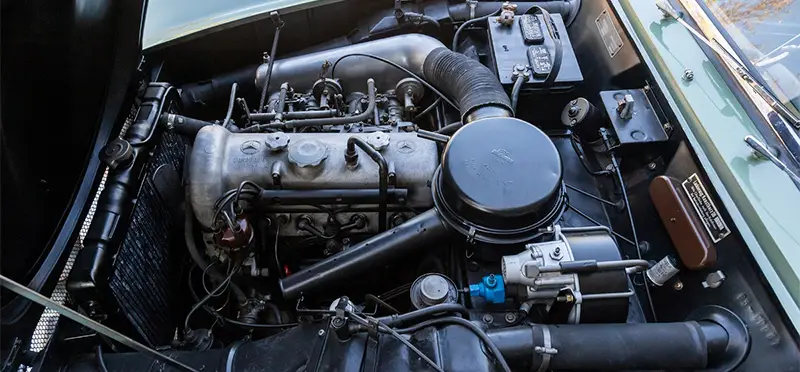
The 190SL was offered as a roadster, with buyers choosing a fabric soft top or a removable hardtop. Its 1.9-liter engine used a cast-iron block and aluminum cylinder head; a four-speed manual with synchromesh on all forward gears handled the shifts. The 1956 car featured here has an M121 inline-four, Solex carburetors, a floor-mounted shifter and a single exhaust outlet.
That hardware makes the car’s purpose clear. The 190SL shares a visual family resemblance with the 300SL, but it doesn’t depend on a high-strung powertrain to make its appeal. Its four-cylinder layout and roadster body suit measured drives, where steering feel, open-air motoring and the view across the long hood matter as much as outright pace.
Assembly mixed production-line work with hand finishing, and body panels were fitted to each individual car. That approach helps explain why condition and panel fit matter so much when assessing one today. On a well-presented example, the delicate curves read as a continuous form; uneven gaps or tired trim can interrupt the effect quickly.

Details that make this 1956 car distinct
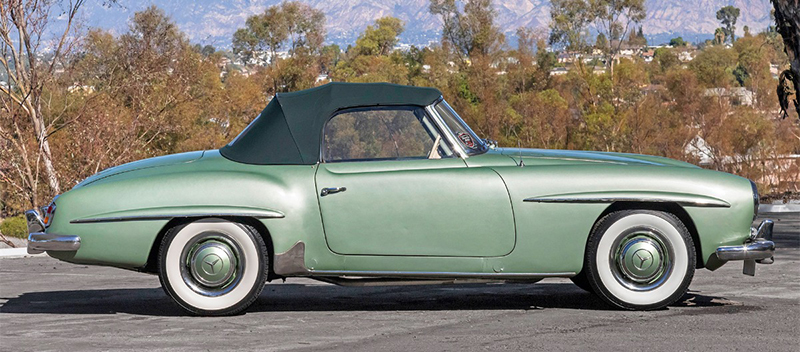
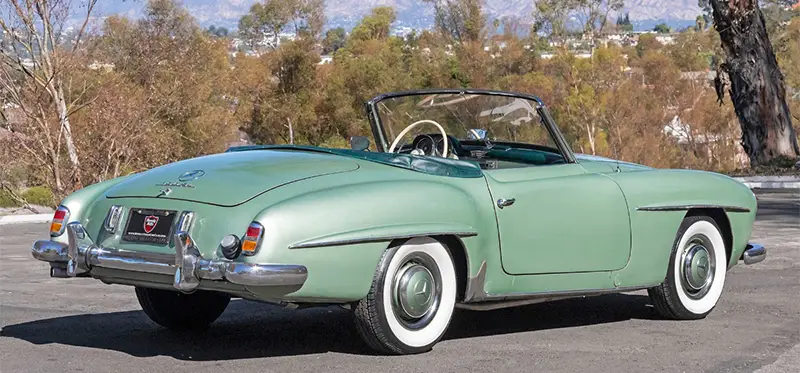
The featured car wears factory Light Green “Hellgrün” Metallic paint, code 274, with a green interior and a dark green soft top. Its seller describes the engine as matching numbers and includes a copy of the data card. The car was raised in Southern California and is described as having long-term family ownership and documented history.
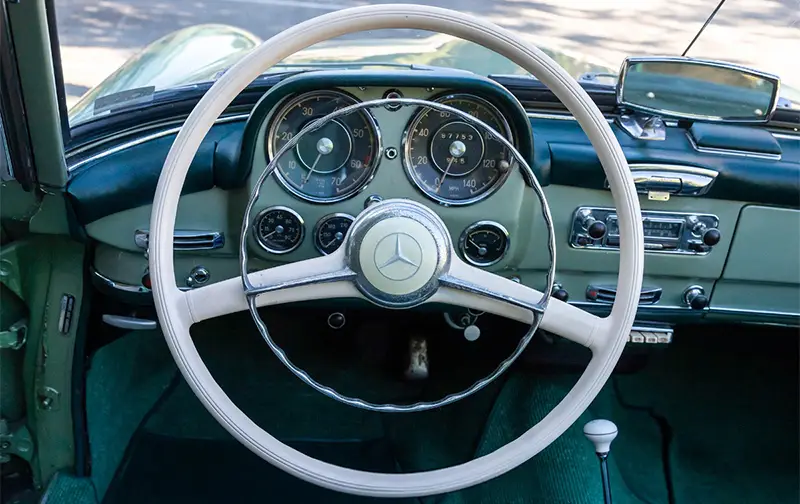
Inside, the optional Gullwing-style seats bring a distinctive link to the larger SL. They’re joined by VDO instruments, a two-spoke steering wheel with a horn ring and a vintage Becker Mexico radio. A fender-mounted antenna completes the period setup. The trunk carries a full-size spare tire, while the exterior has chrome bumpers with overriders, Mercedes-Benz color-matched hubcaps, a soft-top boot cover and Coker Classic wide whitewall tires.
For an enthusiast inspecting this car, the combination of identification, condition and completeness deserves attention alongside the color and trim. The data-card copy provides a reference for checking the stated matching-numbers engine, while the soft top, boot cover and full-size spare give a fuller picture of how the car is equipped. The seller describes the example as mechanically sound; a prospective owner would still want to assess its present condition directly.
A strong American following
The 190SL found a substantial audience in the United States. Of 25,881 built, 40 percent were sold there, according to the figures provided for the model. At launch, the roadster cost $3,998; examples equipped with a removable hardtop cost $4,295. Those sales helped establish the SL as a lasting part of Mercedes-Benz’s sports-car identity.
The model also drew well-known owners, among them Grace Kelly, Ringo Starr, Miles Davis, Ingrid Bergman and Alfred Hitchcock. That celebrity roster adds period color, but the car’s appeal doesn’t depend on famous names. The 190SL occupies an appealing middle ground: more refined and substantial than a small British roadster, yet less demanding in character than the 300SL that shaped its looks.
That’s the 190SL’s lasting strength. Its design carries the drama of the Gullwing, while its four-cylinder engine, manual transmission and open cabin make the experience feel approachable and suited to touring. This 1956 car adds a particularly memorable color, period-correct cabin details and a documented identity to that formula. For anyone drawn to early SLs, those specifics are the place to start looking closely.


