Opel Corsa GSE: 281-HP Electric Hot Hatch Hits 100 km/h in 5.5 Seconds
Mitch Evans puts the 207 kW Corsa GSE in the spotlight, with a Torsen differential, lowered sports chassis and 5.5-second 0–100 km/h time.
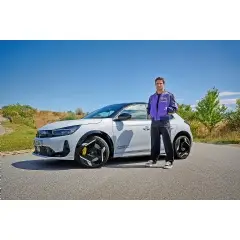
The new Opel Corsa GSE brings 207 kW (281 hp) and 345 Nm of torque to the small-car class, pairing its electric powertrain with a lowered sports chassis and a Torsen limited-slip differential. Its headline figure is 0–100 km/h in 5.5 seconds, making it the quickest accelerating production Opel currently on sale, according to Opel. For a hot hatch, the more revealing question is how the chassis and differential make that power usable through a corner.
Formula E driver Mitch Evans is the face of Opel’s Corsa GSE campaign, following Sophia Flörsch’s role in introducing the Mokka GSE. The campaign video puts Evans behind the wheel of the Corsa, linking his childhood fascination with racing games to his professional career and the new road car. Opel has also named Evans to its GSE 27FE Formula E team for the coming season. The video is available here.
Chassis hardware for a front-drive hot hatch
The Corsa GSE’s Torsen limited-slip differential is a key part of the mechanical package. In a front-wheel-drive performance car, the differential helps manage how drive reaches the front wheels when they have different levels of grip. That matters when accelerating out of a bend: the inside tire can lose traction more readily, while the outside tire carries more load. A limited-slip unit can help the car put power down more effectively in that situation. Opel pairs it with a lowered sports chassis, a combination intended to give the car a more controlled, responsive feel than a standard small hatch.
Those details help explain why the GSE is more than a power increase. The chassis has to handle the motor’s 345 Nm while keeping the car composed as the driver turns in, changes direction and accelerates away. Opel hasn’t supplied further suspension specifications in the campaign material, so spring rates, damper design and alignment settings remain undisclosed. The figures that are clear are substantial for a Corsa: 207 kW (281 hp), 345 Nm, and a 5.5-second sprint from 0 to 100 km/h.
Opel describes the car as its most powerful production Corsa to date. It also calls the model an all-electric everyday sports car, placing the GSE badge within the Corsa’s hot-hatch tradition. The campaign’s visual cue is an older Corsa GSi, which young Evans drives in a games-console scene before the car transitions to the new GSE. That reference gives the electric model a connection to the nameplate’s performance history without suggesting that the two cars share a mechanical layout.
Performance shown in the cockpit
Inside, the instruments and screens display standard vehicle information alongside GSE performance data. Opel says the driver can see G-forces, acceleration figures and battery-management information. Such readouts make the car’s responses easier to follow on a drive: acceleration data shows how the car is delivering its thrust, while G-force displays offer a sense of the forces generated as it corners or brakes. The battery information adds an electric-car layer to the usual hot-hatch feedback.
Opel has also developed an active sports sound for the Corsa GSE. It varies with acceleration and speed, giving occupants an audible response that changes with how the car is being driven. That’s a deliberate part of the experience in a battery-electric performance car, where the absence of a combustion engine’s rising revs changes the usual soundtrack. The available details don’t specify how the sound is generated or how drivers can adjust it.
Evans describes the GSE’s appeal in straightforward terms: “you get in, put your foot down and you just can’t help but smile.” Opel Vice President of Marketing Rebecca Reinermann frames the model around “performance and uncompromising electric driving fun.” Those are campaign statements, but the hardware gives them something concrete to point to: a strong power output, a quick acceleration time and a differential intended to help manage traction.
Range and efficiency figures
Opel lists the Corsa GSE’s combined WLTP energy consumption at 16.9 kWh/100 km, with CO2 emissions of 0 g/km and a CO2 label of A. For comparison, the Mokka GSE is listed at 18.5 kWh/100 km, also with 0 g/km and a label of A. These are combined test-cycle figures; actual energy use depends on driving behaviour and other non-technical factors, as Opel notes. The campaign material doesn’t provide battery capacity, driving range, charging times or charging power, so those ownership details can’t be assessed from the figures released here.
The Corsa GSE has also been named a 2026 “Golden Steering Wheel” winner in the Small Cars category, with Opel citing AUTO BILD issue 46/2026 and BILD am SONNTAG issue 46/2026. The award adds recognition to the model’s launch story, while the engineering case rests on the powertrain and chassis combination.
For drivers weighing up what makes this electric Corsa a hot hatch, the most useful details are already clear: 281 hp, 345 Nm, a Torsen limited-slip differential and a lowered sports chassis. The next practical pieces to watch are full battery and charging specifications, plus independent driving impressions that show how the front end handles that torque on real roads.


