Maserati 3500 GT Vignale Prototype and GranCabrio Meet at Milano AutoClassica 2026
A restored 1959 Vignale prototype and the 490-hp GranCabrio show how Maserati’s open-air grand touring formula has evolved.
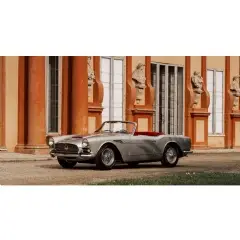
Maserati’s open-air grand touring story has a clear point of origin in the rare 1959 3500 GT Convertible Vignale Prototype. At Milano AutoClassica 2026, that car will share the spotlight with the 490-hp GranCabrio, setting up a useful comparison between the marque’s early convertible thinking and its current interpretation. The show runs from November 19 to 22, with both cars displayed at stand B02 in Hall 16, hosted by Ruoteclassiche. The magazine has selected them as cover cars for its November issue.
The pairing gives enthusiasts more than a then-and-now display. It puts a specific piece of Maserati’s design and engineering history beside a modern four-seat convertible, making it possible to trace what has changed in the materials, chassis setup and technology, and what remains central to the marque’s idea of a fast, elegant open car.
The prototype that set the convertible course
Carrozzeria Vignale developed the 3500 GT Convertible Prototype under the stylistic direction of Giovanni Michelotti. Unveiled at the 1959 Turin Motor Show, it was built in just six units as a one-off project rather than a planned production model. It was also Vignale’s first design project for Maserati. The production 3500 GT Convertible Vignale followed, with around 250 built between 1959 and 1964.
The prototype’s proportions make its purpose plain: a long hood, balanced bodywork and a clean, tapering rear profile give it the presence of a grand tourer without losing the open-air appeal. Its significance goes beyond the shape. It established a formula Maserati would continue to revisit: a convertible that combines sporting performance with comfort and the pleasures of long-distance travel.
The displayed car was built in Modena in the late 1950s. Between 2023 and 2026, it underwent a detailed restoration in the same city, supported directly by Maserati Classiche. Specialists checked its original characteristics against the marque’s historical archives and research from its experts. The work returned the car to the configuration in which it appeared at the Turin show, with the stated aim of preserving its historical and technical authenticity.
Its color scheme is part of that story. Silver bodywork sits over an ivory and red interior, with blue carpets and gold details. The combination reflects the palette of Vignale’s emblem, turning the coachbuilder’s identity into a set of colors and finishes carried across the car itself.
Period hardware, carefully documented
Under the hood is a 3,485-cc inline-six fed by Weber carburetors. Maserati’s stated output is 235 hp at 5,500 rpm, sent through a four-speed ZF manual gearbox. The chassis uses double wishbones at the front and a solid rear axle with longitudinal leaf springs; Borrani wire wheels complete the period specification. Its top speed was around 235 km/h.
Those details help explain the car’s grand touring character. The six-cylinder engine and manual transmission provide the mechanical core, while the suspension layout pairs independent front control with a traditional live rear axle. The result belongs firmly to its era, yet the combination of speed, style and open-top touring was ambitious enough to shape a lasting strand of Maserati’s identity.
The prototype’s influence also points to the international audience Maserati had in mind during the 1960s, particularly in the United States, where interest in Italian luxury sports cars was growing. The modern GranCabrio carries the idea into a different period, with contemporary cabin equipment, revised aerodynamics and a much more developed emphasis on passenger comfort.
A modern four-seat interpretation
The GranCabrio on display produces 490 hp from a 3.0-liter Nettuno twin-turbo V6. Its pre-chamber combustion technology is derived from Formula 1 and patented by Maserati. The marque describes the engine’s sound as a defining part of the driving experience. The show car wears Blu Emozione paint over a Greige interior, with Crio wheels, satin-finish chrome details, full-grain leather and carbon-fiber cabin panels.
Its styling keeps the convertible’s proportions in view while adding contemporary aerodynamic work. Up front, reshaped air intakes and revised external air curtains lead into a central splitter intended to increase front downforce. At the rear, clear lenses update the lighting. The changes give the car a sharper sporting look while retaining the smooth, restrained lines expected of a grand tourer.
The GranCabrio is configured for four occupants, and Maserati emphasizes its thermal and acoustic comfort with the roof down. The fabric top opens in 14 seconds, including while the car is moving. That combination makes the cabin’s practical layout part of the model’s character: it’s intended to carry family or friends on a trip, rather than treating the rear seats as an afterthought.
Maserati also points to revisions in the driving experience, including a recalibrated transmission, a refreshed digital interface and more intuitive technology. The 490-hp version gains a Country driving mode. New Tridente wheels widen the track by 10 mm, a change the marque says improves high-speed stability and cornering precision while giving the car a broader stance. These refinements show how the modern car develops the old touring brief through electronic controls, aerodynamic detail and updated chassis tuning.
Classiche work and a wider heritage display
The Vignale prototype carries a particular milestone for Maserati Classiche: in April, it received the program’s 100th Certificate of Authenticity. Established in 2021 and based at Maserati’s Modena facilities, the program supports owners and collectors who want to preserve the marque’s historic vehicles. It now sits within BOTTEGAFUORISERIE, where technical knowledge, archival research and Modenese craftsmanship are brought together.
Certification involves a committee of specialists examining a car’s technical features, historical documents and records held in Maserati’s archives. The service is available for vehicles more than 20 years old, as well as special models and limited editions. For the Vignale prototype, that process gives the restoration a documented reference point and connects its physical specification to the car’s history.
Milano AutoClassica will also feature three cars from the Collezione Maserati Umberto Panini APS in Modena, displayed in the main hall. The Maserati 6C34 represents the marque’s early racing period. The Tipo 61 recalls its endurance-racing achievements in the 1960s, while the Alfieri concept, unveiled at the 2014 Geneva Motor Show, presents a more recent design vision shaped by historic Maserati cues.
The wider setting adds context to the two convertibles. Maserati is marking 100 years since the Trident emblem first appeared on its racing cars at the 1926 Targa Florio. The symbol later became the badge for its road cars, linking competition roots to the touring machines that followed.
From six experimental prototypes to a production run of around 250, the 3500 GT Convertible Vignale helped make the open Maserati a lasting proposition. The GranCabrio shows how that proposition has expanded: more power, a four-seat cabin, modern aerodynamic features and a roof that can open in seconds. Seeing the two together makes the evolution tangible, while the restored prototype offers a close look at the design choices that started the journey.


