Dow NORDEL NGT 6670 EPDM Targets Faster Automotive Weatherseal Production
Dow’s new EPDM grade combines faster curing, compression set performance and profile flexibility for automotive weatherseals, with a claimed lower carbon footprint.
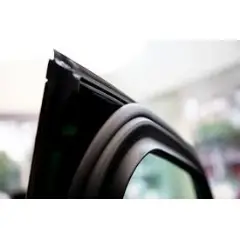
Faster curing is the practical hook in Dow’s new NORDEL NGT EPDM series. Its first grade, NORDEL NGT 6670 EPDM, is aimed at automotive weatherseal production, where shorter cure times can support higher line speeds while the finished seal still needs to keep water, dust and noise out of the cabin over time.
Dow says the series is built with its proprietary Advanced Molecular Catalyst (AMC) technology, which controls the polymer’s molecular structure. The company positions that architecture as a way to ease a familiar material challenge: improving processability without giving up the performance required in demanding rubber applications. NORDEL NGT 6670 is now available globally for automotive dry sponge weatherseals.
One grade for several weatherseal profiles
The grade is designed for use in dry sponge, fast-extrusion dense, microdense and thermoplastic vulcanizate (TPV) weatherseal profiles. That range gives compounders options across different profile requirements while working with one material. In production, fewer material changes can make formulation and inventory planning more flexible, though the right fit will still depend on the compound, extrusion setup and finished-part specification.
Dow describes the material as combining easier processing with strength, surface quality and dimensional stability. Those properties matter at the profile level: a weatherseal needs to emerge consistently from the line, hold its intended shape and present a clean surface, then remain effective as the vehicle sees repeated door or window movement and changing conditions.
For dry sponge applications, Dow reports faster curing and improved compression set performance compared with competing EPDM. Faster cure can give manufacturers room to increase output on an existing line, depending on their process and quality targets. Compression set describes how well rubber recovers after sustained compression. Better performance here can help a seal retain its shape and contact pressure over time, supporting its ability to keep out water, dust and noise.
Processing gains need to hold up in the finished part
The production case rests on both sides of the part: cure speed affects throughput, while compression set and dimensional stability affect how the weatherseal performs after installation. A faster line has limited value if profile quality varies or the seal loses its fit with use. Dow’s stated combination of processing efficiency and long-term sealing reliability is therefore aimed at compounders and manufacturers balancing output with durability.
The company also says the grade can create opportunities to optimize formulations, material use and overall compound cost. Those are possibilities rather than fixed savings; results will depend on the customer’s formulation and production conditions. The profile flexibility may also help teams assess whether one grade can serve multiple weatherseal designs, but each application still needs to meet its own performance requirements.
AMC process and carbon footprint claim
Dow says AMC technology enables precise control of the polymer structure and very low gel levels. Low gel content can support more consistent processing and surface quality, two useful checks when manufacturers need repeatable extruded profiles. For most products in the series, Dow says a Certificate of Analysis with gel-content information is available, giving customers a way to review that material characteristic.
Dow also reports that AMC enables a production process with an up to 29% lower carbon footprint compared with functionally equivalent EPDM made using conventional production technology. The company says its product carbon footprint analysis is available upon request. The comparison is specific to functionally equivalent EPDM and the stated production technologies; the supplied information does not give the analysis boundaries or calculation method.
A first grade in a wider EPDM series
NORDEL NGT 6670 is the first grade in the new series. Dow says the broader development reflects its ongoing work in EPDM and its intent to expand the portfolio for rubber applications across automotive, infrastructure, consumer goods and other industries. The initial launch, however, is focused on automotive dry sponge weatherseals, where the stated combination of faster cure and compression set performance addresses clear production and part-life considerations.
For manufacturers evaluating the material, the most useful next step is to compare its cure behavior, profile quality and compression set in the intended compound and line conditions. Dow says NORDEL NGT EPDM samples can be requested through a Dow representative or its customer support channel. The key question will be whether the reported processing advantage carries through to a consistent seal that keeps its shape and sealing function in service.
*Product carbon footprint analysis is available upon request.


