FIAT Pandina AI Campaign Earns Creative Innovation Recognition for 2026
FIAT’s Pandina work used Google Veo 3.1 and Nano Banana to build a human directed, AI assisted set of campaign assets.
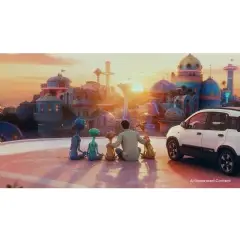
FIAT’s Pandina project puts a practical question at the center of its use of generative AI: how can a creative team make more varied material while keeping a small car’s established character intact? The brand’s answer was to use AI to help build the imagery, with people guiding the concept, choosing outputs and refining the final work. That approach has now been recognized in the Creative Innovation category of AI Impact Makers 2026, a list created by Google with Forbes Italia and presented in Milan.
The recognition is tied to FIAT’s “Italiano” campaign for the Pandina. The project produced one commercial and eight digital creative assets using Google Veo 3.1 and Nano Banana. FIAT describes the work as part of a wider effort to make production more scalable, flexible and suited to multiple channels. The stated aim is an ecosystem of content shaped for different platforms and audiences, rather than a single piece of creative that has to serve every placement.
A small car in a wider visual world
For the campaign, the Pandina was placed in an unexpected universe of characters, environments and visual settings. Generative AI gave the creative team a way to explore those possibilities around the car and turn it into the central figure in a contemporary story. The brief still depended on the vehicle being recognizable as a FIAT: new surroundings could add surprise, but the car’s identity had to remain clear.
That balance is the mechanical equivalent of changing a setup without losing what makes the original work. The production method may open more routes for a visual idea, but it does not decide which route fits the brand. FIAT says human creative direction remained essential throughout, guiding, selecting and refining AI generated material for consistency with its identity. The tools helped generate options; the team supplied the judgment that shaped them into finished communication.
FIAT sums up that division of labor with the line “Crafted by human, accelerated by AI.” It’s a useful description of the project’s claim: AI was treated as a creative aid, not as a replacement for the people responsible for the concept and its execution. That distinction matters in a campaign built around an established model. A stream of possible images is only useful if the team can decide which ones serve the story and which ones pull it away from the car’s character.
Production built for several channels
One commercial alongside eight digital assets gives the project a defined, if compact, scale. FIAT has not provided production times, budgets or detailed technical workflows, so the efficiency gains can’t be measured from the available figures. The stated direction is clear, though: use generative tools to make production more adaptable and to develop material for different audiences and platforms.
That kind of flexibility can matter when a creative idea needs to travel across formats. Different placements may call for different compositions or emphasis, and AI assisted production can give a team more ways to develop the same central concept. The harder part is maintaining a consistent visual identity across those variations. FIAT’s account puts that responsibility with the creative team, which reviewed and refined the generated work rather than treating each output as finished by default.
The project brought together Leo, the creative operation of Publicis Groupe, with technology expertise from Reply and Google. The result sits at the intersection of brand direction and image generation: the tools enabled new visual worlds, while the creative partners shaped how those worlds related to the Pandina. That combination is the part other marketers and production teams are likely to watch most closely. The software can widen the field of options, but a clear brief and steady editorial choices still determine whether the end result feels like a coherent piece of brand storytelling.
Recognition beyond the latest listing
AI Impact Makers 2026 adds to earlier recognition for the project. FIAT says the Pandina work was honored in the Best Use of AI category at the Interactive Key Awards and also recognized at the Next Alliance Awards. Those mentions point to interest in how the campaign joined creative development with generative tools, rather than presenting the technology as an end in itself.
For FIAT, the broader promise is the chance to reinterpret its familiar models, develop stories for different audiences and extend creative ideas across markets and channels while preserving a distinctive identity. The Pandina project offers a concrete example of that ambition: one commercial, eight digital assets, and an AI assisted process with human direction kept in the loop. The next measure will be whether that approach continues to produce work that feels specific to the car, rather than merely demonstrating what the tools can generate.


