Polestar 4 Software Update Adds Android 15, Vehicle-to-Load and Camping Mode
Polestar 4’s P4.3.0 update adds up to 3.3 kW Vehicle-to-Load, Camping mode, broader digital key support and parking assistance for equipped models.
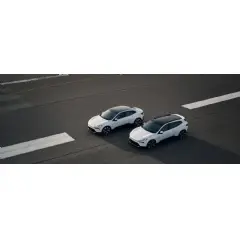
Polestar 4’s P4.3.0 software update brings a practical change to how owners can use the electric crossover when it’s parked: Vehicle-to-Load can send power from the vehicle battery to compatible external devices. Paired with a new Camping mode, it gives the car a more useful role at a campsite or during a stop away from a conventional power source. The update also moves the infotainment system to Android Automotive OS 15 and adds convenience and driver assistance refinements.
Polestar says the update is rolling out over the air across Polestar 4 vehicles. New cars are delivered with P4.3.0 already installed. Availability of some features depends on equipment, device compatibility and market; V2L, for example, won’t be offered in the US, Canada or South Korea.
Power from the charging port
With a compatible adapter connected to the charging port, the Polestar 4 can supply up to 3.3 kW to external equipment. That output can serve camping gear, tools and everyday electronics, extending the battery’s use beyond driving. Owners will need the compatible adapter to make the connection, and V2L is planned for the majority of Polestar markets, with the three named exclusions.
The useful detail is the combination of available output and a dedicated vehicle mode. Powering a device from an EV means drawing energy from the traction battery, so the feature makes the car’s stored energy available for more than propulsion. The update doesn’t specify how long a device can run or how V2L affects driving range; actual use will depend on the connected equipment and the vehicle’s available charge.
Camping mode keeps cabin functions available
Camping mode is designed to maintain cabin temperature and infotainment functions while keeping key power outlets active. That gives occupants access to climate control and in-car entertainment while the vehicle is being used as a place to spend time or sleep. Phones and laptops can also be charged as part of that setup.
For owners planning an overnight stop, the mode addresses a practical challenge: managing cabin comfort and useful electrical functions while the car is stationary. Together, Camping mode and V2L make the Polestar 4 more adaptable at a campsite or during other off-grid stops. The feature description doesn’t provide operating durations or energy-use figures, so owners will need to manage battery charge according to their trip and intended use.
Digital key reaches more Android phones
The digital key now supports compatible Android devices from Google and Samsung. It follows the introduction of digital key for Apple iOS users in 2025, broadening smartphone access across the platforms named by Polestar. With a supported phone and activation in place, owners can lock, unlock and start the vehicle from their device.
Activation is rolling out market by market, so availability will depend on the owner’s location. The update also includes improvements to digital key performance. For drivers sharing access with another person, the expanded device support may make the phone based key more convenient, provided the handset is compatible and the feature has been activated in that market.
Parking assistance depends on model year and equipment
Park Assist Pilot is available on MY26 and MY27 Polestar 4 vehicles equipped with the Pilot pack. After the driver confirms the manoeuvre, the system can automatically steer and brake the car into selected perpendicular parking spaces. That equipment and model year qualification matters: the feature isn’t described as a blanket addition for every Polestar 4.
The driver still confirms the manoeuvre, while the system handles steering and braking for the selected space. It’s a targeted convenience feature for a specific parking layout, rather than a general claim about every parking situation.
Infotainment and daily-use refinements
P4.3.0 upgrades the vehicle to Android Automotive OS 15. Polestar describes improved infotainment performance and responsiveness, alongside changes to remote vehicle controls, start-up speed and Google Maps energy estimation. Those refinements touch functions owners encounter during ordinary use: getting the car ready, checking or controlling it remotely, and viewing energy estimates while planning a route.
The update also includes expanded home-screen shortcuts, enhanced climate controls and improved access between the Dashcam and Gallery applications. Active safety and driver assistance systems receive a range of refinements, though the feature description doesn’t specify individual systems or detail how each change works.
What owners should check
For current owners, the headline addition is the ability to use the vehicle battery to supply external equipment, supported by a mode intended to keep the cabin comfortable during a stationary stay. Digital key compatibility and rollout timing depend on phone and market. Park Assist Pilot has its own MY26 and MY27 and Pilot pack requirements, while V2L has regional exclusions.
That makes the equipment and availability details worth checking before planning around a particular feature. The update’s broader value lies in combining utility, access and infotainment changes through software. For Polestar 4 owners, P4.3.0 adds new ways to use the car while parked and tightens several everyday functions without requiring a workshop visit for the software installation.


