2023 Zeal Motor Fat Truck 2.8C: Amphibious 4x4 With 67 bhp
With 154 hours, this 2023 Fat Truck 2.8C pairs a 67 bhp turbodiesel and hydrostatic 4x4 drive with low-pressure tires built for land and water.
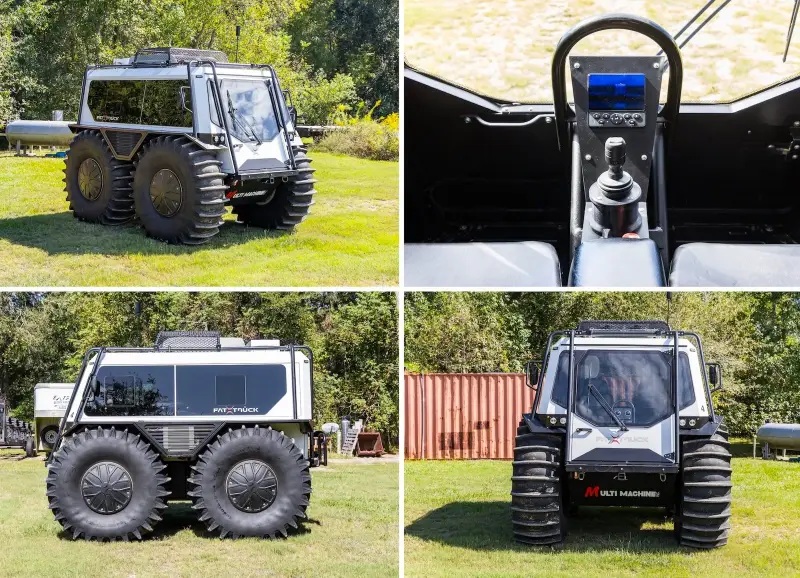
The Zeal Motor Fat Truck 2.8C tackles a problem that usually calls for two machines: moving people and gear across difficult ground, then continuing across water. Its watertight hull, hydrostatic four-wheel drive and huge low-pressure tires let it work as both an amphibious carrier and a land-going off-road vehicle. A 2023 example now offered in Texas has 154 operating hours and several comfort and electrical upgrades.

Built around the terrain
Zeal Motor introduced the Fat Truck in Bromont, Quebec, in January 2019. The company was founded by Maxim O’Shaughnessy, Benoit Marleau and Amine Khimjee, whose combined 60 years of industrial-vehicle experience included work at crawler-carrier maker Prinoth. Their aim was to adapt the big tires and amphibious ability of vehicles such as the Ukrainian-built Sherp into a more work-focused machine. They found the Sherp capable, but difficult to drive, and noted that its cabin could fill with fumes.
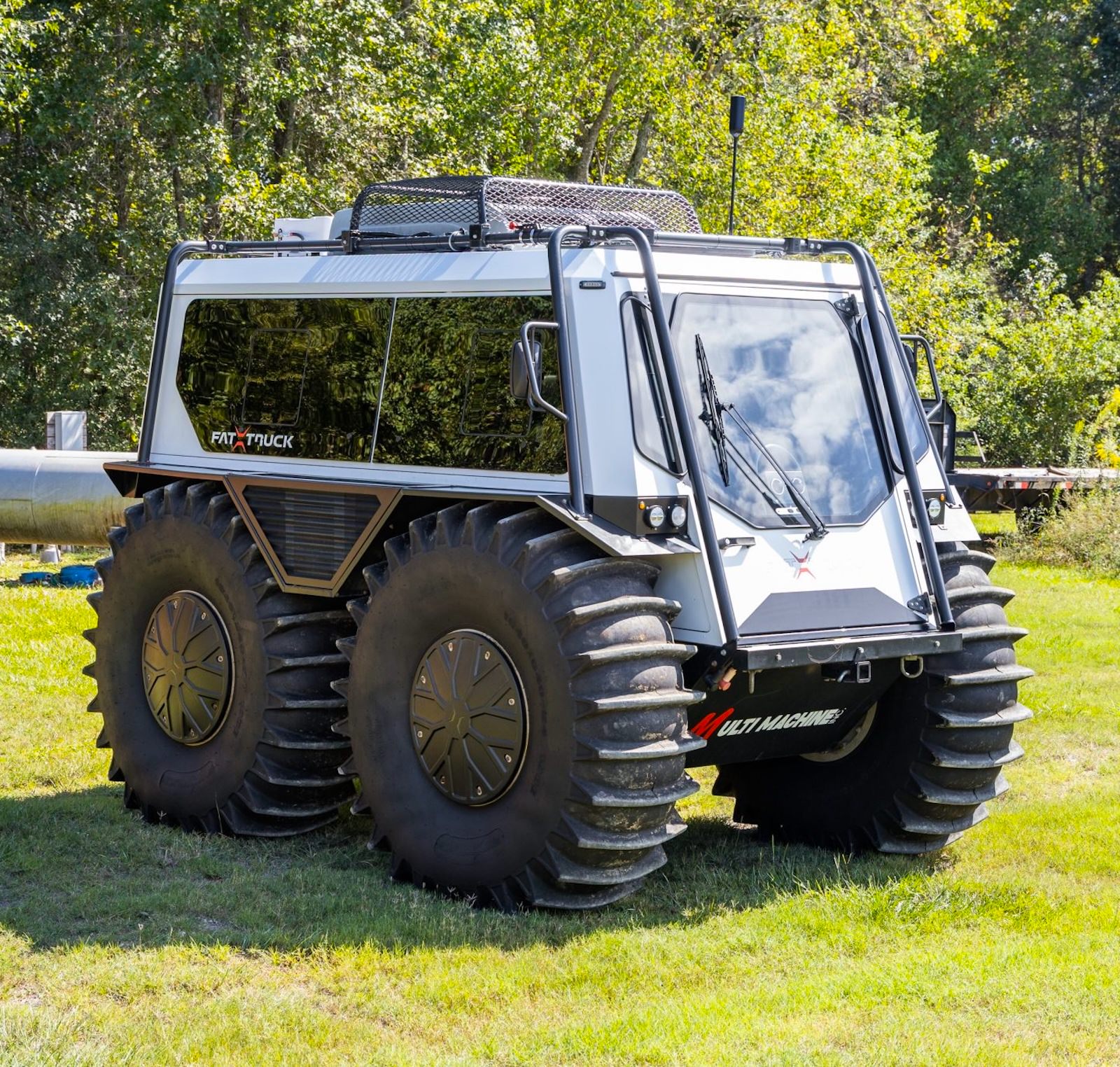
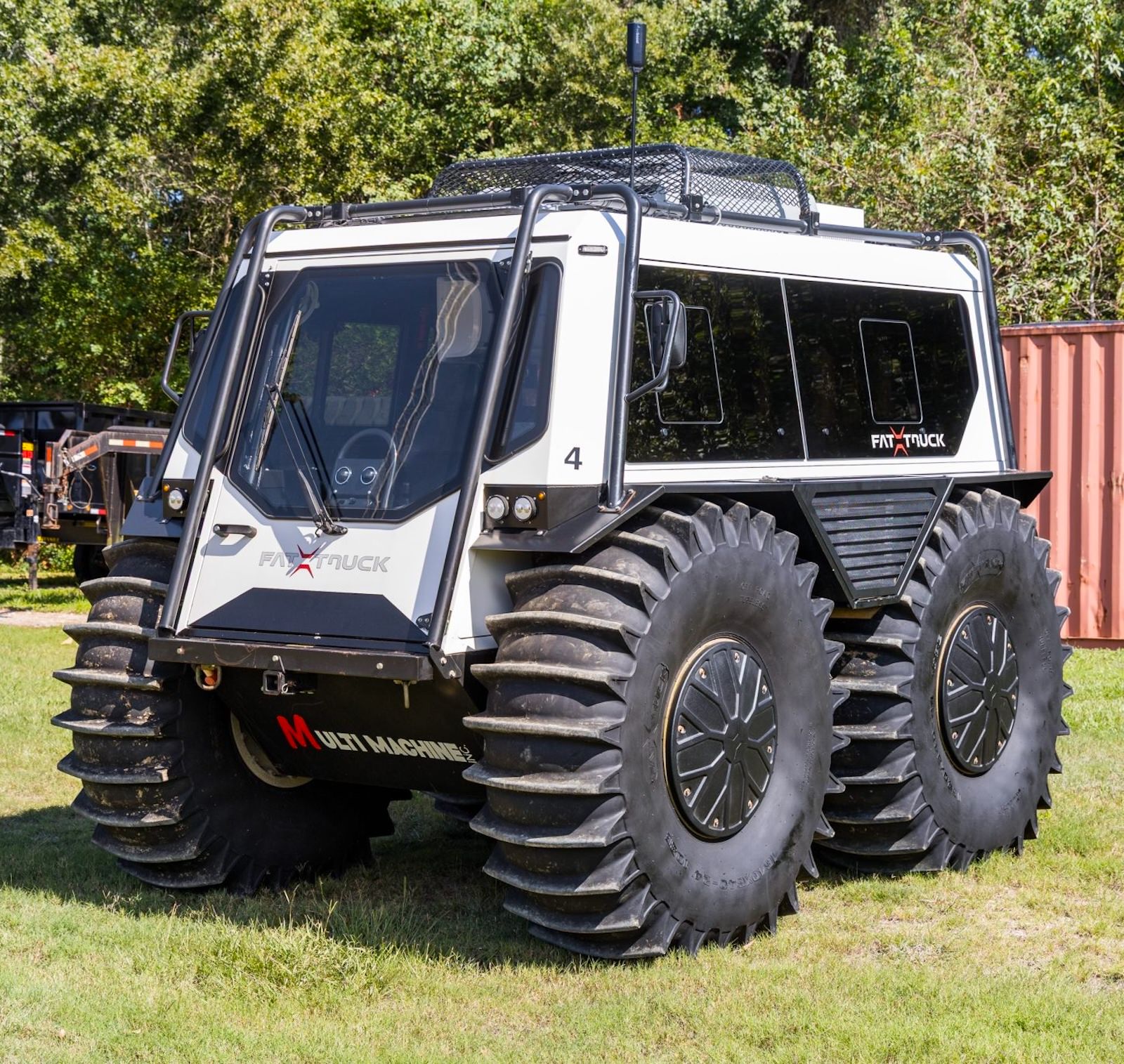
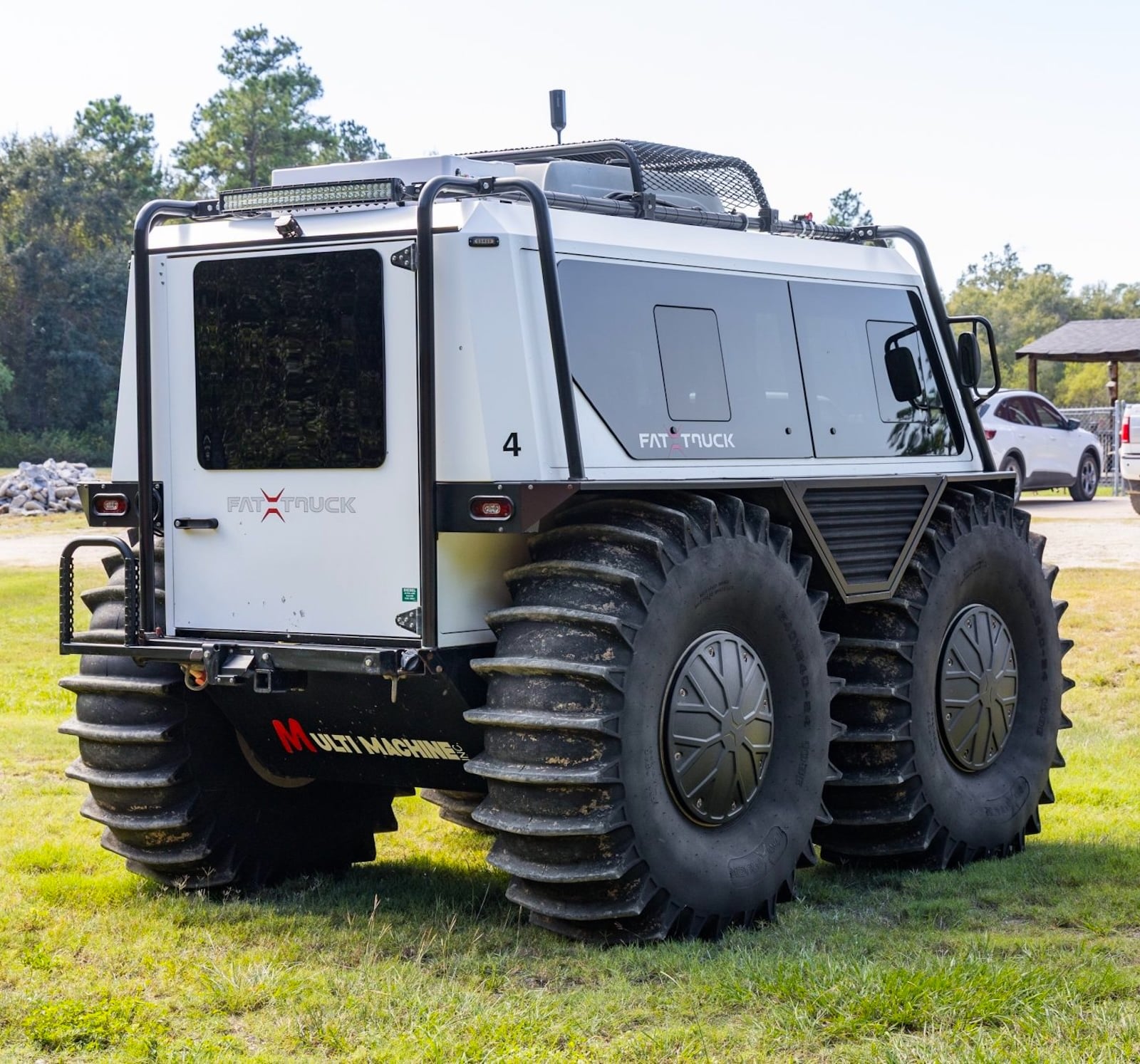
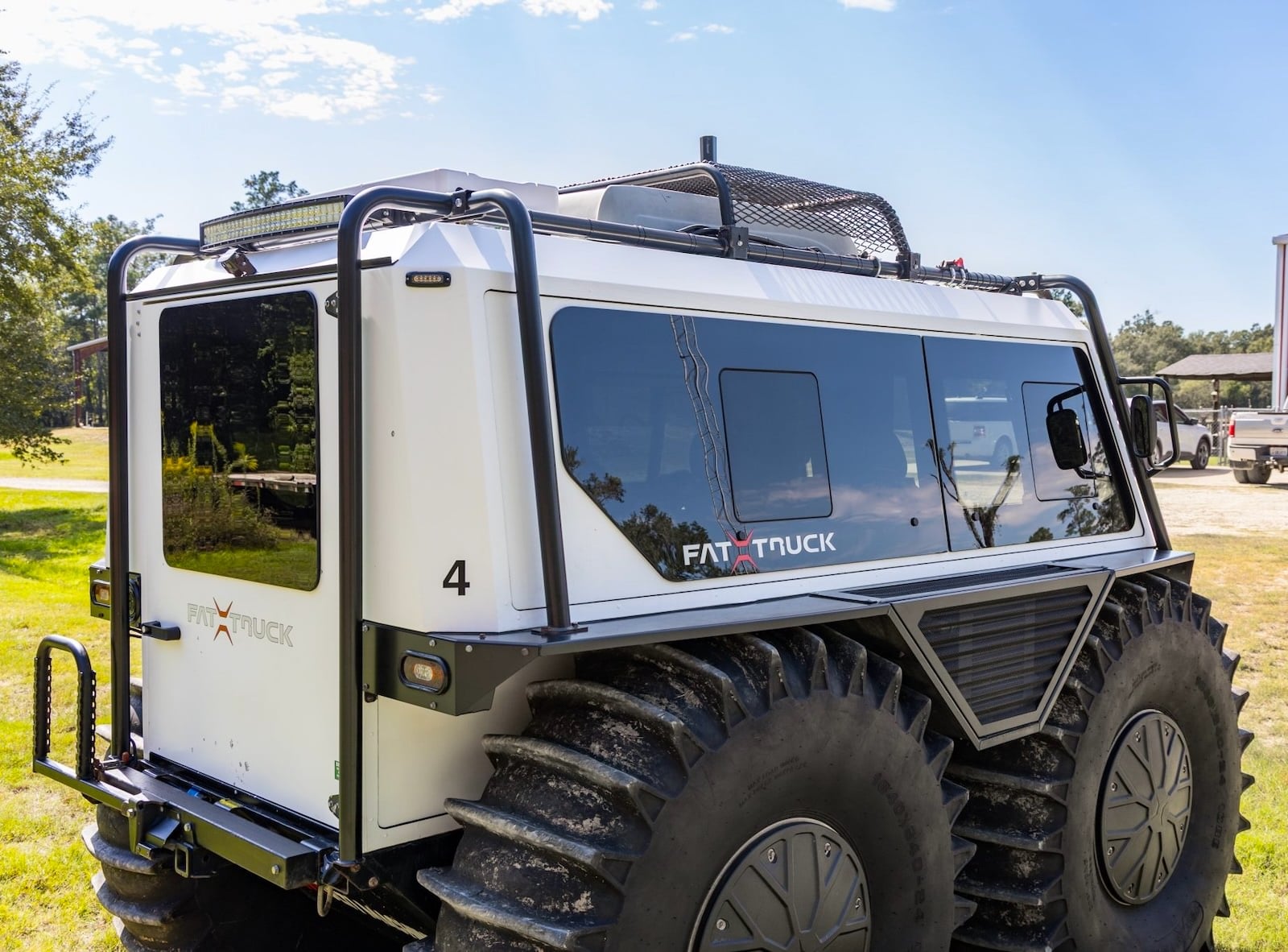
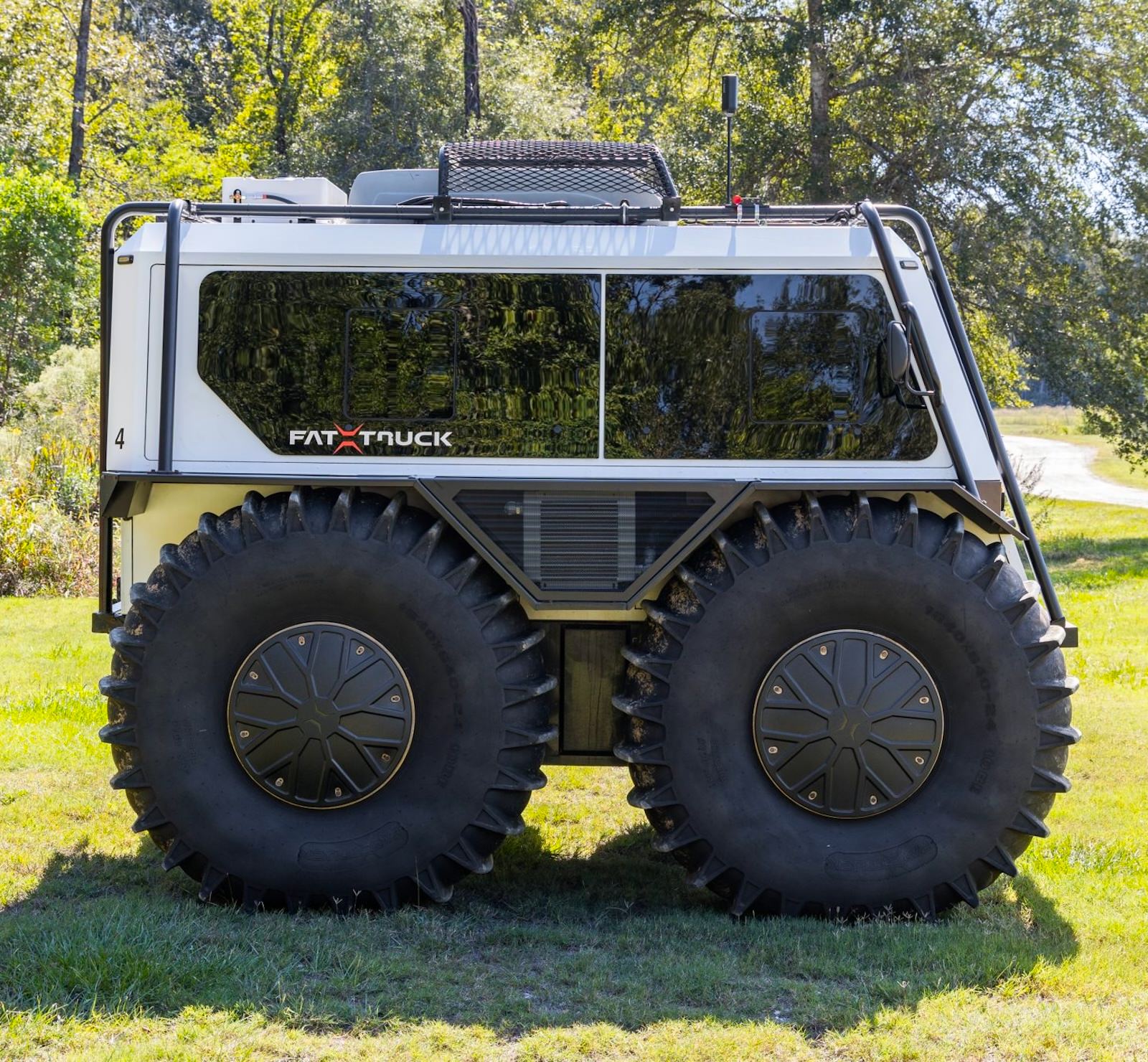
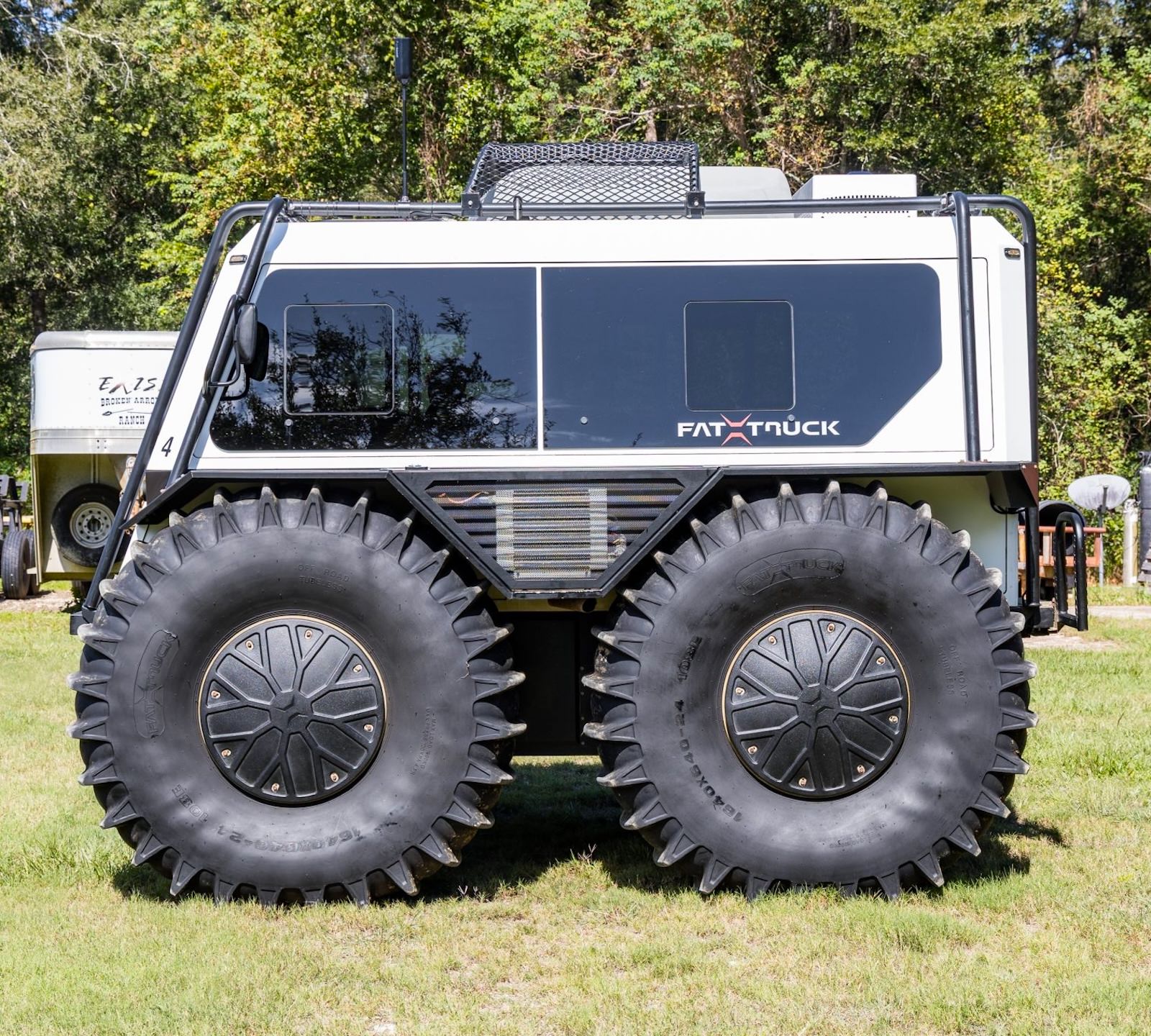
Development began in May 2018, with engineering led by Marleau and body design by Martin Aubé. The resulting vehicle has a tall, box-shaped cabin with large tinted windows on all four sides and little body overhang. That shape gives the Fat Truck a practical, industrial look, while its layout is aimed at worksites beyond the reach of conventional 4x4s. Typical roles include power-line and pipeline work, telecom tower maintenance, wind-farm upkeep and search-and-rescue operations in remote areas.
The first version used a 1.7-liter Caterpillar three-cylinder diesel rated at 40 bhp. Zeal moved to a 2.2-liter Caterpillar four-cylinder turbodiesel, which produces 67 bhp at 2,800 rpm and 153 lb-ft of torque from 1,400 rpm. The C2.2 meets Tier 4 Final emissions rules without a diesel particulate filter. On the 2.8C, it sits low in the center of the hull to help keep the center of gravity down.
Hydrostatic drive and tire flotation
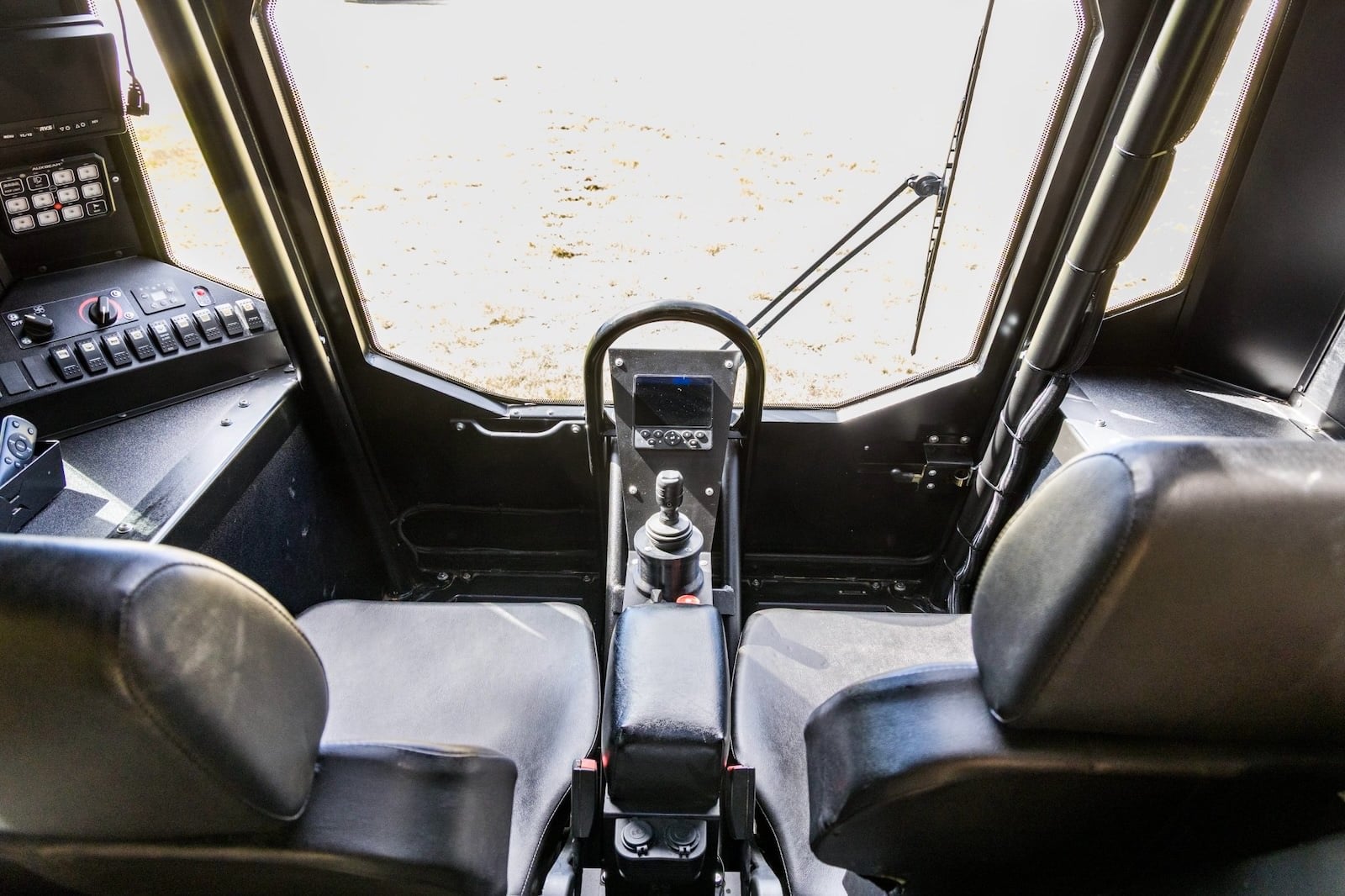
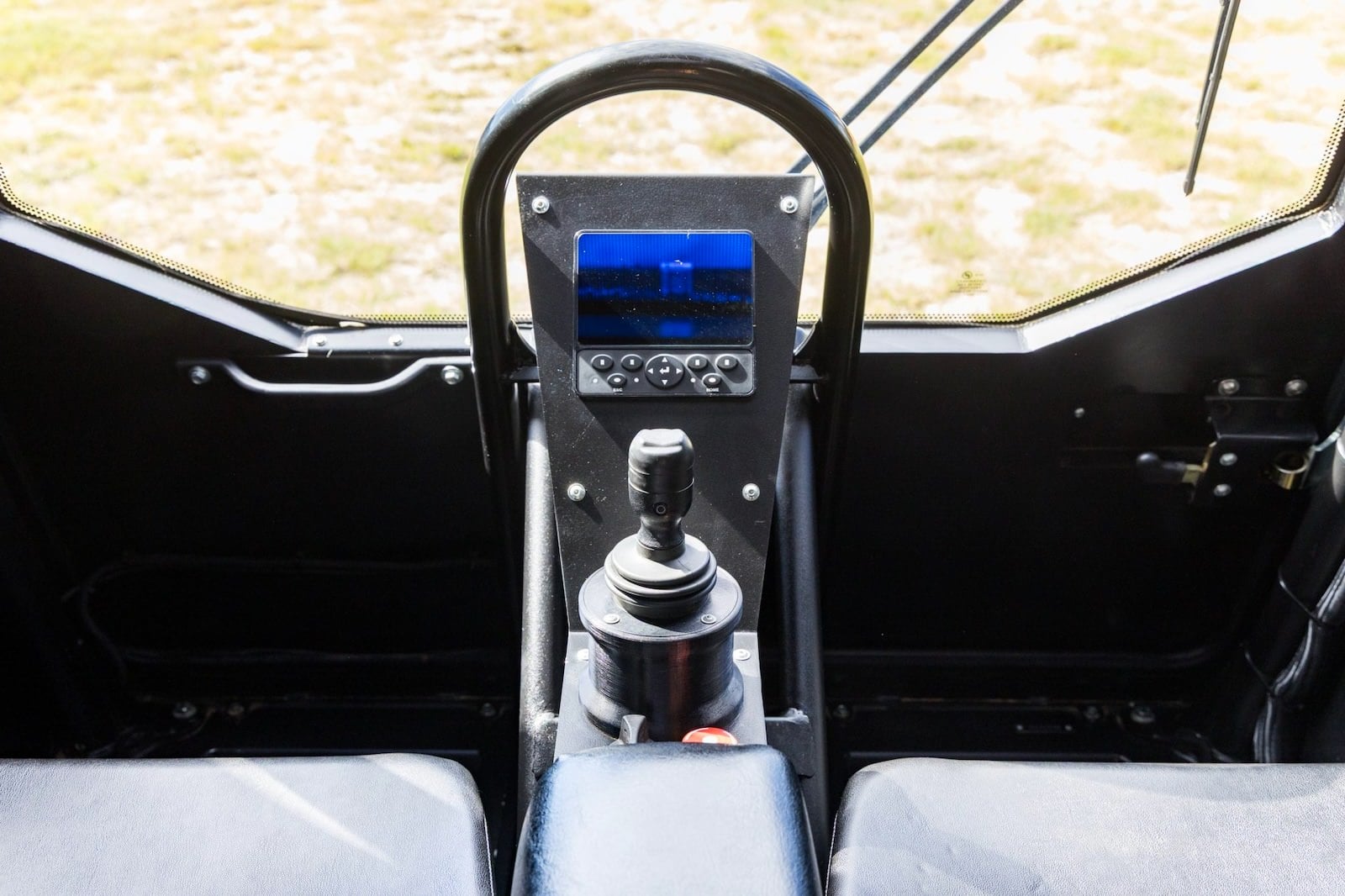
There’s no steering wheel or pedal set. The driver controls the vehicle with a center-console joystick, which either front-seat occupant can use: push forward to move, tip the control to turn, and draw it back to slow down. The hydrostatic transmission uses an engine-driven pump to power hydraulic motors instead of a conventional arrangement of gears and drive shafts. One motor on each side drives that side’s pair of wheels through carbon-fiber synchronous belts.
Steering comes from varying the speed of the left and right wheel pairs. That skid-steering arrangement lets the Fat Truck turn tightly, including pivoting through 360 degrees within its own length. The hydrostatic drivetrain handles braking, while disc brakes apply automatically when the vehicle stops and release as it moves off.

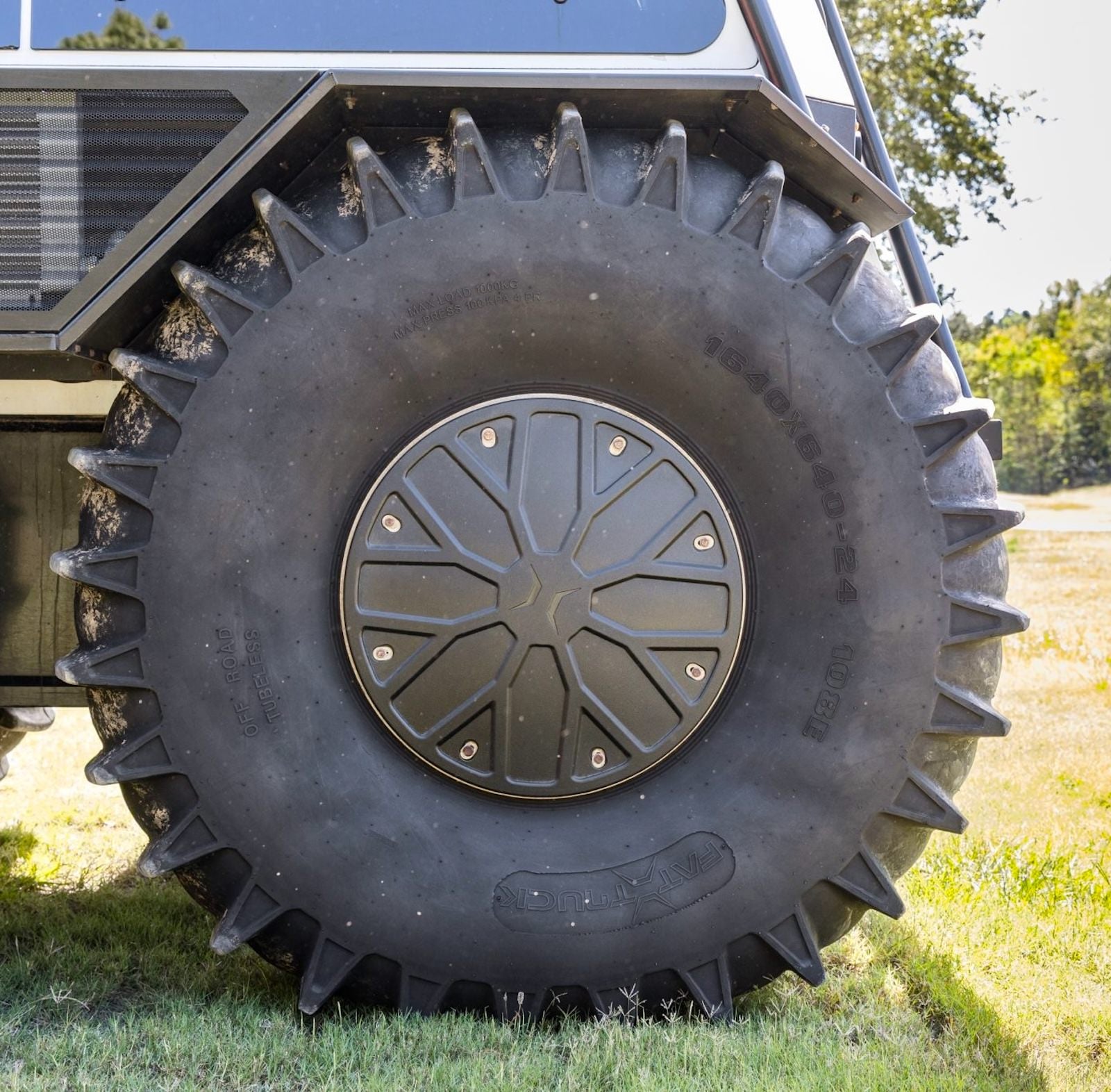
Rather than conventional suspension, the Fat Truck relies on tires run at very low pressure. Their flexible sidewalls deform over obstacles and absorb bumps, while the broad footprint helps the vehicle float on soft ground and water. Each tire measures 1,640 by 640 millimeters, mounts on a 24-inch rim, and is about 65 inches tall and 25 inches wide. Pressure stays at or below 4 psi.
A central tire-inflation system adjusts pressure for four selectable modes: snow, mud, trail and water. Snow mode uses the lowest pressure to spread the tire’s contact patch; water mode raises it for flotation. The transverse paddle tread also pushes water rearward, helping propel the truck. Factory figures list a maximum speed of 25 mph on land and 3.1 mph on water. The 2.8 models are rated for 70% grades uphill and downhill, 40% side slopes, and a payload of 2,200 lbs or as many as eight occupants.
The hull combines Hardox hardened, wear-resistant steel in its lower section with aluminum above to manage weight. The cab has ISO 3471 rollover-protection certification. Zeal says about 60% of the parts come from the United States, including the turbodiesel, while the rest are sourced from within 300 miles of the Canadian factory. The wheels are the only components sourced from outside North America.
The 2023 Fat Truck 2.8C for sale
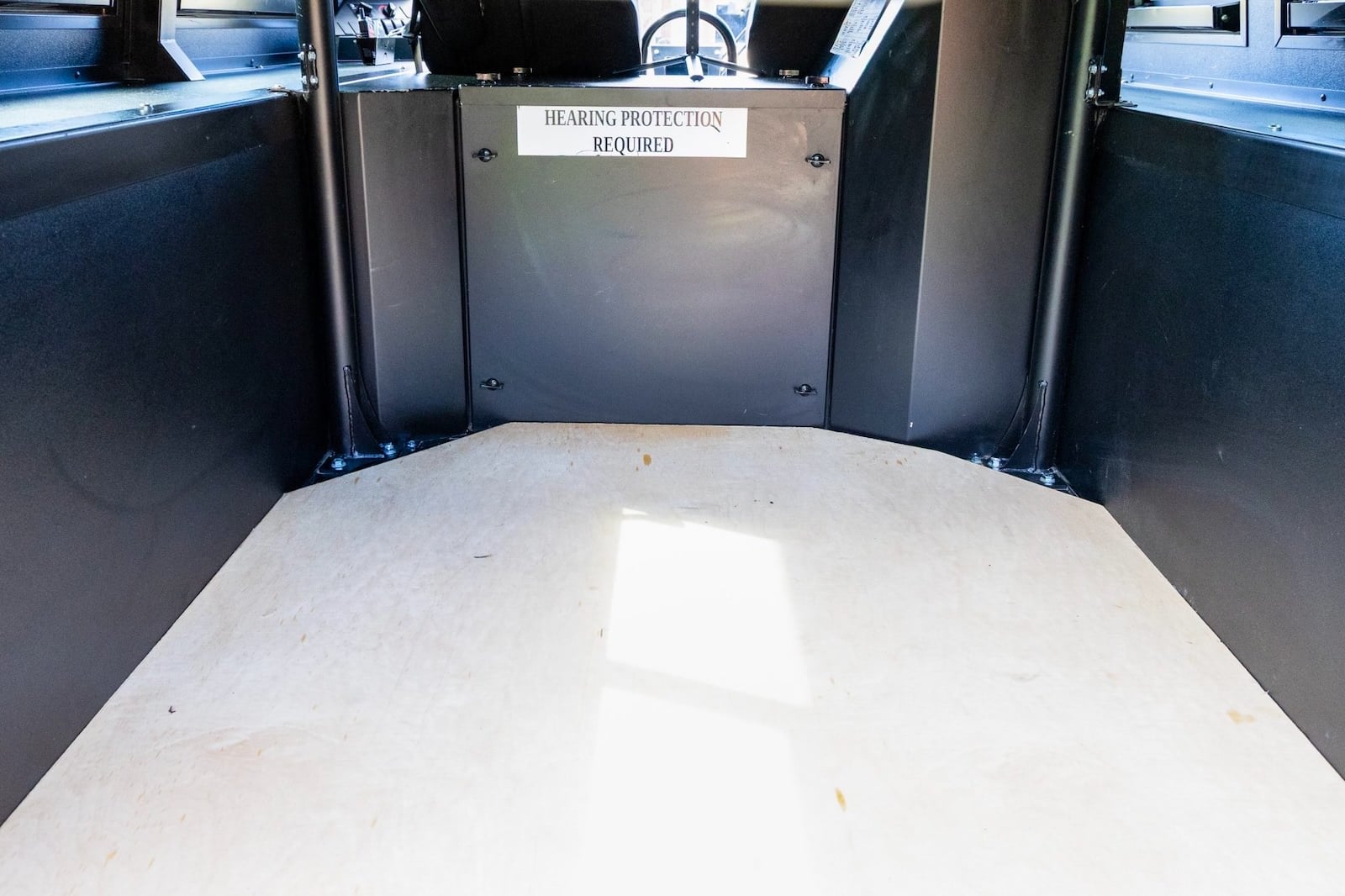
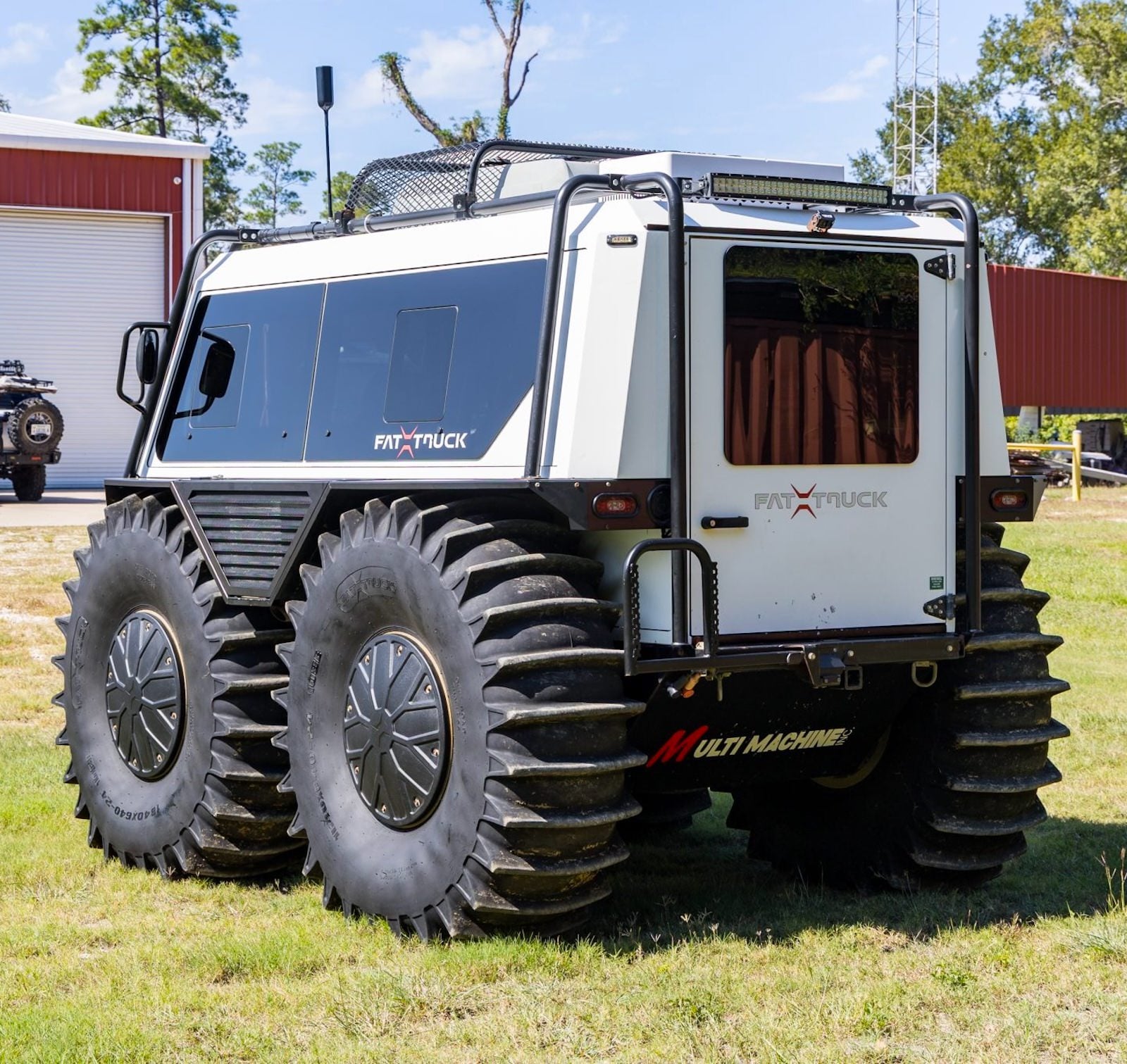
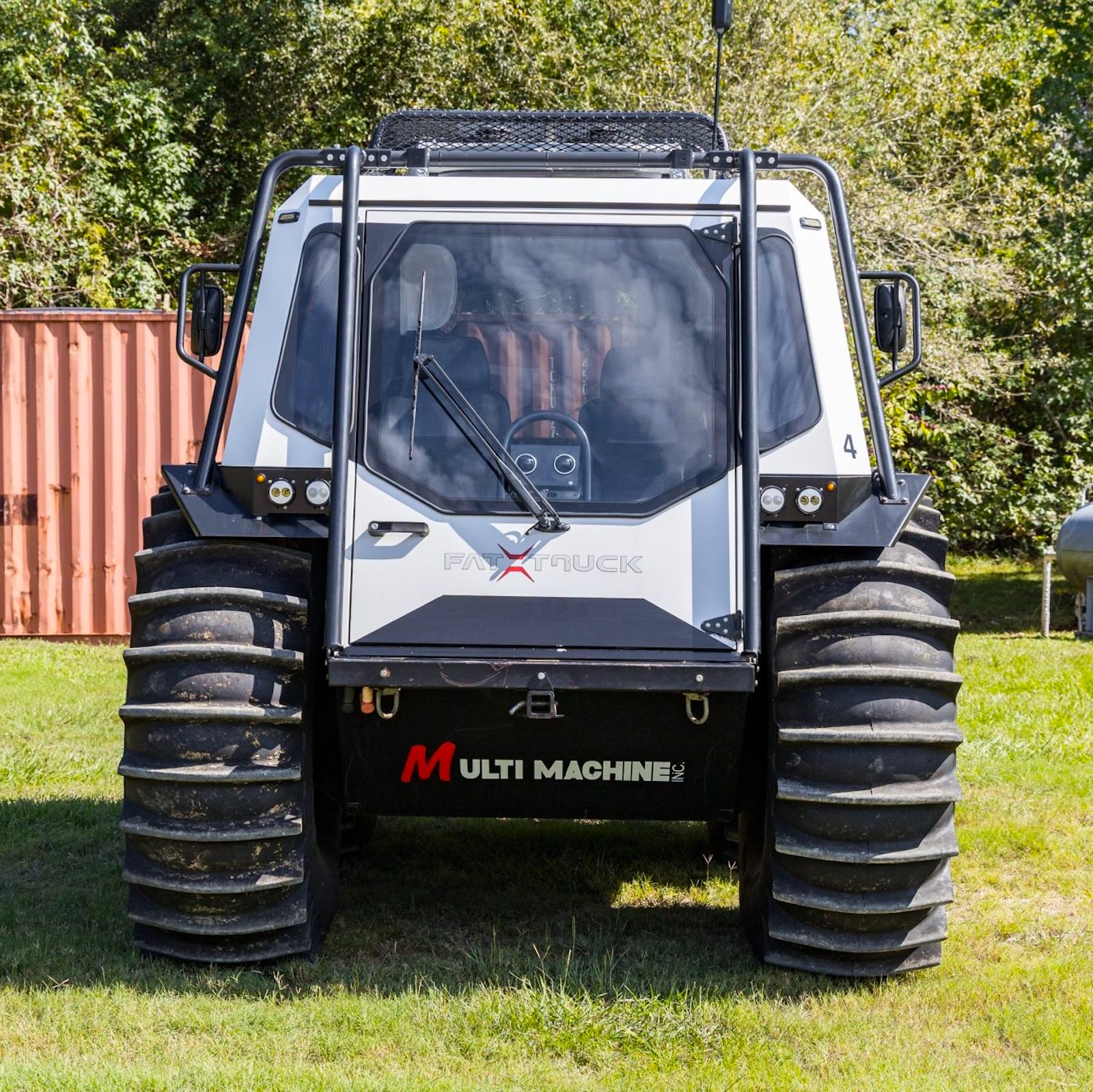
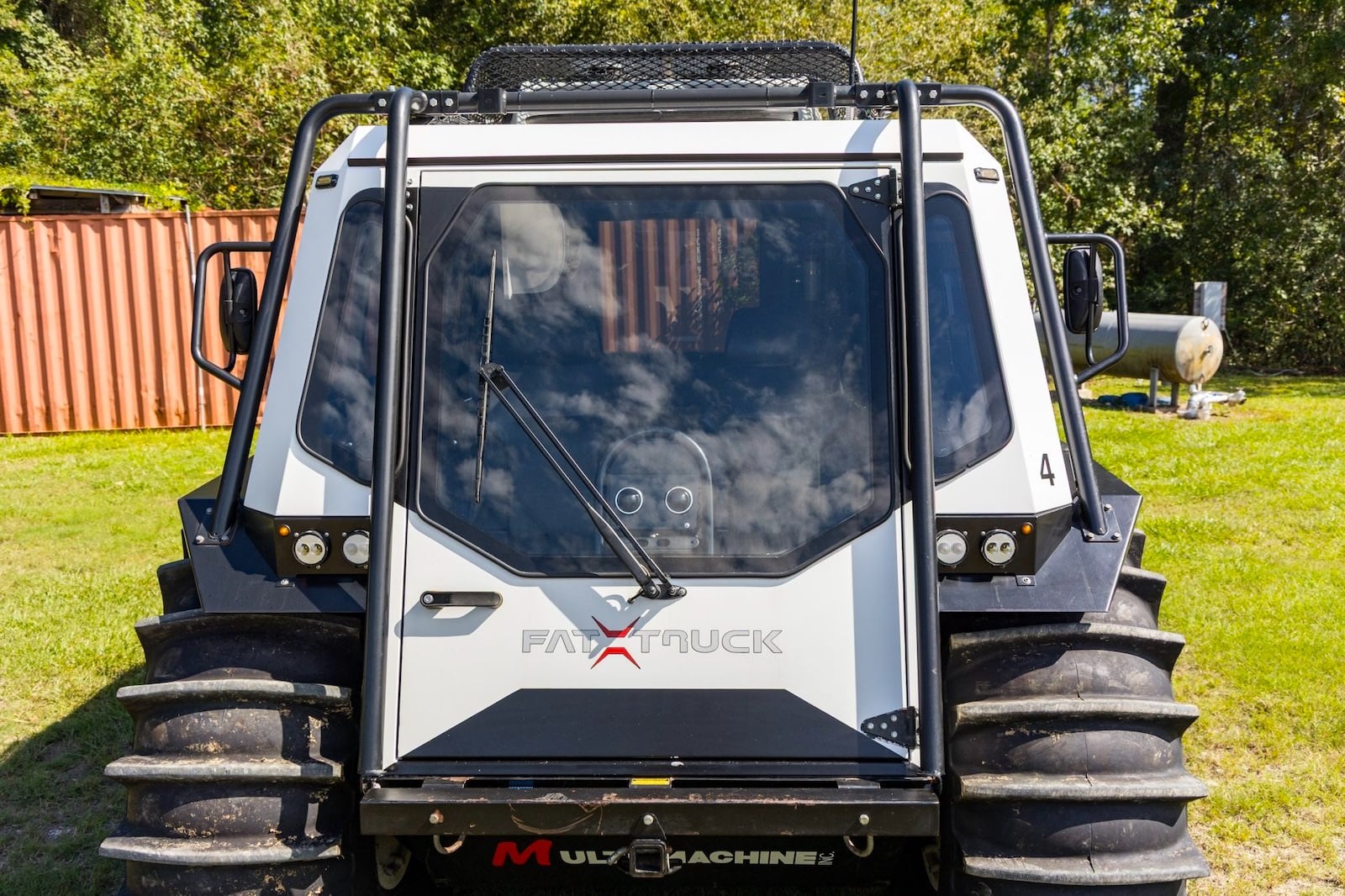
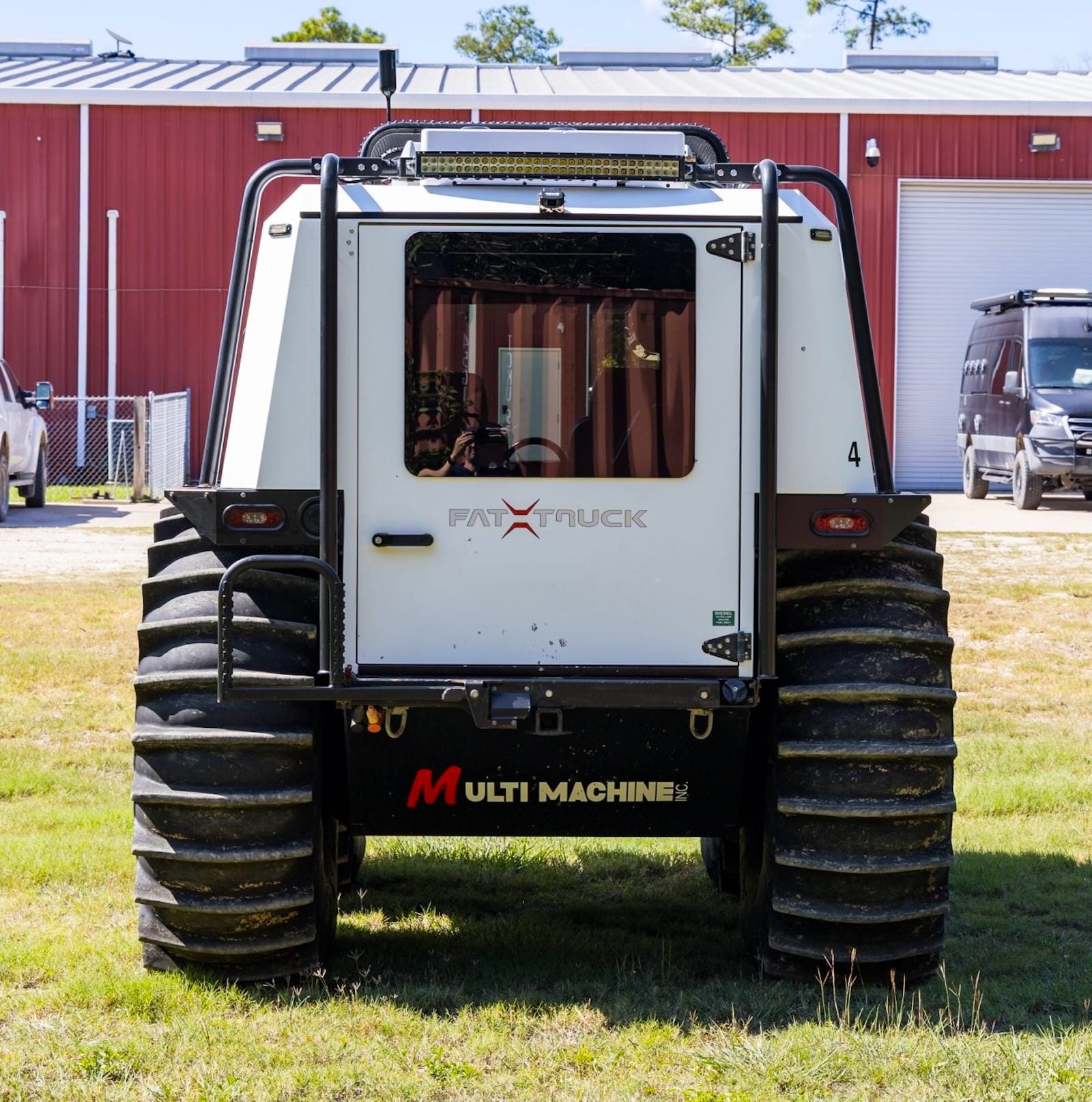
The example offered here was bought by its current seller in 2024. It wears white paint, an external black tubular roll cage and an aluminum body, with a two-seat cabin and joystick controls accessible from either seat. The digital hour meter reads 154 hours. Its engine and drivetrain follow the 2.8C recipe: a Caterpillar 2.2-liter four-cylinder turbodiesel, hydrostatic transmission, belt final drive and four 1,640-by-640 low-pressure paddle tires.
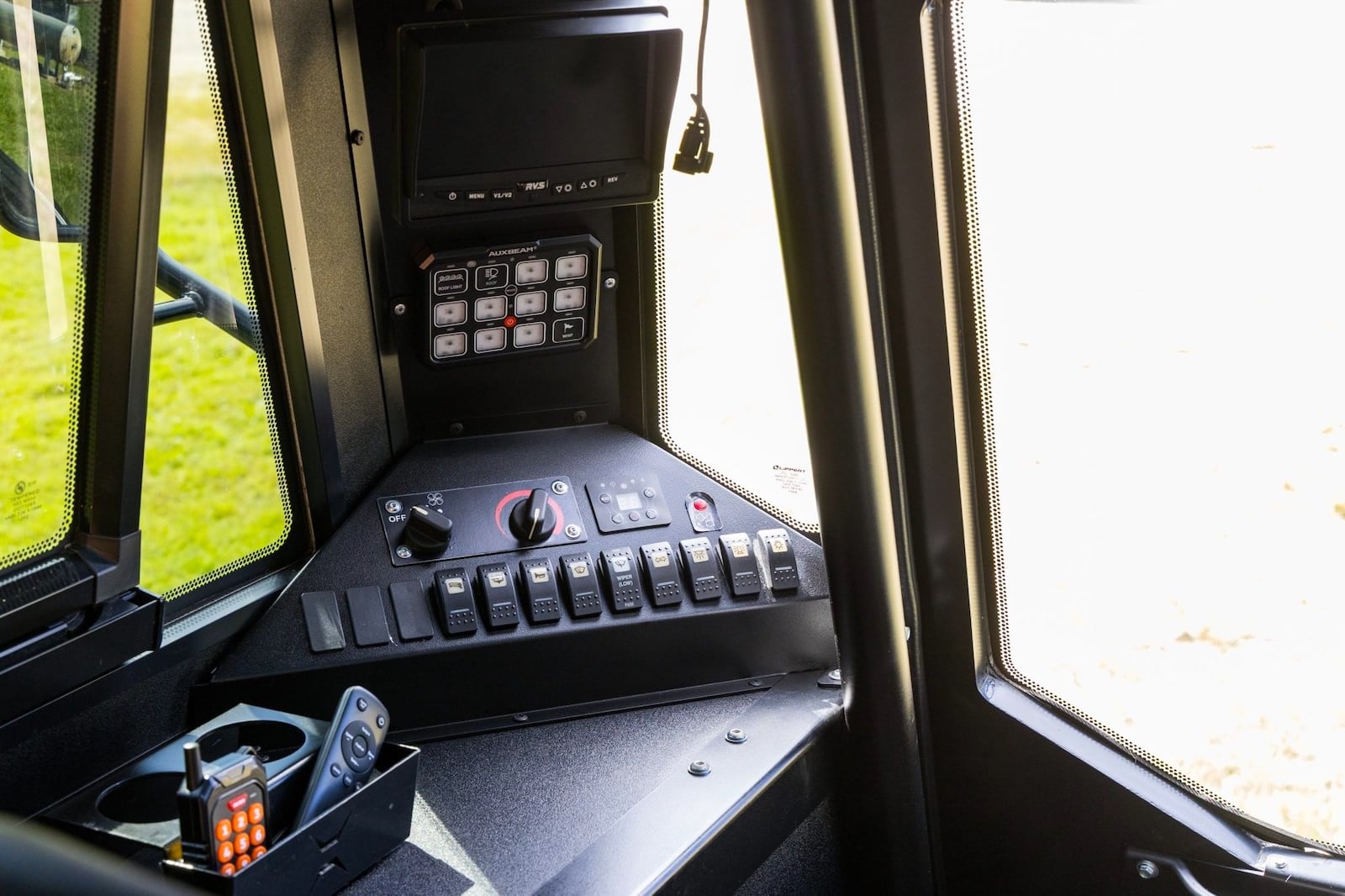
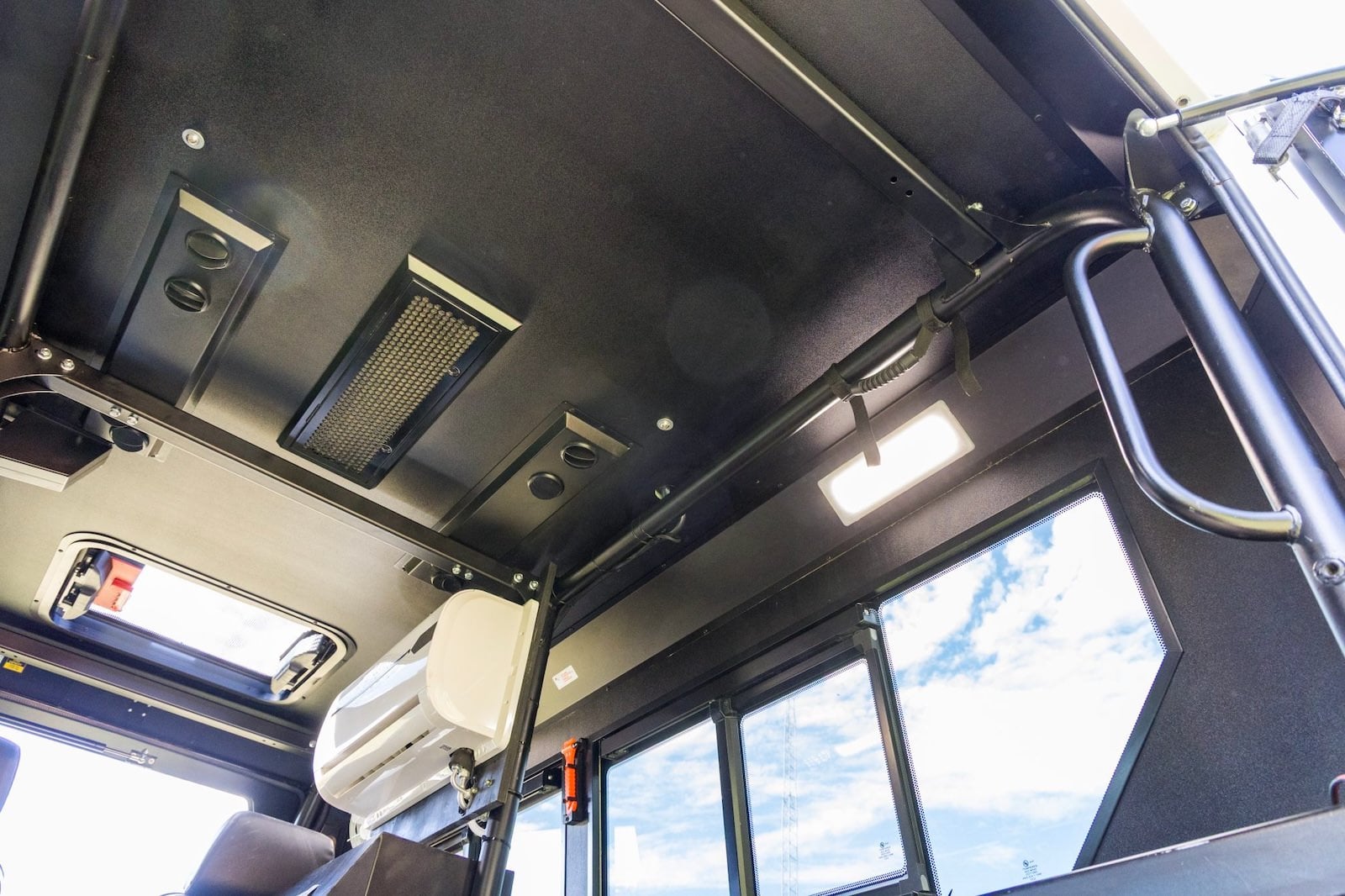
The seller added an OutEquip 12,500 BTU, 12-volt mini-split air-conditioning system, powered by two NewtiPower 600Ah lithium batteries. Other additions include a weBoost cellular signal booster, an Auxbeam digital accessory control panel, a Sirocco cabin fan and an external charging port. These upgrades are aimed at making time in the compact cab more comfortable and supporting its electrical accessories during remote work.
Further equipment includes LED lighting, a rearview camera, a rooftop escape hatch, a folding entry ladder and receiver hitches at both ends. Inside are black vinyl seats with shoulder belts and a central digital display. The truck has 20.7 inches of ground clearance, a stated maximum gradient capability of 35 degrees and a maximum land speed of 25 mph (40 km/h). Its central tire-inflation system adjusts pressure for the selected terrain, while the drivetrain and automatically applied disc brake provide stopping control.
A specialist machine with a clear purpose
The Fat Truck’s speed figures make its priorities plain: this is a vehicle designed to get a crew and equipment through terrain where ordinary wheeled transport runs out of options, not to cover ground quickly. Its tire system does much of the work normally assigned to suspension, and the hydrostatic drive supplies both propulsion and low-speed maneuverability. The trade-off is a specialized control layout and a machine built around access, flotation and payload rather than road-car pace.
This 2023 2.8C is offered from Texas with a bill of sale. The seller’s upgrades and 154-hour reading add useful detail for anyone assessing the particular truck, while its core appeal remains the unusual combination of a working 4x4 and a boat in one hull. Images courtesy of Bring a Trailer.