Audi Circular Solutions Will Build a Used Parts and Materials Business
Audi’s new subsidiary plans to sell used genuine parts, dismantle end-of-life vehicles and return recovered materials to its supply chain from 2027.
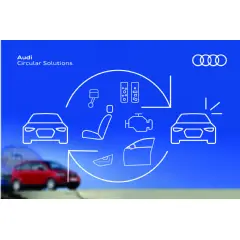
Audi is setting up a business around what happens after its vehicles leave the road. Audi Circular Solutions GmbH will bring together used vehicle and component purchasing, dismantling, genuine used parts sales and access to recovered materials. The wholly owned AUDI AG subsidiary is scheduled to begin operations in early 2027.
The plan connects several steps that are often handled separately: finding usable parts, preparing them for resale, dismantling vehicles and recovering material for future manufacturing. Audi’s aim is to make those activities a scalable business while giving customers another source for used genuine parts and building a supply of secondary raw materials for its own production network.
Parts sales come first
The first planned step is a central sales channel for used genuine parts. Audi hasn’t provided details on the channel’s format, its initial inventory or which components will be offered. The stated priority is to create a route through which recovered parts can reach customers, drawing on the company’s expertise and the infrastructure of its partners.
Reuse can preserve more of a component’s existing value than sending it directly into material recovery. A part that remains suitable for service can return to use without first being broken down into its constituent materials. That makes sorting and assessing components an important link between vehicle dismantling and the parts counter. Audi’s plan puts that sales channel at the front of the rollout, before the subsidiary adds vehicle purchasing and dismantling.
In the next step, Audi Circular Solutions intends to buy used vehicles and dismantle them. That work could give the business a more direct role in identifying which components can be reused and which materials can be recovered. The company has not described its acceptance criteria, dismantling procedures or the range of vehicles it will handle, so the practical scope will become clearer as operations develop.
Recovered materials for the supply chain
The subsidiary will also work to secure access to secondary raw materials for Audi’s supply chain. Recycled plastics are a named focus area. Audi says this effort is intended to reduce reliance on raw material markets and prepare the business for future requirements. No material volumes, sourcing targets or specific component applications have been stated.
The supply chain connection is central to the model. Dismantling only creates a materials benefit if recovered streams can be sorted, processed and directed toward a suitable use. Audi’s approach combines that recovery work with access to its wider manufacturing network, while its partner network is expected to contribute local knowledge and operating capacity. The company describes the intended result as a business that can grow while making more productive use of vehicle materials.
Michael Gick, one of the subsidiary’s two managing directors, said the collaboration model pairs Audi’s strengths with specialized partners working locally across Europe. He said that structure should help the business move quickly and build a scalable, profitable operation step by step. Audi has not named those partners or set out where the first services will operate.
Pilot work provides the starting point
Audi says the new company builds on pilot projects conducted over several years with suppliers, research institutions and recycling companies. Those trials examined the reuse of selected components and the recovery of valuable raw materials. The MaterialLoop program, in particular, demonstrated ways to close material loops and gradually introduce recovered materials into series production.
There is also an existing vehicle dismantling effort within the Volkswagen Group: an industrial dismantling line at the Zwickau plant, where the group is pooling dismantling expertise. Audi presents that work as one example of the experience available to support its broader circular economy ambitions. The new subsidiary is meant to turn lessons from such initiatives into an operating business, rather than leaving them as isolated trials.
Philipp Eder, the other managing director, said an interdisciplinary team had spent recent months turning knowledge from Audi initiatives into a viable business model. His account points to a practical challenge for the rollout: experience from pilots must translate into repeatable processes, dependable partner arrangements and a market for the parts and materials recovered.
A staged launch
Audi places the subsidiary within its sustainability strategy and the Volkswagen Group’s “REDUCE & GROW” circular economy strategy. Its stated ambition is to pair economic performance with responsible resource use, alongside work on decarbonization and efficiency.
The sequence gives the business a clear first milestone: establish used genuine parts sales, then add vehicle purchasing and dismantling while developing material access for the supply chain. Details on inventory, partner locations and operating scale remain open. As the early 2027 start approaches, those specifics will show how Audi intends to connect parts reuse and material recovery in day-to-day operations.


