LG UltraView Windshield Display Earns 2026 Automotive News PACE Pilot Award
LG’s UltraView combines a focus-free AR-HUD and Hover HUD to place driving data and cabin functions at different virtual distances across the windshield.
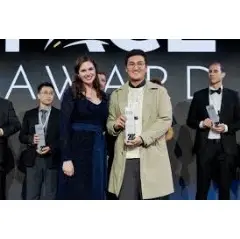
LG Electronics’ UltraView Windshield Display has earned the 2026 Automotive News PACE Pilot Award, recognition for a cockpit concept that brings driving information and infotainment content into a broad area of the windshield. Its defining idea is not simply to make a display larger: the system separates information by purpose and presents it at different apparent distances to suit the task at hand.
The award recognizes early-stage automotive innovations that have not yet reached commercial production but have shown potential through pilot programs. For LG, the distinction puts attention on a design challenge that has become more visible as vehicles gain digital features: drivers may have to scan among separate displays for speed, navigation, assistance alerts, climate settings and entertainment. UltraView proposes organizing that material around the driver’s view instead of treating each screen as a separate destination.
Two display approaches share one optical system
UltraView combines a compact, focus-free augmented-reality head-up display (AR-HUD) with LG’s proprietary Hover HUD in a single optical system. The two components present information at distinct virtual distances, giving the system a way to distinguish driving-critical cues from broader cabin content.
The AR-HUD places vehicle speed, advanced driver assistance system (ADAS) alerts and navigation cues at a far virtual distance aligned with the road. Its focus-free design reduces the difference in focal distance between the road and the projected image. The intended effect is to make checking those cues feel more natural while the driver keeps attention on the forward view. That arrangement matters because a windshield display only helps if its information is legible and usable without demanding a distracting change in focus.
The Hover HUD serves a different role. Navigation, vehicle status, climate controls and multimedia content appear on a large virtual screen positioned closer to the driver. In practical terms, the system is designed to reserve the far layer for information tied closely to driving and use the nearer layer for functions that benefit from a larger presentation. LG says UltraView can adjust screen size and information density according to driving conditions, so the amount and placement of visual material can change with context.
Information placement is the central design question
More digital functions can leave a driver sorting through several screens, each with its own location and visual priorities. UltraView’s approach is to make the windshield part of a coordinated information experience, rather than adding another independent screen to the cockpit. The distinction is significant: enlarging a display alone does not determine which information should take priority, where it should appear, or how much should be visible during a particular driving situation.
LG’s system instead frames those decisions as part of the display design. Road aligned cues occupy the distant layer, while the Hover HUD gives other functions a separate virtual position. This could give automakers more ways to configure the cockpit around vehicle layout and driver needs. LG also points to the system’s compact design as a source of flexibility for cockpit and display configuration.
There are practical questions that vehicle-level evaluation will need to answer. Automakers will have to assess how the projected information fits each vehicle’s windshield, cockpit packaging and intended interface, and how drivers respond to the different virtual layers in real use. The supplied details do not specify display resolution, projection brightness, field of view, hardware dimensions or production timing, so those remain open areas for further validation rather than established capabilities.
Vehicle evaluations are underway
LG says it has conducted vehicle-level proof-of-concept evaluations with multiple automakers around the world, including premium brands in Europe and Asia. The collaborations include vehicle-level validation and sourcing discussions. Demonstrations and technology showcases have also generated further inquiries from automakers, according to LG.
Those activities put UltraView beyond a stand-alone display concept, while leaving its production path undecided. LG plans to continue validating the system for real-world vehicle applications and explore opportunities for future production programs. For automakers, the next step is determining whether the dual-layer presentation can work within specific vehicle platforms and meet their cockpit requirements.
“Winning the Automotive News PACE Pilot Award recognizes our approach to rethinking how information is delivered inside the vehicle,” said Eun Seok-hyun, president of the LG Vehicle Solution Company. “We will build on this recognition by working closely with automakers to bring new display experiences from innovation to real-world mobility.”
The award marks a notable step for a concept built around information hierarchy as much as projection hardware. Its value will ultimately depend on what vehicle evaluations show about usability, integration and driver response. For now, UltraView’s clearest proposition is a windshield display that gives driving cues and cabin functions separate visual roles within one system.


