Mercedes-Benz C111 Car 33 Heads to Auction to Fund Museum’s Digital Twin
The 350bhp, four-rotor C111-II will leave Mercedes-Benz’s collection, with proceeds funding a digital twin of its Stuttgart museum.
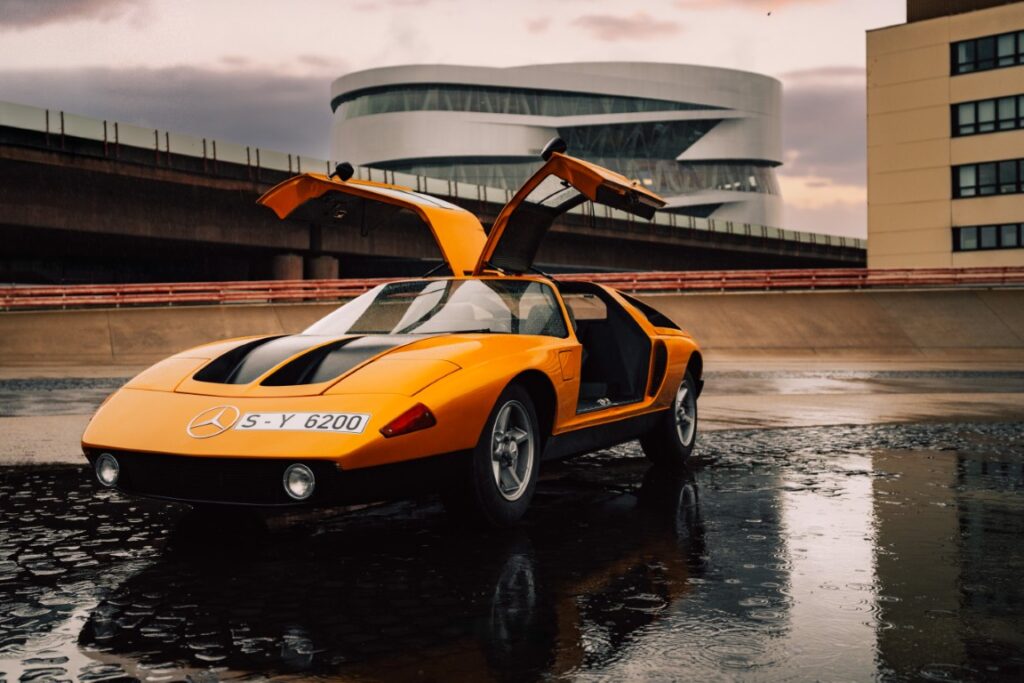
The Mercedes-Benz C111 was a rolling test bed with the shape and performance to capture public attention. Now Car 33, the third C111-II built, is set to leave the marque’s collection through an RM Sotheby’s auction in Paris on February 3. The sale’s proceeds will fund a digital transformation of the Mercedes-Benz Museum, linking an experimental car’s engineering history to the next version of the place that has displayed it since 2006.
Car 33 dates to March 1970 and carries a 2400cc, four-rotor Wankel engine rated at 350bhp. At 1240kg, Mercedes-Benz said it could reach 300km/h (188mph) and accelerate from rest to 100km/h (62mph) in 4.8 seconds while in the company’s test fleet. Those figures put the C111 firmly in prototype territory: its low weight and rotary powertrain made it a platform for exploring performance and vehicle systems, rather than a conventional production sports car.
A working test car, preserved rather than restored
Car 33 returned to full working order in 2024. That year it led other historic Mercedes-Benz cars on the Pebble Beach Tour d’Elegance in California, a public road outing that showed the prototype could still be driven after decades in the collection. The car is otherwise unrestored and has been preserved in its existing condition. Its odometer showed 24,766km when the auction publicity photographs were taken.
Its test record reaches beyond straight-line performance. Car 33 was regularly driven at Hockenheim and helped develop an anti-lock-braking system. It was also used to examine the flow of two side-mounted fluid tanks and to measure temperatures in a rear luggage tray mounted behind the engine. That tray remains fitted and usable. It reflects a practical question behind the C111 programme: Mercedes-Benz had considered production, and a road car would need somewhere to carry luggage, even with its engine at the back.
The car also served as a conspicuous ambassador for the project. In 1971, conductor Herbert von Karajan drove it on the manufacturer’s Stuttgart test track. The following year, it appeared in the first German issue of Playboy. Those appearances added a public life to a machine that was also being used for development work, but the most revealing details remain the hardware and the tests it supported.
One of 13, with experimental wheels included
Only 13 C111 examples were built. Car 33 now sits on light-alloy wheels, and it will be offered with the experimental magnesium wheels used during testing at Hockenheim. Those magnesium wheels are for display only today, so they belong to the car’s development history rather than its current driving setup. For a collector, that distinction matters: the sale brings together the preserved car and a set of test equipment that documents how Mercedes-Benz explored its limits.
The C111 attracted substantial interest, but the planned production path never materialized. New emissions rules, high construction costs and the 1973 oil crisis combined to end the prospect of series production. The result is a small family of prototypes rather than a road-going model range. Car 33’s continued survival in working order gives it a particular place within that group: it carries evidence of both experimental use and decades of careful preservation.
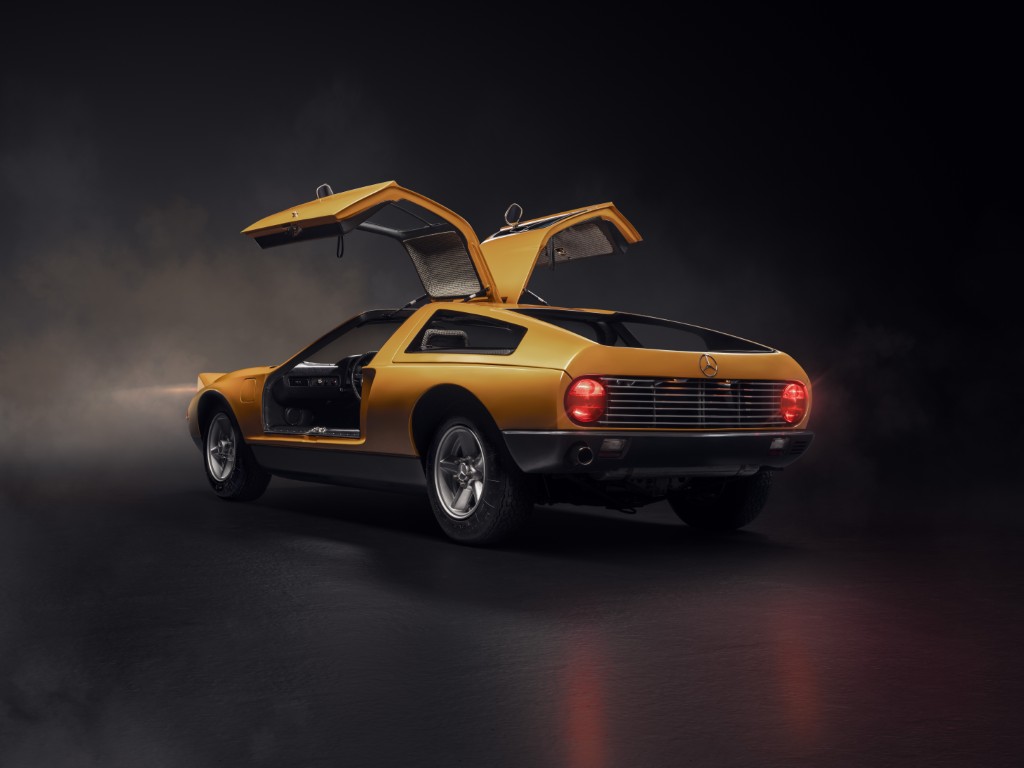
Mercedes-Benz Heritage head Marcus Breitschwerdt said the company would, for the first time, transfer one of these cars from its collection to a new owner. He described the sale as a way to recognize the value of the marque’s heritage while directing the proceeds toward the museum’s future. No reserve price has been disclosed. The expected result has been described as “double-digit millions,” and a contract is in place intended to make this the only opportunity to buy a C111 for at least 25 years.
From Stuttgart display to a digital twin
Car 33 has been displayed in the Mercedes-Benz Museum’s Fascination Design section since the facility opened in 2006. The funds raised will support “Mercedes-Benz Museum 2.0,” a project to create a digital twin and update the experience for visitors in person and online. The museum is to be reconfigured within its existing footprint, with its remit expanded to include current Mercedes-Benz cars.
Museum director Bettina Haussmann said the facility has welcomed 15 million visitors since 2006. She described three parts to the development: a stronger focus on recent innovations, a more interactive visit supported by a new museum app, and the digital twin, which is intended to offer new ways into the collection’s history. The ambition is to make the museum accessible to people who cannot travel to Stuttgart, while also giving on-site visitors more ways to engage with its exhibits.
The project is being developed with The Classic Car Trust and its Roarington digital platform. The first results are expected to be visible in 2027. Mercedes-Benz says the digital experience could reach an audience of four billion people worldwide; that is the project’s stated potential reach, rather than a count of expected visitors. The museum’s existing collection and physical galleries remain central to the plan, while the digital version is meant to extend access beyond the building.
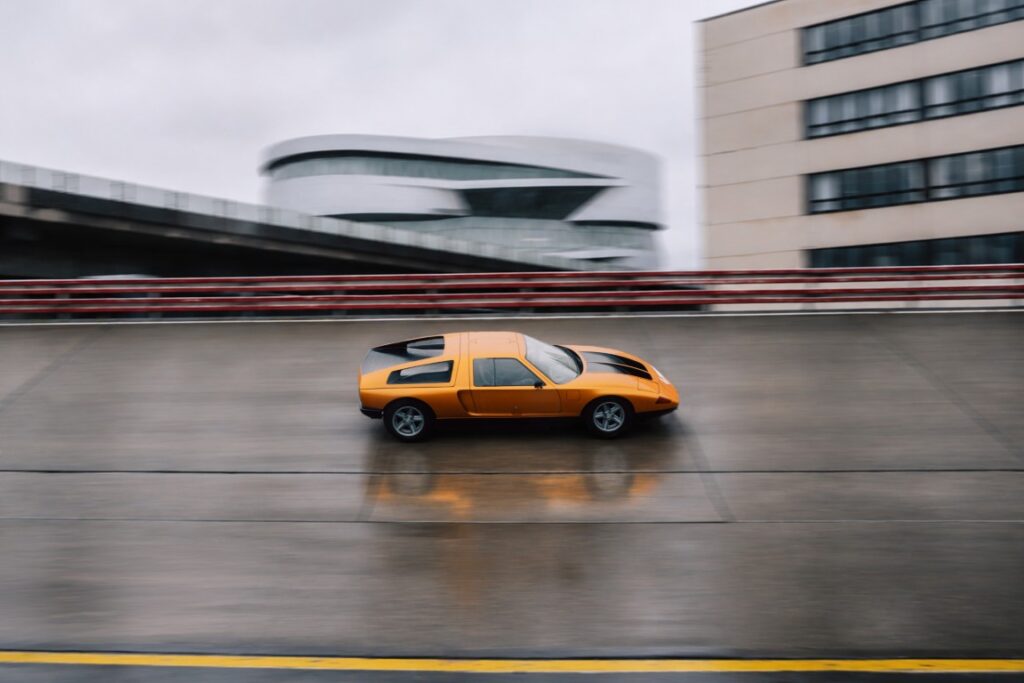
For C111 enthusiasts, the sale marks a rare chance to acquire a well-preserved, running example with a documented role in Mercedes-Benz development. For the museum, it turns one of its most distinctive design exhibits into funding for a new way to present its history. RM Sotheby’s will offer Car 33 in Paris on February 3, the opening day of the traditional Rétromobile Paris show, after the car is displayed to potential buyers at Rétromobile New York. Auction details are available through RM Sotheby’s.


