Ford’s 2027 Le Mans Hypercar Teaser Hints at a 5.4-Litre V8
Ford’s covered Hypercar gets another teaser ahead of its November 26 reveal, with a reported 5.4-litre Coyote-based V8 at its heart.

Ford’s next top class endurance racer is still under wraps, but its latest teaser points to the moment the company wants fans to focus on: the car itself, waiting in a trailer before its November 26, 2026 reveal. The bigger mechanical clue is a reported 5.4-litre V8 derived from Ford’s Coyote engine architecture, said to be capable of revving to around 9,000 rpm.
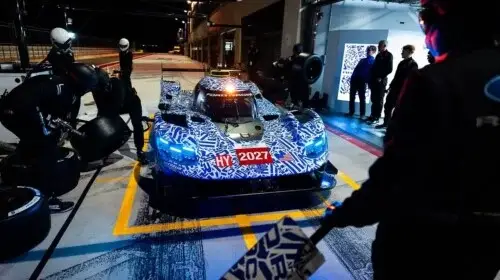
That combination makes the project intriguing before any bodywork, chassis details or performance figures are public. A high-revving V8 brings a very different character from a small-displacement turbo engine, and its sound and power delivery will be part of the car’s identity. For now, though, the engine description remains a report, not a confirmed specification from Ford.
A glimpse, with the details still hidden
Ford Racing’s short video shows a helmeted figure opening the doors of a trailer. Light spills across the Hypercar inside, but a drape conceals the shape of the machine. The clip offers atmosphere more than technical evidence: no clear view of the body, no close look at the wheels or suspension, and no audible engine note to help identify the powertrain.
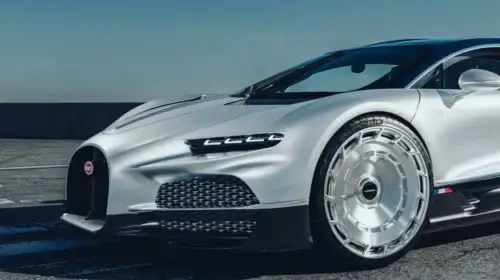
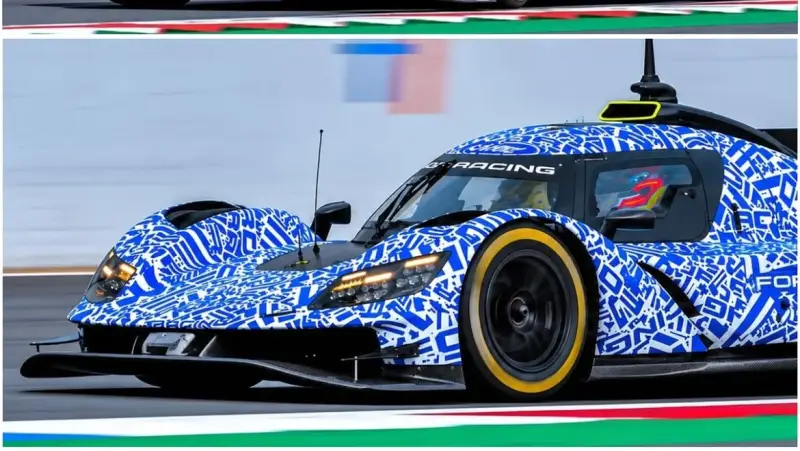
The covered car is a deliberate tease, and it leaves the useful questions unanswered. The footage doesn’t establish the aerodynamic layout, cooling openings, cockpit details or how the finished car will differ from its development form. Those details matter in endurance racing, where a body has to balance aerodynamic efficiency with cooling, stability and service access across long stints.
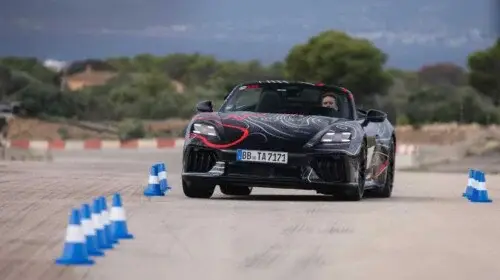
Ford has already set the reveal date: November 26, 2026, which falls on Thanksgiving Day in the United States. The event is also expected to confirm the car’s name and identify the drivers who will lead the team in its first World Endurance Championship season.
The teaser is available in the Ford-related Instagram post.

The V8 is the key mechanical clue
The reported engine is a heavily reworked 5.4-litre V8 based on Ford’s Coyote architecture. The suggested ceiling of around 9,000 rpm would make this a very different application from a road-going Coyote V8. A race engine has to deliver repeatable performance through long periods at high load, while its systems and components must suit the demands of endurance competition.
That doesn’t mean the production engine’s parts or setup will carry over unchanged. The description says “heavily reworked,” but offers no breakdown of the changes, and Ford hasn’t supplied figures for horsepower, torque, engine weight or service life. Nor does the teaser establish whether the car will use any particular transmission or hybrid system. Those details will shape how the V8’s output reaches the track and how the complete package behaves over a race distance.
For now, the Coyote connection gives enthusiasts a family resemblance to Ford’s familiar V8 lineage, while the proposed displacement and rev range suggest a purpose-built competition unit. It’s a promising combination, but the sound and character are still unknown until the car is shown running or Ford confirms its specifications.
A 2027 return, with the important details ahead
Ford is preparing to return to the top class of the FIA World Endurance Championship in 2027. The teaser signals that development is progressing toward the car’s public unveiling, but it doesn’t provide a debut schedule, testing data or a full account of the program’s readiness. The most concrete next step is the November 26 presentation, where Ford is expected to supply the name and driver line-up alongside a proper look at the machine.
Those disclosures should give the V8 claim a clearer context. A visible car will reveal how Ford has packaged the body and cooling around its powertrain, while the driver announcement will put names to the effort ahead of its first WEC season. Until then, the covered prototype is a reminder that the shape and engineering choices remain under wraps.
My read is that the engine report is the detail to keep in view, but the reveal needs to connect it to the finished car. Ford’s next useful step is to show the Hypercar clearly and explain what the 5.4-litre V8 actually does in the package.