Bcomp Plans Romanian Flax Composite Facility for 2027 Production
Bcomp plans to bring its Timișoara site online by mid-2027, adding capacity for European flax roving and automotive composite programs.
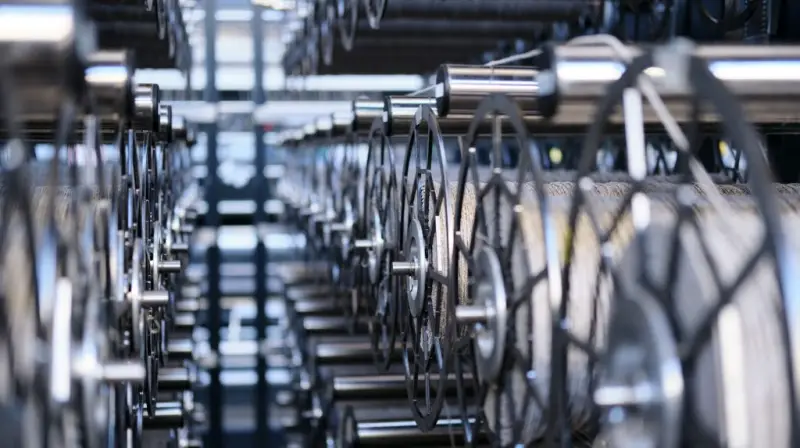
Bcomp’s planned Timișoara facility is aimed at a specific manufacturing bottleneck: producing more roving, the foundational yarn woven into the company’s ampliTex natural-fiber fabric. The Swiss materials company expects the Romanian site to be operational by mid-2027, adding production capacity as demand grows for flax-based composites in automotive and other sectors.
The expansion pairs a new location with more control over a key input. Bcomp says the facility will increase its in-house roving supply, giving the company greater oversight of quality and helping build a more resilient, near-shored supply chain. The roving production line will be based at Bcomp’s existing Fribourg site, while the new Romanian operation will extend the company’s manufacturing footprint.
That distinction matters for a composite material business serving larger production programs. A steady supply of consistent yarn is part of the chain that takes flax fiber into technical fabric and, ultimately, into components intended for vehicle interiors and exteriors. Bcomp says it has been scaling production for serial volumes while meeting requirements for quality, appearance and performance.
A site chosen for automotive manufacturing
Timișoara was selected for its automotive manufacturing experience, skilled local workforce and position close to European original equipment manufacturer customers. Romania also has an established network of automotive suppliers. The sector accounts for around 13% of the country’s GDP and 33% of its total exports, figures that help explain why the region can support an industrial materials operation.
Location also connects the new facility to Bcomp’s global headquarters in Switzerland. The company says proximity to both its European customers and its existing operations was a decisive factor. For a supplier seeking to expand output, that geography can make coordination across manufacturing, customer programs and technical teams more direct.
Bcomp CEO Christian Fischer described the site as part of the company’s long-term growth strategy, building on 15 years of development and manufacturing experience. He said the additional capacity is intended to help serve rising global demand for high-quality, high-performance natural-fiber composites, with automotive a particular focus.
From technical fabric to vehicle applications
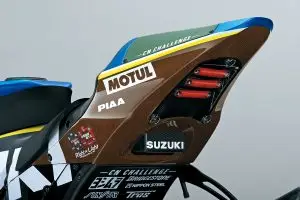
Bcomp’s flax-based technical fabrics have appeared in automotive and motorsport applications. A recent example is the BMW M Concept Neue Klasse. The material has also been used on the Suzuki CN Challenge, showing its presence in motorsport as well as concept vehicle work.

For automotive suppliers, the move toward natural-fiber composites depends on more than material properties. Vehicle programs need repeatable supply and manufacturing processes that can support production volumes, alongside the required finish and performance. Bcomp says demand is being driven by interest in “plug-and-play” composites for interior and exterior uses, and that its production scaling has helped meet those program needs.
There’s a practical manufacturing question behind that claim: can a material developed around a renewable fiber be supplied consistently enough for larger vehicle programs? Increasing control over roving production gives Bcomp a way to manage one important stage of that process. The Timișoara site is intended to add volume and capability, while the Fribourg line remains part of the roving production plan.
Commissioning work is underway
Bcomp plant manager Sergiu Ureniuc said preparations are underway to bring the facility online by mid-2027. The local team is working with specialists in Fribourg as it prepares to commission equipment. Once operational, the Romanian site is expected to produce ampliTex roving from European flax, drawing on experience from Bcomp’s first production site in Switzerland.
The project has received partial funding from the European Investment Bank. Bcomp says the funding supports its plans to industrialize lower-CO2 materials for high-volume applications, strengthen supply-chain resilience and replace more carbon-intensive materials.
The next tangible milestone is commissioning the equipment and establishing production at the Romanian site. If the schedule holds, Timișoara will give Bcomp additional capacity for European flax roving by 2027, with the intended payoff being a more controlled supply base for the larger automotive programs now driving demand.


