Schmitz Cargobull Reports €2.25 Billion Turnover as Trailer Sales Top 47,000
Schmitz Cargobull sold more than 47,000 vehicles in 2025/26, while lower earnings and negative EBIT keep profitability in focus.
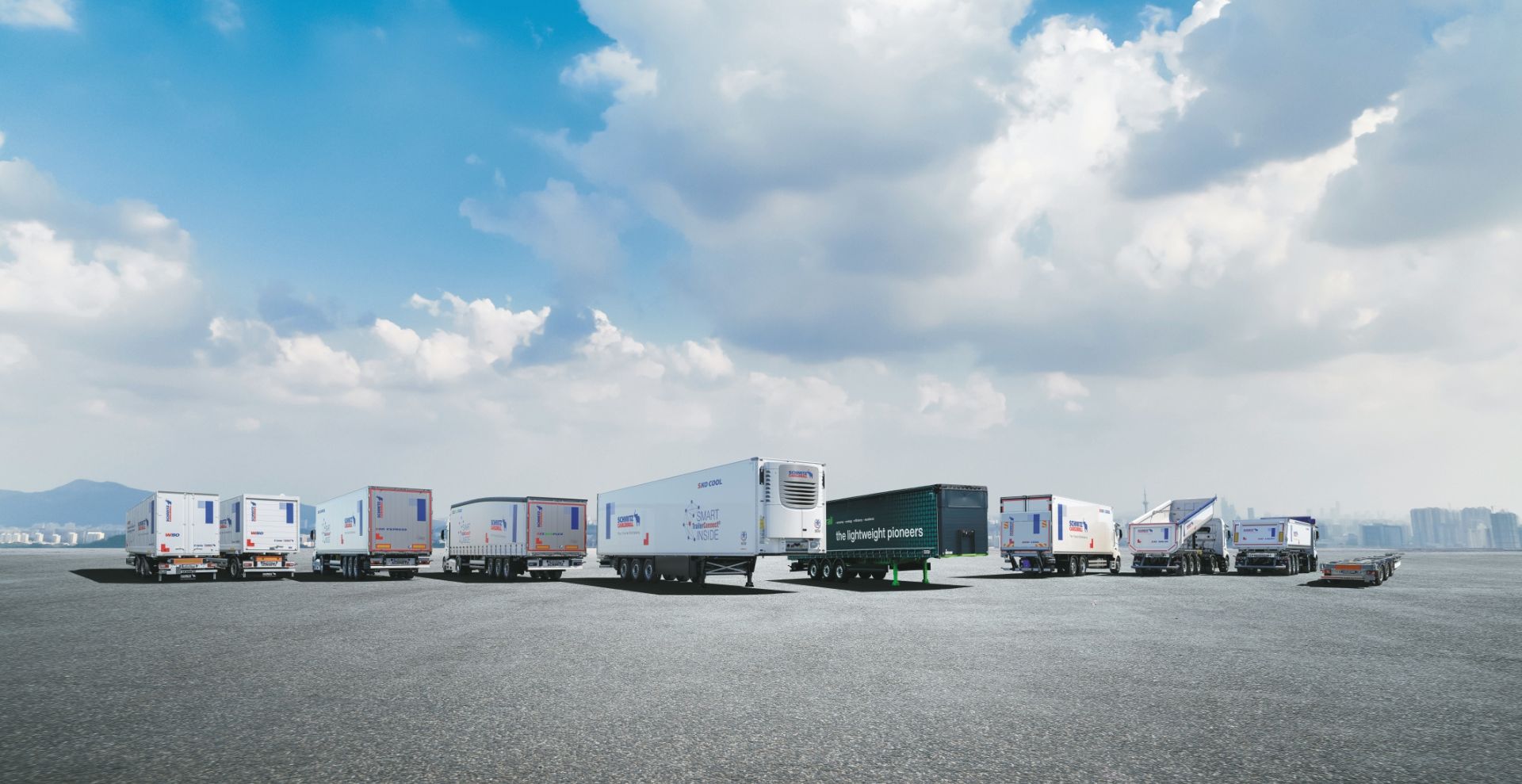
Schmitz Cargobull delivered more than 47,000 vehicles in the 2025/26 financial year, up from 42,620 a year earlier, and recorded turnover of approximately €2.25 billion. The sales increase came alongside weaker earnings: EBITDA was €45.6 million, while operating profit (EBIT) was -€13.3 million. The figures show a company moving more trailers in a difficult market while facing pressure to make each sale more profitable.
The financial year ran from 1 April 2025 to 31 March 2026. Schmitz Cargobull describes the trading conditions as difficult, citing a weak economy in key European markets, reluctance to invest across the transport industry, market volatility and price pressure. Higher energy, labour and raw material costs also weighed on earnings. Turnover rose from €2.16 billion in the previous year, but EBITDA fell from €57.1 million and EBIT declined from -€8.2 million.
Those results put the gap between sales volume and operating performance in focus. Positive EBITDA indicates that the business generated earnings before interest, taxes, depreciation and amortisation, while the negative EBIT shows that operating costs and depreciation still left the company below break-even at that level. CEO Andreas Schmitz said the delivery total reflected customers’ confidence in the reliability and economic value of the company’s products and services. He also pointed to the EBIT result as evidence that improving profitability remains a priority.
Production capacity and digital tools
Schmitz Cargobull invested €55.5 million during 2025/26, directing much of that spending toward production automation and expansion of its manufacturing network. Its new plant in Oradea, Romania, began operating in early 2026. The facility produces curtain-sided semi-trailers and dump semi-trailers for the Central European market, with annual capacity expected to reach up to 4,000 vehicles in the future.
That capacity is intended to support the company’s production network as it pursues higher sales. The plant adds another manufacturing location for two distinct trailer types, while the planned capacity gives a sense of its potential scale once operations develop. The company has not provided a timetable for reaching the 4,000-vehicle figure.
Research and development projects received approximately €5.3 million. The work supports Schmitz Cargobull’s digitalisation strategy, including development of the Cargobull Operating System (COS), diagnostic tools and telematics services. These systems are intended to help fleet operators increase vehicle availability, organise maintenance more effectively and reduce total cost of ownership. For operators, the practical value of these tools depends on how reliably they identify issues and support service work across a trailer’s working life.
Expansion across markets and trailer types
The company also extended its international reach and product portfolio during the reporting year. It invested in Sub Zero Insulation Technologies in India and GT Trailers, a Polish specialist in high-volume vehicles. Schmitz Cargobull has also planned a full acquisition of lightweight construction specialist Berger Fahrzeugtechnik; that transaction remains subject to regulatory approvals.
In July 2026, after the financial year had ended, Schmitz Cargobull acquired a majority stake in Australian trailer manufacturer Freighter Group. The timing places the deal beyond the 2025/26 reporting period, but it signals that the company’s expansion continued into the following months. Taken together, the moves span insulation technology, high-volume trailers, lightweight construction and a manufacturer in Australia, broadening the company’s presence across products and regions.
AI aimed at refrigeration service
Schmitz Cargobull is pursuing artificial intelligence through a group-wide initiative focused on internal processes and digital business models. One example is DR. COOL, an AI-based service assistant for transport refrigeration units. It supports service partners with diagnostic and service processes for the company’s refrigeration units, with the stated aim of reducing repair times.
For temperature-controlled freight operators, refrigeration downtime can affect the working availability of a trailer. A service assistant that helps partners move through diagnosis and repair could therefore support faster returns to service. The company has not reported a measured repair-time reduction, so the current significance is the tool’s intended role in its service network.
Next target: approximately 49,000 vehicles
For financial year 2026/27, Schmitz Cargobull plans to increase sales to approximately 49,000 vehicles. It expects its international network, customer focus and continued development of products and services to support that target. The plan implies further growth from the more than 47,000 vehicles sold in 2025/26, while the latest earnings figures make profitability a central measure of progress alongside volume.
The company manufactures semi-trailers for temperature-controlled freight, general cargo and bulk goods, as well as transport cooling units for refrigerated box-body semi-trailers. Its services include financing, spare parts, service contracts, telematics and used-vehicle trading. Founded in North Rhine-Westphalia, Germany, in 1892, the family-run business has more than 6,000 employees and an international production network spanning Germany, Lithuania, Spain, Turkey, Romania and the UK. Its next financial year will test whether added capacity and a broader portfolio can translate rising deliveries into stronger operating results.